

AHECs and Their Role in Sustaining the Rural Healthcare Workforce, with Dwain Harris, Brianna Sheppard, and Meredith Lair
Date: January 13, 2026
Duration: 50 minutes
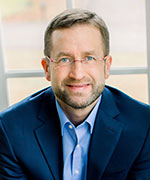
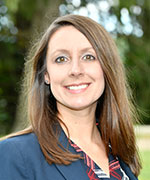
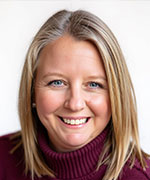
An interview with Dwain Harris, Chief Executive Officer
of the National AHEC Organization, along with Brianna
Sheppard, PhD, Director of West Virginia Area Health
Education Centers, and Meredith Lair, Executive Director
of the Northeast Oregon Area Health Education Center. In
this episode, we learn about the Area Health Education
Center (AHEC) program, and its importance in developing
and maintaining the rural healthcare workforce.
Listen and subscribe on a variety of platforms at PodBean.
Organizations and resources mentioned in this episode:
-
West Virginia
Area Health Education Centers
- Northern West Virginia Area Health Education Centers (Northern WV AHEC)
- Northeast Oregon Area Health Education Center (NEO AHEC)
- Bureau of Health Workforce
- Healthcare VR simulation training, New York State Department of Labor
- Mountaineer Food Bank
- Oregon Health and Science University Campus for Rural Health
- Workforce West Virginia
- West Virginia Association for Behavior Analysis (WVABA)
- Marshall University College of Health Professions
- American College of Rheumatology
Transcript
Andrew Nelson: Welcome to Exploring Rural Health, a podcast from the Rural Health Information Hub. My name is Andrew Nelson. In this podcast, we'll be talking with a variety of experts about providing rural healthcare, problems they've encountered, and ways in which those problems can be solved.
Today we're going to be talking about Area Health Education Centers. And joining us, we have three guests. I'm going to be speaking with Dwain Harris, Chief Executive Officer of the National AHEC Organization, Dr. Brianna Sheppard, director of West Virginia Area Health Education Centers, and Meredith Lair, executive director of the Northeast Oregon Area Health Education Center. Dwain, to set the stage for our conversation today, could you tell our listeners a little bit about the history and the purpose of AHECs and the National AHEC Organization?
Dwain Harris: Sure. Thank you, Andrew. It's a pleasure to be here. I appreciate the opportunity to talk about the work that we do. AHEC stands for Area Health Education Center. We have been around for more than 50 years. We are a HRSA [Health Resources and Services Administration] program, administered through HRSA and through the Bureau of Health Workforce. So, we're federally funded. There are AHECs in 44 states and a number of U.S. territories, so we are essentially nationwide. AHECs were designed to address healthcare professional shortages, particularly in rural and underserved areas. AHECs work in a variety of ways. We form a continuum of services that begin in middle and high school where we provide health career exploration activities for younger kids to offer them the opportunity to see the different healthcare careers that are out there.
AHECs also provide support for undergrad students, those who may be from underserved areas who may need a little extra support and education to make their medical school applications, for example, more competitive. In addition, AHECs offer continuing education, providing that lifelong learning piece to those healthcare professionals who are in the more remote areas. And AHECs also provide a program called AHEC Scholars, which we'll talk a little bit more about later. It is essentially a program that provides enrichment and additional education to students who are already in their program of study with a goal of making them more responsive one day when they get into the healthcare workforce, more responsive to the community that they're most likely to serve. That is those sort of hard-to-reach, or high-need, communities. So AHECs offer a lot of services, a continuum of interventions, all designed to afford those rural or frontier or hard-to-reach areas that added healthcare workforce support.
Andrew Nelson: I'll ask you this first, Bri, but I'd like to hear from each of you: given our podcast is called Exploring Rural Health, how do AHECs support the significant health workforce needs of rural communities?
Brianna Sheppard: One of the things that I love most about AHEC is it really is an emphasis on providing opportunities and support to the most rural and underserved areas of the state. So, in West Virginia, we're considered a very rural state comparatively. And within our AHEC programming, we make it a point to establish partnerships in our rural communities; our center directors are living in, and [are] usually from, those communities. So, they're very well-connected, and understand what some of those needs and opportunities are. But it's really starting at the high school level for us, providing programming and showing students from rural Williamson, West Virginia or Calhoun County in West Virginia, which are some of our most rural locations, even within our state, the opportunities that they have to be a healthcare provider back in their community.
And so, it's really sparking that interest for our rural students, showing them the champions that are from their communities, or communities like theirs, and how they've been successful in pursuing a healthcare career. And then continuing to support them through their training and job placement journey with the hopes that they'll choose to come home and serve their community. And so, our hope is, as Dwain had mentioned before, providing them [with] experiences that make them more competitive to be able to enter these healthcare careers, but also helping to instill the confidence in them that they can be that healthcare provider and that leader in their rural community when they choose to go home.
Meredith Lair: Healthcare is always changing, and it's usually changing really rapidly. When Oregon AHEC was established back in the '90s, it was by doctors from our very remote isolated Eastern Oregon region who raised their voices, and they were just feeling hopeless and burned out, thinking there wouldn't be a future workforce to take their place someday. And that was really how AHEC began, and that was our purpose. AHECs are embedded in our community. They're doing the work that our region needs. They're very nimble and responsive to our workforce trends, and always evolving our programs to be sure that communities have the healthcare workforce that they specifically need. And so, I think all of those things help AHECs to have a significant impact on the healthcare workforce needs in our region and throughout the country.
Dwain Harris: I'm glad that Meredith brought up the idea that her AHEC is a little different, has a little bit of a different approach, a different origin story, than Bri's AHEC, and that's typical of AHECs across the country, though there are common threads in what every AHEC does. AHECs were smartly designed to be flexible and to be nimble and to respond to the needs of their own communities, to respond to their situation, their specific partnerships, and the resources that are in their area. So, I think that's a strength of AHEC. We have AHEC centers that are hosted, for example, by a healthcare organization with other AHEC centers that are standalone 501(c)3s. So that sort of structural diversity and the way AHECs are put together makes them ready-made partners embedded in these communities in such a way that they can produce outcomes that perhaps other organizations cannot, just because of how they're situated.
Brianna Sheppard: And I would add to that, one of the other unique things about the AHEC program is, each center has a community advisory board. Composition varies from center to center, but in West Virginia, we have different types of healthcare providers represented. We have individuals from higher education that serve on these boards. We have individuals from the school system. We have some folks from local government and nonprofit organizations. And it's an opportunity for us to listen and be agile in responding to those changing needs over time. We've adjusted some of our programming and some of the opportunities that we've offered based on feedback from our community advisory boards that really are responsive to each center's separate region that they're serving.
Andrew Nelson: So, would it be fair to say that across the board, AHECs are going to have similar structures in terms of the way they're organized, but then they're also able to customize the activities and the services they provide for different communities?
Dwain Harris: Yeah, that's a fair description. Another thing that highlights how AHECs and their communities in their states may have different approaches: though all AHECs are federally funded, a number of AHECs are also state-funded. So that creates quite a big variety in resources and staff size. So, while a typical center might have one or two employees, some of the AHECs that get more state funding may have 15 or 20 or more, just depending on how they're situated, their history, how they're able to avail themselves to state funding as well as the federal funding. Again, it's a strength. And you know, AHECs are known for their ability to create partnerships, and an AHEC may sort of operate in the same way for years, and then they create a new partnership that adds a whole new dimension to what they're able to offer their community.
Andrew Nelson: Without naming names, would you be able to give a few examples of some ways in which the partnerships that you've formed have enabled NAO to support some of your members?
Dwain Harris: NAO stands for National AHEC Organization, and we are the association of AHECs, right? So, there are 300 AHECs across the nation, and most are members of the NAO. So, our primary job is to help AHECs sort of speak with one voice, to advocate for the AHEC mission, and keep AHEC connected with education and networking, all in an effort to make them even better at what they do. But additionally, NAO, as a national network, is able to reach out and join hands with other national organizations that may align with our mission in some way. So, for example, a foundation may reach out to us that has content related to a specific disease that they want to get out to hard-to-reach communities.
They will approach us because we have the network, we have the infrastructure. Again, the word "embedded." AHECs are embedded in those communities, and we are able sometimes to reach an agreement with those external partners and push that content out to our AHECs, typically along with a little bit of funding so that they can recover the resources that they will spend getting that education out there. And it's a way to sort of amplify and expand upon the mission that the AHEC already had. It just gives them a little bit more in terms of resources to do this additional work that is appropriate to their communities.
Sometimes it's partnerships. Sometimes as an organization we apply for grants. So another example would be, we have a project that is funded now by the Department of Labor, the hallmark of which is the use of virtual reality headsets and implementing healthcare simulation training. So particularly important for rural areas where those opportunities to shadow in a live situation… because of remoteness, of course [that] can be difficult to come by. This technology underpins this project, and it's something that we're looking [for] more and more, we're leaning into more and more with regard to technology. So that's just another example of how we're able as a national organization to leverage the work that the AHECs across the nation do to complete this additional work and help those local communities in terms of their healthcare workforce development even more.
Andrew Nelson: Bri, we mentioned the Scholars program earlier. Could you tell us a little more about that and how it helps to provide health profession students with opportunities to fill gaps in their education that might otherwise exist?
Brianna Sheppard: Yeah. So, the Scholars program is actually one of my favorite things about AHEC. They are just truly inspirational, hardworking students who are dedicated to the AHEC mission. And so, the program is a two-year program. We call it an enhanced curriculum, where students get 40 hours a year of additional didactic foundational knowledge-based training, and then 40 additional hours of community-based clinical training. In West Virginia, ours is branded as the Rural Health Community Scholars. So, we are specifically focused on providing those additional opportunities for our scholars in some of our most rural areas of the state. And then we also do what we call a rural immersion, which is one of my favorite educational activities. So, each of our centers in their region will host an interprofessional group of our scholars.
We have a lot of different disciplines that can participate in our Scholars programs. We have medicine, dentistry, different levels of nursing. We've added nutrition and dietetics, exercise physiology, physical therapy, occupational therapy, social work, and counseling. So, these students have an opportunity to understand the importance of interprofessional team care, particularly in rural settings, and how to work effectively together for that. So, for our rural immersions, each center creates a two- to three-day in-person experience for scholars where they actually get to know that community. So, they go to, whether it's an FQHC [Federally Qualified Health Center] or Critical Access Hospital, do some observations, get to talk to the current providers there about what it's like to live and work in that area. We try to highlight some of the outdoor opportunities. West Virginia is a beautiful place to live and work.
And then we try to also incorporate some type of service-learning opportunity for scholars within that community that they're in. So, for example, our Northern West Virginia AHEC Center was in Braxton County back in October, and worked with the Mountaineer Food Bank, which is a network of food banks. So these students not only had a chance to talk with providers about the importance of nutrition and dietetics as a healthcare provider, but they also got to talk with community members about what their specific experiences were, what they had access to, their day-to-day lives, and how it's impacted at these different levels and how their health was impacted.
Each AHEC has a Scholars program, but each Scholars program is a little bit different. In West Virginia, we take ours as an opportunity to provide our students with information that they may not get in their health profession's training curriculum about topics that are really important for rural health in West Virginia. And we're able to adapt to that as kind of needs change. So, when the Scholars program first rolled out, it was in the middle of the opioid epidemic. Some students were getting substance use disorder-related education and training, while others were not getting so much of that in their health professions program. So, we use the Scholars program as an opportunity to provide that education and ideally increase their confidence in working with these populations in some of the most rural areas of the state. And over the years, fortunately, that has become a core component of curriculum in different health professions training programs that we work with.
Meredith, I would love to hear about how your center interacts with your rural scholars.
Meredith Lair: Well, in Northeast Oregon, we're fortunate to have a consistent interprofessional mix of students doing their rural rotations, and many of them are also part of the AHEC Scholars program. This interprofessional mix of learners is through an initiative that NEO AHEC has been partnering with for the past 10 years. It's called the Oregon Health and Science University Campus for Rural Health. This is really a place that fosters interprofessional learning and a community for students to begin developing their professional identity. As students begin to interact with teams in their clinical setting and in their community, they start to see themselves as part of it. And that's why this initiative has fit so well with our AHEC, because in large part, that's our mission too. And it fits really well with the AHEC Scholars program. So, in our case, medical, nursing, pharmacy, dentistry, , and undergraduate nursing are immersed in the community.
They interact with a longitudinal community-based project. Students are working together, in our case, to develop some interprofessional simulations. So, they come together, they review and enhance the cases that are used for the simulations to ensure that there's a role for each health professional. An example of a case used for simulation this fall was a pediatric trauma. Once the case has been refined to be interprofessional, students are part of the actual simulation. We've surveyed the students to get feedback, and we found that their responses indicate that the interaction between providers like physicians and nurses or medical students and nursing students helps to break through the nervousness of communication. And I think that there is a really exciting link here to think about that students get to experience this in a simulated environment and learn how to be effective and successful team-based communicators. I think that this is transformative within the healthcare system to have a new workforce that's coming into their role and really understanding the roles of each other, the other health professionals, and then that they're able to begin to communicate effectively. I think this takes years off of the ability for new health professionals to function in a team.
Andrew Nelson: Earlier I asked Dwain about some of the national partnerships that he's formed. Bri and Meredith, could you talk a little bit about the partnerships that you've formed, and who you see as key partners in the more regionally based work that you do?
Meredith Lair: Well for us, we're a small nonprofit regional center in a really geographically isolated and rural part of our state. And so, without partnerships, our work really wouldn't be possible. I feel like NEO AHEC is a convener of information and a community of people passionate about growing our own healthcare professionals. We really deeply value the expertise and experience of our partners to make our work possible. Partnerships that we've relied on are, really, everybody — hospitals and clinics, school districts, colleges and universities, other nonprofits, other AHECs, coordinated care organizations, local emergency service providers. We'll really partner with anyone who comes together with a shared mission and a common focus on outcomes to strengthen the work that we're able to do in our community. I think one thing that I've noticed over the years with AHEC is that the work isn't about us. It's about all of us coming together for the future of health in our communities, and how we can be good advocates and stewards of the resources that were provided.
Brianna Sheppard: It's really all of their partnerships within their local region are what really makes these great programs happen. From a program office perspective, we've done a lot of work with state-level associations. We have a very good relationship with our higher education policy commission in West Virginia. And that helps us trade information about what we're hearing at a community level in terms of those educational needs and what they're hearing from their partners in higher education about how we can effectively support those experiential clinical and training opportunities, and how we can help to identify and enhance awareness of an entry into these different healthcare career pathways that are being identified from different regions.
So, we've had three exciting statewide partnerships over the last couple of years that I'm really excited about. One is with Workforce West Virginia and the Regional Workforce Development Boards. So those are the Department of Labor-funded groups in each region of the state that we have been establishing partnerships with to understand how we can each amplify the resources and opportunities that we offer for folks from the region, particularly in terms of entering the workforce specifically. So, they have Workforce West Virginia, for example, they do resume workshops. They're able to engage in kind of apprenticeship-style opportunities for students, and then we partner with them to increase awareness of the resources that they have for our students who are interested in entering those different health professions to help reduce the financial burden associated with pursuing different healthcare careers. So that one's been exciting.
We've also started working with the West Virginia Applied Behavior Analysis Association over the last year. So, they identified a huge gap in the number of providers that can actually do applied behavior analysis therapy which is evidence-based for individuals with autism. Most of the centers that are in the state are more urban-centric — so in our larger cities of Huntington and Charleston and in Morgantown — and the wait lists to be able to access these therapy services in the state is huge. And so, we've partnered with them to help build out a career pathway in the state from entry level of a registered behavior technician, which you can do with a high school diploma. And we've also been working with the Department of Education for their career and technical education program to give high school students the opportunity to get some of that training and experience that counts towards their high school graduation. And then they can move into that that clinical training with a clinical partner with the hopes of increasing access to that very important technician-level role.
We've also been working with West Virginia University to increase awareness of this at a bachelor's level, so that would be kind of the next level up. And then Marshall University is launching a master's level, and up until this year, there was not a training program in state. So, in the year and a half through these partnerships and collaborations, we've been able to build out this career ladder for this identified behavioral health workforce. And as AHEC centers, we're also helping to increase the awareness that this is an opportunity, and there're opportunities for you to train and work in state, and here's what that looks like. And then we also do a lot of work with the West Virginia Clinical and Translational Science Institute.
So they have multiple goals, but one that we're particularly involved in is increasing representativeness of rural populations in healthcare research so that these different interventions, treatments, et cetera, that are created include that rural perspective and understanding of the unique opportunities, but also challenges, that individuals from rural areas face in terms of understanding different types of treatments. And so, within our Scholars program, we've created what we call a Primary and Clinical and Translational Science module. And we do some kind of basic knowledge and information about what clinical and translational science is and then we partner with different community organizations, and those students get a mentored research opportunity that also provides a benefit back to those communities that we partner with.
Andrew Nelson: Bri, an important activity of many AHECs is health career education, and exploration with high school students. Can you tell us a little bit about why that's important for developing the workforce and what your center has done in that area specifically?
Brianna Sheppard: So I think, for growing up in a very rural area of Virginia myself in Buchanan County, I wasn't aware of how many different types of healthcare careers there were out there, and what each of them did and how they can each contribute to improved health in different ways. I think it's important to give students the opportunity to see what's out there and what's of most interest to them and give them those experiential pieces so that they can more readily see themselves doing that as a career.
One of the things we've done in the last couple of years that we're pretty excited about is working to help address the nursing shortage in the state. So there is an RN level nursing shortage all over, particularly in West Virginia. And so, we've been partnering with WVU Medicine who has locations all across the state to host junior nursing academies. So, this is for high school students that are 9th through 12th grade. Sometimes it's the hospital that's in their region in the northern part of the state, we brought them to WVU's new Center for Nursing Education. But we put them in scrubs and we had them walk through the hospital and observe different roles and procedures and interactions that nurses have throughout their day in different departments and gave them a chance to sit and talk with nurses that were at different training levels, ask them what questions they wanted to about what they liked about their jobs and what was most important to them about it.
And then, I'll talk to them as well about what the training requirements were, and how to finance their education as well so that they and their parents, because there are sessions for parents as well, could leave feeling more informed and more confident on whether this might be the way that they want to go in terms of next steps for nursing careers, but doing it early enough that they have time to plan and take those extra high school classes and think through financial aid or other training opportunities to be able to pursue something like a nursing degree once they leave high school. So, it's really a matter of giving them an opportunity to see themselves and have some experience of being that type of healthcare provider.
Andrew Nelson: I think it's really great when you can facilitate them exploring that possibility while they're still in high school, so they can start building towards that and getting ready for that, for the people that want to pursue that possibility.
Meredith Lair: In northeast Oregon, we've been highlighted by our state healthcare workforce policy board for our MedQuest Health Career Exploration Camp as a model to follow. This camp has been in existence for about 35 years now, and we've been collecting longitudinal data on the effectiveness of MedQuest and keeping track of where our participants have gone over time. MedQuest is truly a special experience, and the whole idea is to help high school students understand that there is a place for them in healthcare, whether they're into computers or into construction or want to be what we would think of as more typical health professions like a doctor or a nurse or something like that. It's a highly immersive camp — residential in nature — so they come and stay with us for the week. They have multiple hands-on experiences including uniquely designed job shadows. This last year, I think we orchestrated 301 job shadows in a matter of two months for our campers. We really believe that the best way for students to see themselves in healthcare is for them to be able to apply healthcare-related skills. And so, students learn how to suture, they learn how to take vitals. They participate in a progressive day-long simulation where they learn hands-on skills and then they learn how to apply them with different health professionals.
Our MedQuest camp has also expanded. Before the pandemic, we were in one location once a year and now we've expanded to three locations multiple times of the year. And this was out of information that students provided to us during the pandemic. We went to a virtual camp. We didn't stop existing just because the world needed to stop for a moment. But we brought students together virtually to create a community where they could learn from, with, and about each other's experiences. And we asked them what would stop them or what would be a barrier to coming to a MedQuest camp in person when we knew we could come back together eventually. And many of them told us it was the time of the year. For many of our students, they're working in the summer and to take a week off work just wasn't possible in terms of their support that they provide to their family. And so, we created a spring break camp in a community that is about 150, 200 miles from us. And then for very isolated students, even just the travel, three and a half hours to La Grande was too much. And so, we created another camp in a very frontier isolated community in southeastern Oregon. And that really plays up the unique opportunities in those spaces. So, each camp looks a little bit different. Each camp is responsive to the community, and each student is going to get just a little bit different experience by attending those kinds of things. We like to keep our participants with us for a long time because they have so much to give back. So to quote Dr. Cooper, if you're from La Grande and your doctor's from a place like La Grande and might know the same people, they're more likely to take your advice. Who wouldn't rather listen to their best friend, or someone like their grandmother, then a stranger? And so, our ability to grow our own healthcare professionals is truly amazing because people from rural communities, they have unique needs. And when the healthcare providers come from the community that they're serving, it just really increases the level of care. And our pathway work just ensures a steady flow of people that come from our community that are prepared and trained to care for us because they have roots here. We know they'll stay, and they deeply care about the outcomes of their friends and their families and their neighbors. So, I think that that's just a real strength of the AHEC work.
Andrew Nelson: I always think that's really special when there are systems in place to help people that are interested in healthcare careers embark on that path and then either remain in, or come back to, the communities they grew up in. There's just such an improved sense of connection there. It really makes a big difference, especially for people in more rural areas.
Dwain Harris: Just listening to Bri and Meredith talk about the work that they're doing in West Virginia and Oregon, it reminds me just how intentional and thoughtful our AHECs are in putting together their programming, ready to pivot, ready to respond to whatever opportunity is there. You heard Meredith talking about each of the camps being a little bit different tailored to the region. So, it's gratifying for me to see; this is not something we just roll out and hope people show up. There's thoughtful planning, it's a matter of efficiency, it's a matter of not being blessed with copious amounts of funding. So, AHECs are very good at stretching that dollar.
Just to give you a little bit of context from a national perspective, during the 2023-2024 school year, there were 270,000 AHEC pathway students across the nation. So that kind of gives you that macro, that big picture. But, it comes in fives and tens and twos, you know, one shadowing experience here or maybe a bigger sort of health career expo where a thousand kids show up from local high schools and on a given day just to get a snapshot of what careers are out there. I think it's just so important to the long-term health of these communities. It's really an upstream endeavor. We're planting those seeds and the ideas for those students to come back and practice. And it's so important that they do that. Sometimes I'm guilty of just talking about just the health career aspect, but some people may ask, "Well, why does that matter?"
And it goes to Meredith's point about, it's about getting the right providers in the right places at the right time, right? So, I'm from rural Kentucky, and I can give you an example just from this year. In the next town over, I know a group of brothers who all live in the same town. Their age is probably 55 to 68, and like me, or like many of us, maybe they hadn't paid really close attention to their health for several years. I'm sure they had checkups, and just average people. But earlier this year, their childhood friend who had become a doctor and moved out of state, moved back to town, right? Moved back to town. So, I started hearing this chatter from this group of brothers, and perhaps more from their wives, that they had started checking in, that they had started taking an interest in their health more so than they had before. Well, it was because of that kind of commonality that, as Meredith talked about that connection, that the new physician in town had sort of an influence that others may not have. And that speaks to the value of the AHEC mission right there. Get those right providers in the right places at the right times, and outcomes will be better.
Brianna Sheppard: Along with Meredith, we follow a lot of our pipeline students from high school ideally through their first practice for those that choose to go [down] that healthcare career path. And we're always assessing, we did a little bit deeper dive this year, and a couple of things that stuck out to me that were exciting is, our Northern Center has a shadowing program called Moving Onward and Upward. It's been around for many, many years. But it's an opportunity for students to shadow multiple different departments. It's one of those five or six students a year kind of opportunities. They shadow lots of different departments there. And then the center directors invested in helping to support them through the different steps of that. And so, when we looked back this year, two of the students from some of the earliest cohorts from that program are actually still nurses at the same place that they shadowed when they started in high school, and have gone on and done some additional training.
So we started an associate's level and one's now a nurse practitioner. And they're now the ones providing those opportunities for students to shadow, where they got the opportunity in the beginning to experience whether it was the right career for them or not. So, we have several of those stories across the state, and they're just really wonderful because you're creating your own pool of champions and your own pool of preceptors who do care and who want to help support that next generation of healthcare providers that are going to come into their community.
And then we did a deeper dive on our Scholars outcomes for this last year as well. So, the program started in 2018, which means our first group graduated in 2020 in the pandemic. And of all of the students that we were able to stay in contact with once they entered a health profession, 51% of those, so almost a hundred, were still practicing in the state. And when we mapped it out, I think what was most exciting for me was just how dispersed those different scholars were in terms of where they were practicing post-graduation. So, we had a pocket in Morgantown and we had a pocket in Charleston where our larger hospitals are at. But, it was really dispersed and in some of the most rural communities that we have in the state. And so that was really reassuring to me that we're doing something right and that those folks who invested their time and energy with us, and we did the same, are choosing to serve those communities. And we've helped them feel more prepared and more confident to be able to do that long-term.
Meredith Lair: I think AHEC is really a selfless organization. I am a first-generation college student. My dream was to be a doctor probably like everyone else maybe my age, but the resources just weren't there. Maybe I wasn't aware of AHEC, or perhaps I'm too old for AHEC in Oregon. I'm not sure. But anyway, I think we are really here to inspire confidence, whether that's confidence at the pathway level for high school students, or confidence for learners who have already matriculated into a program and they need to learn how to talk to maybe that next level up of a provider and develop that confidence in their communication skills.
One of the partners that our AHEC relies on most is our regional school of nursing in Oregon. That is really one of the only opportunities for health professions training throughout the state. Our school of nursing regional campuses located just down the hall from me. And so it's really fun to run into our pathway participants who have matriculated into the nursing school. Recently I ran into one and he told me his story, and I thought it was just fascinating. He said, "I am from an agriculture community, so I thought that was the only career that I could have. And then I came to MedQuest, and I saw that I could become a nurse and that I liked the idea of nursing. And I went back to my community, and I thought the only place that I could go was to the community college that was near my community. And then I learned that there was an undergraduate program in La Grande not too far from my community. And now I'm here." And today he's inspiring students from his own school who are visiting the campus and working with our AHEC programming. And I thought that that was inspiring because we had this opportunity not necessarily to control the outcome of the student, but we had the opportunity to inspire confidence, create that space for him to learn about what he was interested in and what type of training he had access to. And most importantly, we help our participants know and understand that there's a place for them in healthcare, especially in the rural community that they grew up in. They go back to their community, and they become part of the healthcare team and then AHECs get to provide them with the ability to give back, to growing that next generation. And so, I really feel like the pathway just doesn't end. I think our impact is generational and I think it's lasting. And I just think AHECs in general are just so selfless to give and give with the idea that we know that we're really impacting health of our community for generations to come.
Brianna Sheppard: And Dwain, before you chime in, one thing we haven't talked as much about, but I do think is an important part for AHEC, is that continuing education and upskilling support for current health professionals. AHECs are still there for those healthcare providers once we've helped them find a career that's right for them and then tried to support them through additional training and support to come back home. So, one example that comes to mind for me is, again, during the peak of the opioid mortality in West Virginia, one of our very good hospital partners came to us along with an FQHC and said, "We really need person-centered, trauma-informed care training for our staff. And we need support for our staff on resilience and supporting them in terms of burnout." And so, as AHECs, we were able to support that very specific identified training need in that community, and one of the hardest-hits areas of the state was like, "We need this. This is a need for our providers, this is a need for our community." And it just felt great for us to be able, because we do provide this continuum of services across a health professional's career, to be able to step up and meet that need.
Dwain Harris: I'm glad you brought that up, Bri. Just for national reference, there were 375,000 continuing education participants of AHEC programs in the 2023-2024 school year. That's another space that NAO works in. We partner with the American College of Rheumatology and have so for eight or nine years now, and through that program, we're able to deliver their content related to lupus education to AHECs across the country. Again, just covering those places that are hard to reach and providing education often in a live setting, that wouldn't otherwise be available to those physicians in that particular community.
Andrew Nelson: You've been listening to Exploring Rural Health, a podcast from RHIhub. In this episode, we spoke with Dwain Harris, Chief Executive Officer of the National AHEC Organization, along with Dr. Brianna Sheppard, director of West Virginia Area Health Education Centers, and Meredith Lair, Executive Director of the Northeast Oregon Area Health Education Center. Look in our show notes for more information about their work and visit ruralhealthinfo.org for all things pertaining to rural health.