

Behavioral Health's Place in the Alaskan Health Aide Workforce, with Xiomara Owens and Tonya Horn
Date: October 6, 2026
Duration: 29 minutes
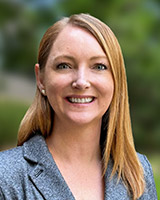
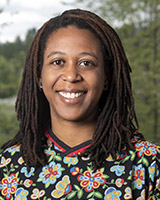
An interview with Xiomara Owens, PhD, Director of Behavioral Health Aide Training at the Alaska Native Tribal Health Consortium, and Tonya Horn, PhD, Director of Research and Evaluation in the Behavioral Health Program at the Western Interstate Commission for Higher Education. In this episode, they explain how, along with Community Health Aides and Dental Health Aides, Behavioral Health Aides provide an integrated, resilient web of care for rural Alaskans.
Listen and subscribe on a variety of platforms at PodBean.
Organizations and resources mentioned in this episode:
- Alaska's Behavioral Health Aide Program
- Alaska Native Tribal Health Consortium (ANTHC)
- Western Interstate Commission for Higher Education (WICHE)
- Center for Alaska Native Health Research, University of Alaska Fairbanks
- Northwest Indian College
- Native American Research Center for Health, Indian Health Service
- Health Research Programs for Federally-Recognized Tribes or Tribal Entities, National Institutes of Health
- Community Health Aide Program Certification Board
Transcript
Andrew Nelson: Welcome to Exploring Rural Health, a podcast from the Rural Health Information Hub. My name is Andrew Nelson. In this podcast, we'll be talking with a variety of experts about providing rural healthcare, problems they've encountered, and ways in which those problems can be solved.
Today I'm talking to Dr. Xiomara Owens, Director of Behavioral Health Aide Training at the Alaska Native Tribal Health Consortium, located in Anchorage, Alaska, and Dr. Tonya Horn, Director of Research and Evaluation in the Behavioral Health Program at the Western Interstate Commission for Higher Education in Boulder, Colorado.
Tonya, you and Xio are a couple of the leads on the Alaska Behavioral Health Aide Research Project. Can you give me an overview of this project and tell me what some of your initial findings were?
Tonya Horn: So, the main team who's working on implementing this research project is the Alaska Native Tribal Health Consortium, Xio, and a few of her staff. And then I am from the Western Interstate Commission for Higher Education Behavioral Health Program. We also have this project in partnership with the University of Alaska Fairbanks Center for Alaska Native Health Research and the Northwest Indian College.
The project is funded and supported by the Native American Research Center for Health, at the National Institutes of Health. This program has been around for a while, and it's actually being looked at as a model for replication in the Lower 48. And yet, there has not been research done that really looks at the implementation of this program, or even describes the program and some of the outcomes. The effectiveness is well-known by folks in communities and folks who are involved with the program.
So, this study was designed as a three-phase study. We're just moving into year six of this project. The goals are to look at how the BHA [Behavioral Health Aide] program has been implemented in different geographic areas in Alaska that are all unique. And so, how has this program been implemented? How effective has the training program been in building provider competencies and preparing a workforce to meet the needs that they see in their communities? Another purpose is to describe the core facets of the program that can help guide that potential implementation and adoption in other settings and adaptation, in other states and communities and tribes. The last purpose is to build the research capacity of Alaska Native research partners and institutions. We are in the middle of data collection in the third phase.
We started with phase one, which was a survey that we did with Behavioral Health Aides themselves. And the purpose of that was to describe who the workforce is, who's working as a BHA, where are they located, what are the needs that they encounter, and what are their primary service areas? As well as, how do they self-perceive their competencies and ability and preparedness to respond to those needs, and how do they perceive the supervision that they receive and the training that they've received for their role? So, some of the core components of the program, describing what's going on with the program, what BHAs are doing, and how well they're supported for those roles.
The second phase was that we conducted interviews with Behavioral Health Aide supervisors, and we really looked at, from the perspective of supervisors, how do they perceive the training that the BHAs they're supervising have received and their ability to respond and preparedness to respond to the needs that are walking in their door, and how do they support Behavioral Health Aides to integrate cultural knowledge into client care and the role of a supervisor?
And then the last phase, which is phase three, we've identified two sites [where] we're conducting more in-depth case studies to look at how the BHA program was implemented in each of those settings. And we've chosen settings that are different in many meaningful ways to look at how it's been implemented across areas. What factors lead to the successful implementation of a BHA program? How do BHAs serve the needs of their communities? How do they respond to challenges associated with service delivery in rural and remote areas in real time with examples and observing the work that they do, really getting a chance to have more in-depth understanding of their day-to-day, and then, how do they weave together that evidence-based practice training that they've received with culturally congruent behavioral health interventions for their communities? And finally, how do BHA programs impact local communities and regions? So those are the three phases.
Some of the preliminary findings that are coming out of phase one and phase two, [from] which we have mostly analyzed that data, are, one, that the strength of the BHA program and the BHA model lies in its capacity to deliver essential behavioral healthcare services despite significant challenges of serving rural and remote communities. There's a lot of innovation that happens, and folks are able to overcome a lot of those challenges. A second finding is that BHAs successfully blend cultural and research-based best practices, and Alaska Native supervisors are a really important support for BHAs to be able to do that. Two other findings: that BHAs are particularly well-positioned to deliver prevention services and to promote healing from current and — historical and current trauma based on their positions in their communities, and that the BHA program provides a model that can be replicated to fit other cultural, social, and geographic contexts. So, it can be adapted for those and particularly in settings where there are currently few or no behavioral health services.
Andrew Nelson: Can you tell us about some of the unique aspects of rural areas in Alaska, as well as how Alaska's history of workforce innovation helped lay the groundwork for the Behavioral Health Aide program?
Xiomara Owens: As we all know, Alaska is a very big state, but we also don't have a very big population. And so, the geographical distance that is often between communities and villages and major hubs really does mean that you have to rely on community members in order to survive and thrive in your environment. We can have harsh weather, long seasons, and many of our communities are only accessible by boat or plane or snow machine, four-wheeler, ATV. So, it's hard to rely on outside help when you might be weathered in or they might be weathered out. And so, from my perspective, the health aide program is really a beautiful model that was grassroots. It came out of communities where community members were faced with a lot of significant health issues, including high infant mortality rates, TB, and influenza epidemic. And this was all on the medical side that was really killing a lot of people. A lot of people were dying from these health concerns. And they didn't have access to care in the way that you might have if you were in more of a hub or an urban location. And so, you've got community members who are saying, "Teach me so that I can help take care of my family members and community members so they can be well," in absence of other providers not being able to make it out there. And so that really started with the Community Health Aide program, which again is our medical model. And then that model has been tried and true over many decades. This started back in the '60s. And so, it's been tried and true and refined over time and then expanded to include Dental Health Aides. And then the last arm of the health aide workforce is the Behavioral Health Aide program.
Andrew Nelson: So, those were some of the existing needs that led up to the establishment of the Behavioral Health Aide program. How did folks go about setting the program up, and how do these providers function in those rural communities?
Xiomara Owens: So, as I mentioned before, the Behavioral Health Aide program is the third of the three health aide disciplines. And so, we've got a lot of history that we were able to build on from those that had come before us, and learning what was working well and what wasn't working well with that model. By the time the Behavioral Health Aide program came on board, there was already some very formal structure of the health aide programs, including a federally recognized certification board that oversees all of the ins and outs of being able to be certified, defining what the scope of work is for health aides, what kind of supervision is needed, [and] what kind of training is needed. So, there was already a bit of a template for structure for the Behavioral Health Aide program. This was slightly before my time, but folks were recognizing that there were some significant mental health and substance use, i.e. behavioral health, needs throughout the state. A lot of it tied to suicide, substance misuse, domestic violence, depression — just high rates of different behavioral health conditions. And so, they said, "Hey, this model has been tried and true. Use this model to develop the Behavioral Health Aide arm." And so, that was done with a lot of people who were passionate about the work and really understood the context of where BHAs would be working, but also building on the workforces that were already out there. There were people in the communities who were providing this type of service, but formalizing it and giving it a bit more structure and support and guidance. And so, the BHA program, again, falls under the Community Health Aide Program Certification Board. BHAs can complete their training and apply for their certification through that board.
Historically, when people were identified in health aide positions, they were identified by community members. They were often identified by the tribal council, or other people of importance in the community. They recognized when people had certain qualities that would make them a good healthcare provider. They cared about people, they naturally were connecting with people, helping them to be well. And they also were identifying people who were deeply rooted in their culture and had a lot of traditional and cultural knowledge that they could bring to the table. A lot of these qualities are qualities of the individual that really can't be taught in a formal way. But they are qualities that are essential for a provider to provide a quality service and connect with people and have meaningful impact.
And so now our goal is to identify people who have those innate qualities and then complement that with formal training that helps them to understand standardized interventions that can be made available to put words to what it is that they might be seeing, so that they can talk to other healthcare providers using similar language. And then to give them other skills, so that as they encounter different situations in their communities, they are more prepared, and understand how to connect with that person, what kinds of services they might need, and how to connect them to those services if they're not able to provide them themselves.
Historically, it used to be that someone might have been sought out by someone from tribal council and said, "Hey, we've got a vacancy, and you have some really amazing qualities about you. I see you in the community making impact. I think this would be a good position for you." And so, they connect them with their regional tribal health organization [THO]. The tribal health organizations are the ones who actually employ health aides. They would get connected with their regional THO, as we call them, and apply for and be employed in that position. Once they are employed, they receive training to help prepare them for their position.
So, it also removes the barrier of needing someone in these rural communities who has a higher education, degrees that are often required for people to step into other kinds of healthcare positions. We are focused on the individual first, getting them employed, getting them the training, and of course under the supervision and oversight, that helps them to develop the competencies necessary to provide quality services. And then, under the guidance of their supervisor, they complete all of the requirements for certification and apply for certification through the CHAP [Community Health Aide Program] Certification Board.
Andrew Nelson: The grow-your-own employment philosophy seems to be something that's central to the Behavioral Health Aide model. Can you tell us about how that approach works? Do you see that the scope of practice grows over time, as more training is being completed?
Xiomara Owens: The grow-your-own approach is at the heart of our health aide workforces. We are ideally growing people who are from the community who relate to and/or are from the culture, within that region. And then we are complementing those qualities they have with more formal training and helping them to grow in that position. And I think it works well. There are many nuances about living in a rural community; if you've never lived in a rural community like that, it can be difficult to navigate and/or understand or truly integrate yourself into it. And so, people who have grown up in those contexts are familiar with the people in their communities [and] know the history of their communities and their region. All of that stuff is rich knowledge that helps them to better connect with the people they're serving.
Tonya Horn: I would like to just talk about something that's been so compelling to me as I've learned about this program. You started out, Andrew, talking about Alaska's history of workforce innovation, and this is just an incredibly innovative approach that meets the needs of folks who are living in communities that are more rural and geographically remote. It's a model that trains and supports village-based counselors: people, as Xio said, who are from the community. They know their community, they know the people, they know their culture, they know the land, and they know the strengths that can be built in that community. They don't have to leave to get training. They're meeting behavioral health needs in the areas that they're serving and they're living. And those are areas where no other behavioral health services are or could reach potentially. So that innovation really stems from necessity and creativity and innovation around ways to meet different behavioral health needs of communities. And it's a strong and effective model that's been developed.
Andrew Nelson: I'm sure that's an important factor in establishing trust between providers and patients, as well. If you're familiar with a certain community, that makes it a lot easier for patients to get to the point where they're receiving services. What are some of the specific barriers Behavioral Health Aides have to overcome in order to serve those remote Alaska communities?
Xiomara Owens: Some of the challenges are that training takes time. The breadth of the scope of practice of BHA is pretty broad. And so, we're training them in a little bit of a lot of things, but that's because that's what shows up at their clinic doorstep. And so, we're trying to prepare them to have the best impact possible, but it does take time to engage in the training to develop the competencies necessary for the services they're providing. And I think another challenge can be, as much as there is value in getting someone who is from the community to serve their community, that can also present a challenge, because sometimes people don't want to meet with someone who knows so much about their history, or who knows them as a community member. They've oftentimes grown up with these individuals, or they just see them in the community. And so sometimes people are looking for more anonymity between them and the provider that is connecting with them. And I think that happens often enough that our regional tribal health organizations have practices in place that can still get someone connected to care, but that BHA that they would be connecting with would just be in a different community, so that they've got a little bit more distance there.
Tonya Horn: One of the greatest strengths and opportunities of this program is that folks don't have to leave to get training, don't have to leave for extended periods of time, their families and their communities to receive training, and then hope that they someday come back however many years later. But, it provides an opportunity for folks to work, earn, learn. So, it's the "work, earn, learn" model, and certify so that they have that credentialing that they need to provide those services and the training that they need. And the training that they get in this grow-your-own approach that ANTHC delivers is not generic mental health, behavioral health theories or prevention theories that were developed by and for people who don't look like them, who don't share their history, and delivered in contexts that aren't like the context that they are actually going to be delivering services in.
Rather, the ANTHC curriculum and the BHA training is grounded in the context that they're going to work. So, it is grounded in, how do you do behavioral health services in Alaska, in your village, with Alaska Native people? And then it emphasizes weaving together the best and the most relevant evidence that we have for different interventions, together with what communities know about healing and behavioral health and wellness and cultural practices that promote all of those.
Andrew Nelson: It's always important to be able to meet people where they are, either physically, geographically, or culturally. That's important overall, but maybe even more so in rural areas around the country.
So, you've talked about how BHAs can apply best practices to provide care. After Behavioral Health Aides have started working at their job, there are trauma-related diagnoses that appear: PTSD, self-harm, domestic violence, and so forth. How do you make sure that Behavioral Health Aides are supported and equipped for secondary trauma, or burnout prevention?
Xiomara Owens: So, we recognize that in the positions that BHAs are in, they are going to encounter some type of crisis and some type of trauma, and they are people, same as the folks they are serving. And they can be impacted in the same ways. They are community members, they know the people they're serving, they know the people that are impacted by whatever traumatic event happens. And so, they themselves as providers are likely going to encounter that. Knowing that, we weave that throughout all our curriculum. We have specific courses that teach them from the very beginning. If you're trying to become a BHA I, you will take a course that is focused on taking care of yourself, recognizing when you are becoming unwell so that you can develop skills and practices that help you to be well.
So, there are specific courses that address that. And again, it's woven throughout other courses too. So even if the course is on crisis intervention where we're teaching them how to help another person in crisis, in that course, we will acknowledge that can be really jarring or upsetting for the provider as well. And so, this is also an opportunity for you to take care of yourself. So that's in courses that are required for certification. It is in courses that are continuing education as well. And then I think on a regular basis, BHAs are connecting with their supervisors, and the wellness of the BHA is something that is always on the radar of their supervisors as well.
Tonya Horn: Dr. Owens did a great job talking about how they're prepared through the training and curriculum. And as I mentioned earlier, that training is tailored specifically to the context of Alaska and village-based care and serving Alaska Native communities. And so that's embedded across the curriculum. So, it's preparing them to navigate some of these issues in the role of a caregiver, and also to pay attention to their own wellness and healing needs. Many BHAs understand from a personal perspective the impact of that history and current situations and what's needed to promote healing. They understand it so deeply. As Dr. Owens said, they're impacted by it. So, they're part of the community. They feel the loss when there's a suicide or a community tragedy. And one thing that we heard in the interviews with BHA supervisors is, the really important role that supervisors who are themselves Alaska Natives play, the important role that they play in supporting BHAs to navigate those challenges and to support their own well-being and healing as well and support those practices. And then something that we heard and saw in the site visit, the first one that we did, is that BHAs share common experiences, and they have really close relationships with other BHAs in their region sometimes, or at least the region that we were visiting. And so, they support each other. So, in one instance, there was a BHA who had experienced a loss and needed to take some time off, but because that person is the only Behavioral Health Aide in that village, there's nobody to call when that person is not there. So, another Behavioral Health Aide went and stayed in that village and helped to care for the needs that arose in that time, so that time could be taken off for that person to take the time that they needed. And the workforce is still so limited. So, there's a lot of desire to support and there's some practical limitations in terms of, more BHAs are needed, more funding is needed to support folks, to do this good work and to build the capacity to respond to them so that BHAs are not having to shoulder so much.
Andrew Nelson: What challenges do you face when hiring people with limited education?
Xiomara Owens: When you hire someone who doesn't come in with a higher education degree, there's some other needs that you have for the oversight of that person. BHA supervisors have unique challenges in their position. They provide clinical oversight of the services that BHAs are providing, but it's also really important for them to focus on the wellness of their BHA, making sure that they are taking care of themselves along the way. They also can serve in a way as an educational advisor because they have to be aware of what is required for certification, make sure that they are making progress towards those requirements. And they want to make sure that the BHA is just generally taking care of themselves. And so, the supervisor has more responsibility in those roles. And I think that can present some challenges at times because that might not be as explicit when you're looking at the position that you're being hired for as a BHA supervisor. And so, it can present some challenges, but I think there are many BHA supervisors who have addressed those challenges head-on and really do some wraparound of the BHA, academically, personally, and professionally.
Andrew Nelson: Behavioral [health] workforce shortages are common in rural communities all across America. Are there any takeaways from this program that you think could be useful for rural communities in other states? And what aspects of the program might be unique to Alaska's demographics and infrastructure?
Xiomara Owens: The health aide programs have a longstanding history in Alaska. And what we know of the health aide programs is that they are on the front line of providing healthcare services in our most rural and remote communities. And we refer to them as the backbone of our tribal health system, because they are relied on to provide so much healthcare service in these communities. Because the model has been around and has been very successful in Alaska for many, many years, it's gotten the attention of communities, regions across the nation, as well as across the globe. And so, a part of why we were doing this research project is because people were saying, "Hey, we have similar needs. We have rural communities. We have communities that don't have regular access to care, and we want to make sure that they're getting services as well." And then they hear about the Behavioral Health Aide program and [think], "We think this is a model that could work for us." So, there's a big effort for the replication of this program in the Lower 48, with American Indian tribes and communities.
That's probably the biggest effort that's happening, but in the past five years or so, I've been contacted by people from other communities, other regions, other countries who have said, "We're rural, we're remote. Maybe we do or don't have Indigenous populations, but maybe we have a rural population that has some unique qualities about it, and they have some really significant behavioral health needs. And so, what do you think about us developing a model that is built off of this one, that can meet our unique context, but build off that foundation?" And it has really opened my eyes, and I believe that it is a model that can be applied in lots of diverse settings. It happens to have started here in Alaska, but I think the people that it's serving and the way that they're serving people is a model that can really be applied in lots of different contexts. It might not be with Indigenous populations, but it might be with rural farming communities. It might be with communities in other countries that just have not had expansive healthcare services. But I believe it is a model that is transferable and flexible in other settings as well. The structure is there and I think it could really be helpful.
That said, there are some challenges in doing that because we're Alaska, and the Alaskan context can be different than Lower 48 context or other places. But as I said before, I think it just takes some creative thinking. I still believe that it's a model that can be applied into lots of different contexts. And so, it just takes time to understand what that context is, what the culture is, what the cultural values and contributions are within the curriculum, and build it from there. But I think it's totally doable. It takes thought and intention, but I think it's absolutely doable, and it's exciting to see what other tribes and organizations are developing in a way that they know meets their unique context, because it teaches us also. We're learning from the process of expanding this program across the globe as well.
So, it's been around for a long time, but in some ways I feel like we're just getting started, and that's exciting to me. I look forward to other communities and regions having access to the level of care that Alaskan villages and communities have been able to get via the Behavioral Health Aide program and other health aide disciplines.
Andrew Nelson: You've been listening to Exploring Rural Health, a podcast from RHIhub. In this episode, we spoke with Dr. Xiomara Owens and Dr. Tonya Horn. Look in our show notes for more information about their work and visit ruralhealthinfo.org for all things pertaining to rural health.