

New Insights on the Rural Public Health Workforce, with Casey Balio and Betty Bekemeier
Date: May 5, 2026
Duration: 31 minutes
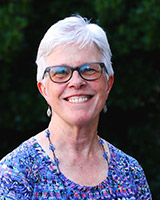
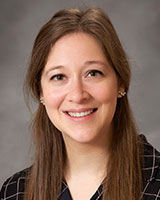
An interview with Casey Balio, PhD, research assistant professor at the East Tennessee State University Center for Rural Health and Research, and Betty Bekemeier, PhD, MPH, RN, FAAN, director of the Northwest Center for Public Health Practice. In this episode, we learn about new insights about the rural public health workforce from their recent research study published in the Journal of Public Health Management & Practice.
Listen and subscribe on a variety of platforms at PodBean.
Organizations and resources mentioned in this episode:
- Small but Essential: Understanding Rural Public Health Workforce Challenges and Strengths From the 2024 Public Health Workforce Interests and Needs Survey, Journal of Public Health Management & Practice, 32(1S), S60-S67, 2026.
- Public Health Workforce Interests and Needs Survey (PH WINS): 2024 Findings
- Making PH WINS for All: Two Regional Public Health Training Centers Team Up to Reach Small Health Departments for Crucial Workforce Insights, 2021
- Journal of Public Health Management & Practice, 32(1S), January/February 2026 supplement focused on 2024 PH WINS
- PH WINS 2024 Findings and Tools for Action, de Beaumont Foundation
- Public Health Workforce, Association of State and Territorial Health Officials (ASTHO)
- Public Health Training Center Network
- Public Health Infrastructure Grant (PHIG), Centers for Disease Control & Prevention
- Rural Health Transformation Program, Centers for Medicare & Medicaid Services
- Consortium for WOrkforce Research in Public Health (CWORPH)
Transcript
Andrew Nelson: Welcome to Exploring Rural Health, a podcast from the Rural Health Information Hub. My name is Andrew Nelson. In this podcast, we'll be talking with a variety of experts about providing rural healthcare, problems they've encountered, and ways in which those problems can be solved.
Today, I'm joined by two of the authors of a new study that draws important new insights about the rural public health workforce from the 2024 Public Health Workforce Interests and Needs Survey conducted by the de Beaumont Foundation and the Association of State and Territorial Health Officials. I'll be talking to Dr. Casey Balio who is a research assistant professor at the East Tennessee State University Center for Rural Health and Research, which is a part of the College of Public Health along with Dr. Betty Bekemeier, who is the director of the Northwest Center for Public Health Practice.
Dr. Balio, your article looks at the characteristics of the rural public health workforce. Can you tell me more about the study, the information gaps you wanted to fill, and why it was important to undertake that work?
Casey Balio: Sure, I can get us started. This study used PH WINS data, which is the Public Health Workforce Interest and Needs survey. It's conducted by the de Beaumont Foundation and ASTHO. It's been going on for a little over a decade now, about every three years, but this most recent fielding took place in 2024 and was the first time that small and rural health departments across the country were eligible to participate. So, this is really the first nationwide data we have on the rural public health workforce. In a previous iteration in 2021, Betty was part of an effort to pilot a smaller version of this, which was called PH WINS For All, and focused on two regions and piloting in smaller and rural health departments. But this is the first time that it was national in scope. So this article was really meant to be sort of a baseline of what we know about the rural public health workforce across the country and really opened up an opportunity to look at the general workforce, the local rural workforce, compared to other settings, and some new questions that we haven't had in previous iterations of PH WINS as well. So really, this was pretty descriptive in trying to lay the groundwork for future research in this space.
Betty Bekemeier: We'd never had data like this, until it was collected in 2024. So we've really not known broadly what the public health workforce looks like in rural areas. This was definitely the biggest, the most health departments surveyed, et cetera. It's the first time that it's had data from such a large sample, and inclusive of small and rural health departments.
Andrew Nelson: What were some of the most interesting findings from the study?
Casey Balio: I would say that it highlights some of the strengths of the rural workforce, as well as some of the challenges. We often think of rural as having a lot of challenges, and don't really consider what the strengths are as well. So, I think this study really shed some light on those as well. But like we said earlier, I think having this baseline is really valuable for understanding what the workforce looks like across the country and also recognizing that rural local health departments [LHDs] also don't look the same across the country depending on what their context is and where they're located. And then I think the other thing that jumps out at me is the amount of part-time workers that are in local rural settings too, and what that might mean for recruiting and retaining and benefits for people in those roles.
Betty Bekemeier: I mean, we already kind of know this on some level, but it just kind of solidified this further, that there are a lot more clinical services provided in rural areas. I think we have traditionally painted public health systems with a rather broad brush because there generally haven't been a lot of data that looks specifically at rural health departments, particularly the workforce. So, when you do that, you think they're more similar than they are. But what I think we saw from this study that Casey led, [was] that rural health departments do have some similarities that are quite a bit different from urban health departments. So, we need to pay attention to that and understand that they do [have] the broad array of services that urban health departments do, but they also have more clinical services, because often they're the only game in town and they're really filling an important niche in their communities.
Andrew Nelson: Dr. Bekemeier, the study highlights strengths like lower turnover intentions and deeper tenure in rural public health departments. To what extent do you think these things reflect job satisfaction and organizational support, versus maybe having a lack of other employment opportunities in rural labor markets?
Betty Bekemeier: In other research, which supports what we found here, what Casey found, is that in rural public health, some of their unique strengths over and above those in rural areas, is around collaboration and communities and community cross-sector work in communities. And that's partly because people know each other, or are more likely to know each other. And I do think that supports greater satisfaction in a rural health department.
Casey Balio: Yeah, I agree. I think there are some considerations here on what the local labor market does look like. And in many cases, there are more limited job opportunities, especially for people with certain public health training. And in many communities, not just in rural, when people are place-dependent and there aren't other opportunities, I think that could be part of it. But like Betty had mentioned, I think there are a lot of strengths, and people do feel connected and engaged with the work that they're doing and with their local communities. And there's a lot of strength in having that connection from a broader array of work not done by me, but done by many others. Having that local community context is really, really important for public health work in general. And from other work that we and others have done as well, we do know that there can be some competition between public health and healthcare organizations in rural settings, especially. And they both have different pulls for people. Oftentimes public health can offer a better sort of work-life balance and better scheduling than working at a hospital, for instance. But public health has a really hard time competing in terms of salaries when you are looking at alternatives in healthcare settings. So, I think that's one of the constant challenges in rural local health departments in particular, and especially for people who are clinically trained.
Betty Bekemeier: This represents quite a bit of nurses too. There's more nurses than public health nurses, other types of nurses that work in rural public health. And Casey found that here there's more part-time people because these agencies aren't going to have as many staff, but if they're nurses, they might also be working in the hospital, which supports their ability to work across sectors and work with other organizations within their community's health center.
Andrew Nelson: Dr. Balio, you found that rural staff may have less formal public health training, but more clinical experience. In practice, how does this shape the way rural health departments approach population health, versus direct patient care?
Casey Balio: As Betty had mentioned earlier, in a lot of cases rural local health departments are providing more clinical services and direct services than in other settings. And frequently it seems like the field has moved towards this idea that public health shouldn't be providing clinical services, but in rural areas, those are really important. Often local health departments are the only providers of some of those services, or the most accessible providers. So, I think that shapes a lot of why we see a lot more clinical experience for folks working in rural settings. In terms of the less public health training, there are certainly roles where having public health training is really important and valuable, but not every job or every role necessarily is specific public health training the right training for that work or necessary for that.
Betty and others have done a lot of work with public health nurses in particular, and there are elements of public health training that are really embedded within some of that training as well. So, while they might not show up as having a formal public health degree, they may have some of that training from other backgrounds as well. Not to say that we shouldn't offer more public health training for people in rural settings, and there's a lot of value to that and specific skills, but there are also other ways to get some of that training too. And we know that people working in rural settings often benefit from some of the other trainings that are available through CDC and public health training centers and others that aren't reflected within the formal public health training data that we have available.
Andrew Nelson: Conversely, with a large portion of the rural workforce having 21+ years of experience, and more than 15% planning to retire in the next year, what are some proactive strategies that rural LHDs could implement now to prepare for retirements? And how might those strategies differ in rural from the same situations in urban areas?
Casey Balio: There's been an effort to understand what sort of career ladders and succession planning can look like in public health in general, and people recognize that those are really important, but also are really challenging within governmental structures and within governmental agencies, and may not always be possible in the same way that they are possible in other types of sectors. So, I think that is an ongoing challenge across the board, not just in rural settings for public health. But I think that does mean that we have to be really intentional about making sure that we are meeting the professional goals of the workforce to the extent that we can. In rural settings, in particular, your organizations tend to be flatter and have less opportunities for growth and for promotions across a career, which is not necessarily a bad thing, but does mean that we may have people turn over and go to other locations where they can sort of have title changes and raises and other things. But in rural areas specifically, we know people often come back to them later. So, making sure that we are considering that as well, and when we have opportunities for growth, that we are intentional about offering those to folks and making sure that we're meeting their professional needs and goals.
Betty Bekemeier: And there's efforts going on outside of rural local health departments, in universities and colleges, even community colleges in rural areas. "How do we grow and develop people from within our communities who will stay and work in our rural local health departments?" And also looking at, "What are the kinds of strategies for helping people stay in place in their rural local health department settings?" If remote work is such a thing among a lot of agencies, but not possible in a rural community where you're really doing more direct services, et cetera, are there ways to provide some flexibility for people in terms of how much they're in the office itself? And so, there's a lot going on in terms of looking at approaches, providing tools and new strategies, also doing the research about what's going to work and with some particular focus, on how this might need to differ for rural areas.
Andrew Nelson: We often see that rural LHDs function as a healthcare safety net in their communities. How would you say that dual role of being both a public health authority and a direct clinical provider can have an impact on staff burnout and job satisfaction differently than in urban settings?
Betty Bekemeier: There's some complexities about that that might make it difficult, but there are ways in which I think it's a positive. Casey mentioned earlier that there's been this push nationally for quite some time now that health departments really should be focused on a population level, and doing less in terms of clinical services. But I think what we're seeing is, when you don't paint everything with as big and broad a brush, you see that rural areas are different, their needs are different, those communities' needs are different. And health departments are likely really important for providing some clinical services. So, for some that can be complicated; "Am I truly a public health person if I'm also providing clinical services, or is our agency doing the right thing if nationally we're 'not supposed to be' doing clinical services?"
I'm overly simplifying things, but that can be complicated in terms of what is in fact one's role as a public health agency. On the other hand, it can also be very satisfying if there's a lot of this connection that is developed in communities that one is serving when one is providing some level of direct services. Casey's paper showed that there's a lot more maternal child health services going on, for example. And that is generally seen as a real positive for health departments in a community where young families are seeing their health department as providing services in a very healthy, preventative way, et cetera. So, that's a nice connection that people have, I think, as staff and health department, and it can be really additionally satisfying.
Andrew Nelson: It's a lot of pressure, but I know that it can be very fulfilling as well. Dr. Balio, your study found less than 13% of the rural workforce holds a public health degree. Is this cause for concern, and if so, do you see ways in which this can be addressed both now and in the future?
Casey Balio: We definitely see a difference between the rural and non-rural workforce here. Where the rural workforce has a much lower rates of having formal public health training. But I don't necessarily think that is a cause for major concern, although there are opportunities to increase that training. There are other trainings that people often have in rural areas that are supporting the roles that they do, including a lot of clinical care like we've been discussing in a lot of clinical training. Even within non-rural settings in local health departments and state health departments, we know that not everybody needs to have a formal public health degree, and there's not an agreed-upon sort of right portion of people that have it, or right type of role that requires it. And there are certain roles that it is probably more valuable and more important and impactful to the work of individuals than in other places.
In terms of meeting training needs, though, I think there are training needs in both rural and urban areas that are big gaps. And we continue to see over time across all of the iterations of PH WINS that there are big gaps, especially around financial competencies and capacities and around policy and advocacy and communication type work. And we have not looked at those specifically within the rural workforce, but those continue to be big training needs that people are seeing within the workforce in general. So, in terms of addressing those, I think there are lots of other opportunities for training. But then we also know that there are incentives that can support formal public health training as well. If you have loan reimbursement, for example, or if you have your employer covering a certain portion of education costs, those kinds of things can be really impactful for people being able to seek out those opportunities.
Andrew Nelson: Your study identified numerous implications for the field of rural public health. How do you think that research might help to impact policy and practice?
Betty Bekemeier: Well, I can jump in here. In terms of findings around some of the educational differences between those in rural versus urban public health settings, I agree with Casey that again, we can't paint things with too broad a brush, that everybody needs to have formal public health training across agencies and in these rural settings. And frankly, they're just not going to. There's not enough access. And we want rural people to be willing to stay and work in their rural areas, ideally. That said, for example, the regional public health training centers… there's 10 of them across the country. They serve their individual states and their regions and need to be looking at data like this. And they do, to identify pockets of high areas where training can be provided. That's not necessarily a formal degree. That might be on demand, and they can access it without having to leave their agencies and get some of the training that is going to benefit them in a way that maybe a formal degree might not be necessary or is much harder to come by. That's on us in terms of policy and practice to make sure these things are available and accessible.
Casey Balio: I would also just say again, this is really sort of a foundation baseline understanding of the rural workforce in general. And I think this opens the door for a lot of future work to understand some of the nuances here and some of the things that do differ even within rural local health departments across the country. And really understand what might be driving some of these differences, because this was really descriptive. We aren't able to get at causal drivers of any of these or what the impacts of some of these might be or identify which strategies or approaches may be helpful for addressing some of the challenges that local health departments face. So, I think there's a lot more that can be done from this, and it'll be interesting to also track this over time, especially as PHIG [Public Health Infrastructure Grant] funding ends and other changes in the workforce and in the labor market may be affecting the local health department workforce.
And then I think the other thing that we haven't talked about necessarily so far, but I think this may be interesting to consider, and something that we are continuing to work on as well, is local health department workers in rural communities are often wearing multiple hats and doing multiple jobs. And Betty alluded to this, especially with clinicians in public health nurses, but many public health workers in these settings are doing many, many jobs and they're jumping back and forth between those, within the local health department. And there may be strengths to that and some value and the creativity and some fulfillment and excitement around that. And then there are also challenges of, you are switching jobs a lot, and you are responsible for a lot of things, and there's only so many hours in the day. So, I think all of this is really just a foundation for future work, future research, and future additional recognition from states and from others on what rural health departments are facing and how that can look differently than in other settings.
Andrew Nelson: To expand on that a little bit, what would you say are going to be the most useful findings from this study for rural public health department that only has a staff of a few people, or maybe doesn't have very many full-time people and a limited budget?
Casey Balio: That's a good question. I think some of it could be used by those agencies in communicating with their boards of health, communicating with their state and with others, especially in sort of budget requests and justifications and other things on that, just to better be able to communicate what they are encountering and what their role is and how that looks different. And we need to think about that differently. And then I think there are probably lots of other questions that can come after. Betty, I don't know if you have other thoughts?
Betty Bekemeier: One other thought I would add is, this issue that came up in this research that there are more people that are sort of "at the end of their career as well as at the beginning of their career," right? And I think this could be used a lot for advocacy, but it can also be used a lot for agencies themselves to start to be thinking about that. "Is my agency one that is in a similar situation? Does that mean I need to think harder or work harder around succession planning, around identifying training opportunities for new staff?" So, they're going to be up to speed quickly enough to fill leadership shoes, perhaps earlier than they might've planned. So, it gives some prompting or helps people think about workforce development planning and leadership development, et cetera, things like that.
Andrew Nelson: What questions would you like to be able to answer with future PH WINS, especially as the effects of recent infrastructure investments unfold?
Casey Balio: I think there are so many questions that we would still like to answer with PH WINS and with other data sets as well. I think their previous work, from us and others, has shown that public health resources don't always align really well with local-level need. And I think there are opportunities to think about how we are funding local health departments and where resources are coming from within states and across the country to try to better align those and understand where those may be not aligned, just given how the state structures work. Within the sort of recent infrastructure investments, the Public Health Infrastructure Grant has been a huge influx of funding to public health, which is great and needed but is coming to an end. And it's not clear what that's going to mean for local health departments and state health departments either.
When that funding goes away, what happens and what happens to all the people that have been working in those areas and the other investments in technology and other things, are those able to be sustained after that? There have been calls for long-term stable infrastructure funding for a really long time and this is helpful, but still not sustained over an extended period of time. And then I think the Rural Health Transformation Program funding is also another potential opportunity and something to really consider how that is impacting rural local health departments as well. We know that public health can be really complementary to healthcare in rural settings. But we are often hearing these conversations around the Rural Health Transformation Program funding being really focused on healthcare delivery organizations. But public health can be a really important partner in a lot of those spaces. So, I think there are questions about what that looks like and if there are ways that public health can really be a partner and help to improve health and healthcare access within rural communities across the country.
Betty Bekemeier: That was beautifully said, Casey. I would just add on top of that is, looking at more deeply trying to understand, what are some of the interventions that are going to work best around recruitment and retention in rural areas? I do think it's different for rural areas. And so, what's going to work specifically in those settings? And then Casey has done some work in looking at the distribution of what's [the] appropriate, best distribution of public health staffing and different kinds of staff relative to urban and rural settings, and other parts of the country where there's a higher need. So better understanding that, and then advocating for, "How do we assure that we've got public health staffing, workforce prevention, where it really needs to be?" And then finally, better understanding the nature of that clinical versus population health strategy or approaches, et cetera. I think we need to better understand the circumstances under which that's really critical in public health and assure that that exists and is supported.
Andrew Nelson: Looking ahead, what gives you the greatest concern and the most hope for the future of the rural public health workforce in the United States?
Betty Bekemeier: I can say something about that, and this isn't necessarily in this paper, I don't think specifically, but I do see it elsewhere, that we talk a lot about the so-called loss of the public's trust in public health. And that gets talked about a lot these days. And so that's a great concern. That would be maybe my greatest concern. But my greatest hope is that where that trust seems to remain the strongest is in rural, among rural health local health jurisdictions. Not all of them, not everywhere, but that's where it seems to be strong. And I think because of some of the things we've described, that there are these connections, these are real people that you know from school and the PTA and my faith communities, et cetera. So that to me is the kernel with which to sort of rebuild that public trust.
Casey Balio: I fully agree with that. My greatest concern is the potential turnover of folks that have a lot of institutional knowledge, a lot of trust from their communities, and we are seeing a lot of those people getting close to retirement or have intentions to leave for other reasons. And I think we need to be really careful about that and really make sure that we are recruiting and training and continuing to support the incoming workforce. There are some efforts, and within PH WINS, there was a new module this time that focused on the under-35 age group for within public health. And I think really paying attention to what that sort of newer generation of the workforce wants is really important in figuring out how we can make sure that they have the training that they need and that they are also interested in staying in their local communities. And as Betty mentioned earlier, there is a lot of value in having people stay in the communities that they are already connected to and grew up in. And I think we need to figure out how we can continue to support those people and also make it a great place for people to work and to stay and make sure that they feel like they can do so.
Andrew Nelson: As we're wrapping up here, is there anything you want to promote?
Betty Bekemeier: Casey and I are grateful to be members of what we lovingly refer to as CWORPH, the Consortium for Workforce Research in Public Health. And that is led by J. P. Leider at the University of Minnesota, but we are part of a five-state consortium that includes Casey and her colleague Mike Meit at East Tennessee State University, and myself at the University of Washington, and other colleagues.
Casey Balio: This study was done by Betty and I and two others from East Tennessee State University, Michael Meit and Stephanie Mathis, and was built off of ongoing collaborations that we've had through CWORPH partners. This was also published in a supplemental issue of the Journal of Public Health Management and Practice, or JPHMP, and they have a full supplemental issue with a whole collection of papers that used this new PH WINS data. So, if people are interested in other topics, I would highly recommend folks go look at that supplement too, to learn about all the other things that were done with this data.
Andrew Nelson: You've been listening to Exploring Rural Health, a podcast from RHIhub. In this episode, we spoke with Dr. Casey Balio, a research assistant professor from the East Tennessee State University Center for Rural Health and Research, and Dr. Betty Bekemeier, director of the Northwest Center for Public Health Practice. Look in our show notes for more information about their work and visit ruralhealthinfo.org for all things pertaining to rural health.