

Virtual Roads to Real Recovery, with Amanda Kennedy
Date: July 7, 2026
Duration: 23 minutes
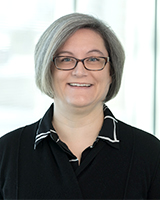 An interview with Amanda Kennedy,
manager of the Mercy Virtual Substance Use Recovery
Program. In this episode, we learn about the strategies
Mercy vSURP employs to build trust with their communities
and provide patients a seamless bridge into substance use
treatment. Part 2 in a 3-part series featuring the 2026
Rural Communities Opioid Response Program (RCORP)
Innovation Tank finalists, with Mercy vSURP's work
winning third place. Listen to Part 1
featuring Lincoln County Ambulance District and
Part
3 featuring the Choctaw Nation of Oklahoma.
An interview with Amanda Kennedy,
manager of the Mercy Virtual Substance Use Recovery
Program. In this episode, we learn about the strategies
Mercy vSURP employs to build trust with their communities
and provide patients a seamless bridge into substance use
treatment. Part 2 in a 3-part series featuring the 2026
Rural Communities Opioid Response Program (RCORP)
Innovation Tank finalists, with Mercy vSURP's work
winning third place. Listen to Part 1
featuring Lincoln County Ambulance District and
Part
3 featuring the Choctaw Nation of Oklahoma.
Listen and subscribe on a variety of platforms at PodBean.
Organizations and resources mentioned in this episode:
Transcript
Andrew Nelson: Welcome to Exploring Rural Health, a podcast from the Rural Health Information Hub. My name is Andrew Nelson. In this podcast, we'll be talking with a variety of experts about providing rural healthcare, problems they've encountered, and ways in which those problems can be solved. Today I'm talking with Amanda Kennedy, manager of the Mercy Virtual Substance Use Recovery Program, or vSURP. The program is operated out of the Mercy Virtual Care Center and serves patients in the five states that Mercy encompasses. Amanda, can you tell us about vSURP, and how it differs from traditional approaches to treating substance use?
Amanda Kennedy: So, Mercy vSURP was set up about five years ago in some of the Mercy Hospital systems. We're different than your traditional recovery programs, where we are embedded inside a hospital system. Historically, hospital systems treat substance use primarily as a medical crisis to stabilize, and then what happens from there is, a patient is typically handed a list of resources of those specialty recovery places at discharge and told, "Good luck. Go ahead and call, yourself." So, what we did is we challenged that, and we said that this is actually a long-term chronic disease. So instead of a medical crisis, we need to treat it for the full disease in a hospital system, not refer them out to specialty practices. So, we've embedded an outpatient program inside the hospital system.
Andrew Nelson: What ongoing needs did you see in your community that made you realize this model could be helpful?
Amanda Kennedy: You know, we identified these barriers inside the communities of getting the treatment. So that gap between stabilization and emergency department or going to your primary care and asking for help. So, a lot of things these patients are missing…
One big key thing is transportation, especially when you're talking about rural communities. In order to get to a clinic, you have to have a working car. It might be 45 minutes to an hour away. So, transportation was a big thing. We're all-virtual, so you don't have to go anywhere. We come to your smartphone.
The second is that immediate need. So, here's the biggest example we give. If you walked into your primary care office and you were recently diagnosed with cancer, that's scary, it's deadly. You want that immediate care. So similarly, a patient that's walking in and asking for help with their substance use disorder, particularly opiates, that's deadly. Tomorrow, they can go out and use and die. They need care today, as opposed to getting screened and waiting for weeks for an appointment with a physician. So, we have made a guarantee that patients are seen within 24 to 72 hours, not just with an intake worker, but with the physician, to start treatment immediately.
And then I think the final piece that we always talk about is those traditional recovery pathways. When you call for help, you're immediately asked, "What kind of insurance do you have?" And you shouldn't have to answer that right away, right? Your healthcare should not be dictated with how you can pay. So, we don't ask that question because at Mercy we take any payer source, even self-pay, and we work with the patient after they're stabilized to figure out how they're going to pay for their bills.
Andrew Nelson: Given that you're providing care virtually, have you found that broadband accessibility has been an obstacle to providing care to patients?
Amanda Kennedy: In those rural communities, at times, yes. So, when we first stood up a few years ago, we were in the city areas, right? Where there was no issue. So, as we are expanding and growing into rural, sometimes we do. So, there's two different ways, right? So, we do have to see a patient on video, at least for their first visit, to establish that care. It can be choppy. Our doctors get it. While we do say transportation is a barrier, we are working on getting telehealth carts inside of Mercy primary care clinics, so that the patient can actually go to their primary care office and use their broadband. I've had patients that have gone out to their neighbor's houses and sat on their porch and used their Wi-Fi or go to a local McDonald's and sit in their car and use the Wi-Fi. So, there's a will, there's a way, but it's kind of finding that way around it.
Part of this particular grant we have is we are getting hardware, making sure there's hardware embedded in some of our primary care clinics for our patients to use. Mercy is already pretty forward with most of that since COVID. We have many virtual service lines in the hospital, but since we're an outpatient program, we're looking more at those clinics to where a patient can just go in and use one of their rooms. When a patient calls and they say, "I don't have a phone," my team trained to say, "Well, what about your parents? Do they have a phone you can borrow? Or do you have a laptop?" Some patients have kids that have tablets, right? "Can you do that?" So, we also partner with Lincoln County EMS [featured in the June 2026 episode], who is doing a lot of forward work. And we had them go to their local EMS dispatch, and they let them use one of their cell phones. Whatever we can do to make it work, we do.
Andrew Nelson: Do you want to talk a little bit about that 72-hour post-discharge window and how that ongoing support for patients compares to traditional models where you're referring folks to community providers?
Amanda Kennedy: Now, specifically in these five rural hospitals where we're piloting at through this grant that we have, patients that go to the emergency room, all of the physicians and providers have now been trained through my team on how to do an induction of the medication in the ER. If the patient isn't quite ready for that process yet, they're trained how to educate the patient, how to even do it on their own at home. So, we talk about that 72-hour gap.
Worst case scenario, let's say a patient is seen on Friday in the ER, and my team gets in the office on Monday to call them, what they would be doing is leaving the ER with medication in hand; free medication, at that, with this grant. So, they're leaving with three days of buprenorphine or Suboxone, along with an entire packet, a written-out packet of step-by-step instructions of, "This is how you can tell if you're in withdrawal to start the medicine, this is how your first dose should look. This is how your next dose should look. These are some frequently prescribed medicines that you might've also been sent home with, and how to take them. This is the vSURP number who will be calling you on Monday." So, the patient is literally leaving the ER with their treatment with them for us to connect the following day. There are zero gaps.
Andrew Nelson: Yeah, it's really cool to hear that you can provide them with that kind of structure after they physically leave the facility. In rural communities, especially, stigma can remain a massive barrier to seeking help. Have you seen that the virtual nature of the follow-up care you're providing helps to protect patient privacy, and has that been a factor in patient engagement?
Amanda Kennedy: Absolutely. I think you hit it on the nail, right? In rural communities, everybody knows everybody. They know what car you drive, right? So, if you're going up to the local methadone clinic, they're going to know your car's there, right? So, they're going to know you're getting treatment. Whereas with us, you can do it in the comfort of your own home. You can do it in your office. We've treated patients on work sites, in their car, wherever they can, to have that anonymity. Also, they're not even having to call, they're going to Mercy. So Mercy, in most communities, is known as a healthcare system. So again, you're protected by HIPAA. People are not going to know if you're going into your primary care's office to ask for help about diabetes versus substance use. Where other places, when you're walking into those recovery centers, you're announcing that that's what you're asking for help with. We recently had a patient who even asked us to send a prescription to a pharmacy about 45 minutes from his house because he was so stigmatized and afraid and ashamed of what people would think in that area that knew him, that had treated him for years medically, if he was filling this kind of medicine. So, we are very much able to provide that support and trust.
Andrew Nelson: I'm sure that's very helpful for a lot of people, to be able to maintain that distance from some forms of support that they might feel are more embarrassing or more stigmatized. On the other hand, having a personal face-to-face relationship with providers can often be something that's very important to people. How do you go about ensuring that the virtual aspect doesn't create a disconnect between provider and patient?
Amanda Kennedy: When you ask that, I think of two different things. So first, the way our program is designed is to have a very small care team so you're not bouncing from provider to provider. So, we not only are treating the patient with medicine, we're treating their social needs as well with a collaborative care model. Each patient has one physician and one social worker. So that's it. So, over a spectrum of time, they are really developing that relationship. And let me tell you, we actually recently had a physician that's moving, and we have patients that are now breaking down in tears, right? Due to the rapport that they've built, knowing that they have to transition care to somebody else. Because that's just the connection that we make with them. It's funny, sometimes you'll answer the phone for somebody and they'll say, "No, I only want to talk to my social worker," because of that connection. So, it's truly that one-on-one care that we're not giving them an entire team, we're giving them that one person.
I think the other thing is trust in the Mercy system. So, myself and our medical director, Dr. Smith, have really been intentional about going out to these communities and taking road trips to go out and shake hands with all the Mercy providers and physicians so they know who we are. So, if you go to your primary care, and Dr. Jones says, "You know what? I actually know Dr. Smith. He came here and talked to me. You can trust him with your care." I think that goes a long way, right? If you've been with Dr. Jones your whole life, they've delivered your babies and you trust them. And so, knowing that they trust us and we're in the same healthcare system, I think really goes a long way as well.
Andrew Nelson: You said when you're discharging patients from the ED, you're providing them with a medication discharge pack that gets them through the next 72 hours, right? And then the next step is, they're going to be talking to a licensed clinical social worker?
Amanda Kennedy: I can run you through how that looks. We have patient navigators. Typically, when a patient is discharged with a referral, they're given a phone number and said, "Call this place and schedule an appointment." So, our patients don't call us, we call them. So, the patients are referred to us, and we are taking that initiative and calling them and saying, "Hey, it looks like you were really struggling and you were in the ER last night. We're here to help you." So, I have two navigators that do those phone calls every day. And not only do they do it once, if the patient doesn't answer, we call at least three times to engage with them.
And so, talking about that rapid access, myself and Dr. Smith originally came from the emergency department. So, we faced this model on that need for emergent care. So, the navigators only take about 10, 15 minutes to go through a consent piece, making sure that they have a video phone that works, asking a few follow-up questions, and then that's when they're scheduled with a physician. That navigator is really trained to be empathetic and to explain to the patient next steps and what to expect. The navigator also answers the phones for all of our other things. So, we were talking about that connection to the physician and the social worker, patients oftentimes will call and just ask for that navigator, because they were the first voice of the program. They have that skillset getting that patient buy-in for their recovery.
So then truly, a lot of times it's same day or next day, that appointment for the physician is scheduled. The physician sees the patient, and after the physician sees the patient, they of course schedule them for the week follow-up. And the day that the physician sees the patient, the social worker is then calling and saying, "Hey, it looks like you established with our physician. They've prescribed you some medicine. Let's review that medicine one more time," so that the patient feels very comfortable with the medicine. And then the social worker follows pretty closely with phone calls that first week or so while that patient is stabilizing on the medicine. And then scheduling a full psychiatric assessment afterwards. So that's another key portion, is our licensed social workers are doing that behavioral health assessment. And then we also collaborate with a psychiatrist for any psychiatric support or needs. Taking away that wait list, again, for psychiatry. The psychiatrist is able to give recommendations to our addiction docs for any psychiatric needs that need help. So truly, within the first two weeks that patient is being brought in, full circle for addiction care, psychosocial needs, and that extra recovery support.
Andrew Nelson: Substance use can certainly lead to a lot of feelings of isolation and so forth. So, it sounds like you have a really good framework there to help take care of them and get them on that path to recovery, not just addressing an immediate issue, but providing ongoing support.
Amanda Kennedy: And we have an open-ended commitment. So, a lot of places will do a 30-day treatment or even intensive outpatient, they'll do 60 days. I have patients today that I've been seeing for five years. They stabilize, a lot of patients stabilize, just like [with] a lot of chronic diseases. Addiction does cycle. So, I'll have stable patients for years, and then all of a sudden they'll call us, and say, "Oh, I had a blip, right? I had a mess-up." And we'll just start back from the beginning and get them back on track again. So, there's no end of when they need to be discharged.
Andrew Nelson: Have any challenges arisen in sharing patient data between the ED, the virtual platform, and whatever provider or community resources? And were there standards that you had to develop in order to facilitate that?
Amanda Kennedy: We are all one Mercy, right? So that is the beauty, is that we all have one embedded electronic medical record that we all put stuff in. Now, when we created the program, we had to work to make our own internal workflows. Before we existed, there was no referral for us. So, I would say that's maybe our biggest barrier is, we have a referral now, but now it's educating 40-plus hospital systems that this program exists and there's a referral to place and how to do it. So, I think that that's the biggest workflow that we've had to work through, of how to get that referral going. But other than that, no, everybody can see things back and forth, and that's truly the beauty of it.
So, a lot of times my physicians that are seeing the patient, even after the first visit, they might send a secure message to the referring physician and say, "Hey, thanks for that referral. I know you saw him in bad crisis in the ER, but I just talked to them two weeks later. And guess what? They're going out there and getting a job." Because that positive feedback to that ER physician who's just kind of, boom, boom, boom, trying to treat people's traumas and get them moved on, that's going to remind them the next time they see a patient, "Hey, that program really does work, let me refer."
Andrew Nelson: Is Mercy ubiquitous in your area, or have there been any situations where you're after providing initial care, you were coordinating with a different health system to continue that care for a patient?
Amanda Kennedy: Oh, yeah, absolutely. So, one of our favorite lines is, "We're not here to keep patients." Recovery is best for wherever they can go, wherever a patient can go. So sometimes we'll see patients in the interim where if they do have a bed set up at a 30-day treatment program, but that's not for another two weeks, but they were seen in the ER, great. "Come to the ER, start at vSURP, start with us for two weeks. Go to your recovery place. Good luck. We'll get you some medicine if you do. If you like it there, if they discharge you with other outpatient services, we're happy that you came to us, that we were a step in the road, otherwise you can come back to us." So we very much work with those community agencies and partner.
Andrew Nelson: It can definitely be a challenge in rural areas to provide that kind of patchwork or that coherent care when people can be spread out so much. How would you go about defining success for a rural population where recovery might look different in terms of maintaining employment, family reunification and so forth? Are there nonclinical social determinants of health that you're looking at in terms of outcomes?
Amanda Kennedy: That's a great question. You know, leadership or people that are giving you funding, they always want numbers, right? And sometimes it's really hard to put a number on success of this, right? The best example I can give is, what's that number on a child that's not in foster care anymore, or that child that wasn't taken into foster care because mom established with us while she was pregnant, and had a healthy delivery? So those numbers are really hard to quantify. A lot of it is just those individual stories. We do keep track manually of some of those things. So those social determinants of health, of who gained employment, who established with a medical home, right? So, I will tell you, we've served a little over a thousand patients in our whole area over five years, and we have established like 150 of those patients with a medical home. So those are patients that had no medical home, didn't have any medical care, and now they're embedded in our system for all of their medical needs. Same thing with employment, right? We're in the hundreds now of patients that were unemployed and they're now employed. And so, think about those small things. They're able to pay the rent so they're not being evicted. And so those trickle effects in those rural communities really do make a difference.
Andrew Nelson: If there was another healthcare system that wanted to try to replicate this model, what do you think might be the biggest hurdle, or some of the biggest hurdles, that they would face?
Amanda Kennedy: I think the biggest hurdle that we have found, because it affected us as well, is truly that internal stigma and buy-in, right? So, this is a new wave of medicine. Suboxone has been around for years, but there used to be some restrictions on it, with an X waiver where you had to be specifically licensed to prescribe it. So, it was very much a, "I don't want to do this in my practice. We shouldn't do it in this healthcare system." Since COVID has gone away and some laws have changed, we truly are that change in a large healthcare system of educating the physicians and the providers that this is a safe medication, that this is best practice for patients with this. So that first hurdle of stigma, but how we've gotten over that is finding those champions in those local community hospitals. I will tell you firsthand, we have rolled out to some Mercy [location]s where we maybe don't have a local champion, and it hasn't really gotten off the ground compared to the ones where we have a local champion that's willing to let us come and do rounds with us and introduce us to the physicians and say, "This is a great program, listen to their stories." That is what has truly made the difference of success and not, internally in our system as well.
Andrew Nelson: So, it has a lot to do with forming connections with communities, right? And finding individuals that can help support and advocate for your program in certain areas? Because we often see that people trust people that they know. It seems like that's an important part in terms of getting buy-in.
Amanda Kennedy: Yeah. Two things you said there. Absolutely. They only trust who they know, right? Especially when we talk about, "We're big city medicine," right? We're doing telehealth, and sometimes we're in a different state than them. Why would they trust me? Right? So, it is making that connection. You ask anybody in recovery, there's a statement, a quote that says, "The opposite of addiction is connection." And when you said that, I thought, you're right. We're not only connecting with the patients, right? We are deliberately making sure that those patients have that one-on-one connection with our team, but we have to do that same thing internally in our systems across five different states, making that personal connection so that they can trust us to care for their patients as well.
Andrew Nelson: How important was the funding that you received from FORHP [the Federal Office of Rural Health Policy] in making this program a reality? Would you have been able to do it at all, or would you have had to operate on a much- smaller scale?
Amanda Kennedy: We've been around for five years, but [vSURP was] not fully integrated into all of Mercy. So, what we have deliberately done over those five years is we've had to have funding through different organizations, either internally or externally, to allow us to continue to go across the Mercy footprint. So, this funding made it 100%. That was the only way we were going to get to Southwest Missouri, was with this funding source. Word of mouth, we had 10 referrals in Southwest Missouri for a year. Within a year prior to the grant, we had 10 referrals come in. After the grant, in the first month, we had 10 referrals because we were able to educate. And obviously it's exponentially moved on. So, I think that has allowed us to grow in those communities. Not only that, but we talk about that 72-hour bridge of medicine, that's only through this grant. I am not able to offer that in every Mercy community. So, this is a true pilot of, "Does this work, is this a need?" so that we can take it to Mercy leadership in the future or other grant sources and say, "Listen, it worked here, we want to do it in other places."
Andrew Nelson: Yeah. It seems like medication covering that gap is a really important part of facilitating moving from emergency care to an ongoing kind of support being provided for them. Your grant period ends in August of 2026. What's your roadmap for sustaining the vSURP program, once that RCORP funding expires?
Amanda Kennedy: We have some other funding available to continue at least through the next three fiscal years. And then, we're also actively applying for other grants. HRSA [the Health Resources and Services Administration] has released some other grants. We have not expanded to Oklahoma at all, and we have a pretty big footprint in some of the Oklahoma area that we're going to hopefully actively apply for another grant to do something very similar, if not even on a larger scale, with community partners in Oklahoma. So, every day we're talking about grants and other funding sources. We are not just grant-funded, I should also add, we are embedded with a lot of insurance-based patients, so we do have some revenue that offsets some of the costs. We're not fully revenue-based and fully functioning in the black, per se, but so this is why we actively work with our grants team as well to make sure that we kind of have a mix of both. Mercy senior leaders have said that this program is here to stay, so we will find a way. We can't take this away from our communities now.
Andrew Nelson: You've been listening to Exploring Rural Health, a podcast from RHIhub. In this episode, we spoke with Amanda Kennedy, manager of the Mercy Virtual Substance Use Recovery Program, or vSURP. Look in our show notes for more information about their work and visit ruralhealthinfo.org for all things pertaining to rural health.