

Community-Based Recruiting: Keeping Providers Close, with Joe Theine and Jen Gero
Date: February 24, 2026
Duration: 18 minutes
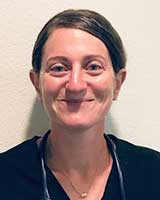
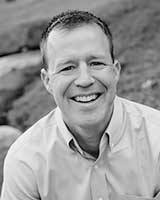
An interview with Joe Theine, CEO of Southwest Health System, based in Cortez, Colorado, and Jen Gero, MD, SHS Chief Medical Officer. In this episode, we learn about community-based recruiting, and how it streamlines the path to robust health systems integrated into rural areas. Part 1 in a 3-part series from the December 2025 Health Innovation Potluck held in Hutchinson, Kansas. Listen to Part 2 on allied health and Part 3 on workplace violence.
Listen and subscribe on a variety of platforms at PodBean.
Organizations and resources mentioned in this episode:
- Hutchinson Regional Medical Center
- Southwest Health System
- Pueblo Community College Nursing Programs
- Southwest Colorado Education Collaborative, which offers the summer camp for high school studies together with Southwest Health System.
- Colorado Association of Family Medicine Residencies (CAMFR)
Transcript
Andrew Nelson: Welcome to Exploring Rural Health, a podcast from the Rural Health Information Hub. My name is Andrew Nelson. In this podcast, we'll be talking with a variety of experts about providing rural healthcare, problems they've encountered, and ways in which those problems can be solved.
In December, I traveled to the Health Innovation Potluck in Hutchinson, KS, hosted by Hutchinson Regional Healthcare System. While there, I was able to record interviews with several rural workforce experts. In this episode, I'll be speaking with two people from Southwest Health System, based in Cortez, Colorado. Joe Theine is their CEO, and Dr. Jen Gero is their Chief Medical Officer. Our conversation focused on community-based recruiting.
First of all, can you tell me a little bit about the area where you're located?
Joe Theine: Yes. So, our hospital's located in Cortez, Colorado. We're in southwest Colorado. A couple quick, easy ways to recognize us — we sit in the shadows of Mesa Verde National Park, if folks know where that is. The other way to think about us is, we're almost in the middle of four interstates. If you were to zoom out on a map, right in the middle of where I-25 and I-15 run north and south, and I-70 and I-40 run east and west, if you dropped a pin almost in the middle of that, you'd probably land on our hospital.
Andrew Nelson: Can you tell me a little bit about how the unique nature of your community shapes the approach you have to recruiting healthcare professionals?
Joe Theine: So, I'll start, and then Dr. Gero, you can add. Given that we're geographically isolated and that we've got some great assets in the community, we're really looking for people that want to live and be a part of where we are. So, we want folks to understand that they're really going to be in a rural place and it's hard to get patients out. And that they are often going to need to take care of either sicker patients, or those that in some settings you might say, "Oh, I just moved them to an -ologist of sorts." In our community, they get to stay, but then also we want them to enjoy living there. So, we're close to the mountains, we're close to skiing, we're close to the desert. And so we want families and people to move to the area and enjoy the recreation and all the great assets that we have in the community.
Jen Gero: Yep. I think it's important to find a candidate who's going to be comfortable in a rural setting, and making sure they've had exposure to that. I can remember when I first came to Southwest as an emergency medicine physician working in the emergency department, we had a trauma and I just came out of residency. So, I was looking around thinking, "Well, where's my trauma team?" I'm like, "Oh, wait, I am the team here." So, kind of giving that story to candidates, making sure that they're wanting to come to a rural place and knowing that you have to be creative, because you're going to be the only physician there sometimes.
Andrew Nelson: Jen, can you tell me a little bit about how community-based recruitment differs from traditional hiring models?
Jen Gero: So, I really love this term because I think there's different definitions of communities within the system. There's the hospital community, there's the provider community, and then there's our actual community. And it really takes all of us working together to recruit a candidate. We all have to have buy-in to recruiting. And our community's involved. They're dedicated. We have made this a commitment with our board and our providers when we get candidates.
Joe Theine: And I'll add a really easy example of what that may look like. So, when we went to members of the community and asked them to be involved in this and create a community recruiting platform, we ask community members to be willing to host people either in their home or to take them on tours of the community. And we created an inventory, almost like a Rolodex of people; roughly what age, do they have family members or children, what activities they enjoy, so that when we invite somebody to the community for an interview or to visit the hospital, we can partner them up with someone that is like-minded, like activities, like family size. So, they really get a sense of being part of the community, not just the job at the hospital.
Jen Gero: And one of my favorite stories — we talked about it yesterday — was the first candidate we had interviewed. When they came, we were able to have dinner at one of our retired physicians' houses. And then we had a caterer in town who was retired, and she was able to cook us dinner. So, they had a home-cooked meal at a house. And it was a special moment coming together with providers. You were there, and retired physicians in the community.
Joe Theine: Great example.
Andrew Nelson: It seems like just getting that social connection in community can make a huge difference in terms of the retention of providers, and kind of help them to become part of the community. And I think that can be kind of a two-way street, because the patients also feel more of a connection with their providers. And so, the perceived quality of care can go up.
Jen Gero: And another thing that we did with onboarding as far as we're involving community members, is that every new physician is assigned a community mentor in addition to a clinic mentor. So they had somebody out in the community that cares about them and that they can go to if they have any concerns. I think it's nice when community members can know their provider outside of the hospital too. It's not just a clinic visit, but that connection outside is I think what really also helps foster deeper connection to the community, and the community's connection with the provider.
Andrew Nelson: Yeah, absolutely. Beyond just making sure that you have staff and you have providers, leadership is important too. Can you talk a little bit about how you recruit people into leadership roles to set yourself up for the future?
Joe Theine: Yes. So similarly, if we're looking for somebody from outside the area, we've treated those individuals just like we would a physician. So, a couple years ago, our chief financial officer position was open, and just like we would with a physician or a provider, we invited their whole family out. We connected them with the community and did many of the same things that we would with a physician. But the other part of being in a geographically isolated rural community, not connected to a lot of other healthcare facilities, is that we're going to be growing and we have been growing leadership from within the organization. And so, behind the scenes, we've been working to develop a new leader orientation, and that actually kicks off at the beginning of 2026. We've got a 12-month program to take individuals who have either maybe led outside of healthcare or have never had a leadership role in their life before, and start to grow that skillset from within the organization. And we hope that and believe that that's not only going to have great leaders in the hospital long into the future, but it's also going to keep people in the community, raise people up in terms of their skills and ability, and have opportunities to contribute back to the community that they're a part of.
Andrew Nelson: Yeah. Can you tell me a little bit about how partnerships with local schools or colleges or training programs can help facilities establish a talent pipeline, especially in a rural area like Cortez?
Joe Theine: Maybe I'll start with some of the local connections, and then Dr. Gero, you can talk about some of the things we're doing with residencies and med students? So, at a local level, we're fortunate enough to have a community college close by that has a two-year nursing degree program. And so, we have really allowed that program to embed itself in the hospital. Nurses do their clinical rotations with us. We have some of our nurses that are on the faculty for that program. And so, we're actively involved in some of the didactic and teaching parts. And so, there's this integration that helps build nursing up. But beyond just the nursing piece, we really have a culture of welcoming learners into the organization. So, it's hard to imagine a couple weeks going by without many students in the hospital, whether they're pharmacists, pharmacy techs, physical therapists, nurses and physicians.
And so that connection into the schools really allows us to have people get a rural experience. What's also great is at a very micro level, we're engaged all the way down to the middle school level at some times. So, we may have students or have our staff that are going out to job fairs or to career fairs that are put on by the school systems and engaging with everyone from middle school to high school. And then we also run a summer camp for high school students. So, we'll have a month-long period where we'll have high school students learning all the ins and outs of healthcare, hopefully to inspire them to choose a healthcare career in the future. Dr. Gero, do you want to talk a little bit about providers?
Jen Gero: Yeah. You know, in that same vein, it is so important to open up those connections to the community and invite them to come into the hospital. And we've done the same with the residents. We are partnered with the Colorado rural family medicine program [Colorado Association of Family Medicine Residencies]. So, now our facility hosts family medicine residents, usually in their second or third year; for a month, they can rotate with one of our physicians. And it's really great because at our hospital, we are able to do full-scope family medicine, including OB deliveries. So, it's really awesome to see these residents come down, get that experience, and then take that back and hopefully keep our hospital in mind or keep rural communities in mind. So that exposure. We've also been working with the University of Colorado medical school program for the longitudinal program. We'll have a med student come down for their longitudinal for their whole year and host that medical student. So that's been really fun to be a part of.
Andrew Nelson: A few minutes ago, we talked about how valuable something as simple as having somebody over for dinner can be when it comes to providing a sense of community for both patients and providers. Are there any other community-based practices that you have in place to help improve your retention?
Joe Theine: One of the things Dr. Gero talked about was the importance of having a community mentor. And so, once somebody, a family or a person moves in and is getting established as a physician at the hospital, there's also somebody in the community that's really connected to that individual and their family to help them broaden those connections when they're out in the community, connect them with activities and other things that they may enjoy, so that they more quickly integrate, and become part of the community as a whole.
Andrew Nelson: Housing, childcare, and cost of living are all things that can complicate healthcare recruitment. Are there any local or regional collaborations you have that you're leveraging to help address these non-clinical barriers?
Joe Theine: We're on the very front edge of some things. Maybe reach out in a year and see where these go. So, we've started a discussion with a couple of childcare centers in our community. What's really interesting is, aside from infants, like zero to six month old, there's some capacity for childcare that exists. And not all communities are fortunate enough to have that. What is often a challenge though, is we're in a relatively low-income part of the state. And so, at times it's a financial barrier for whether it's our employees or others to access childcare. So, they leave the workforce for a period of time when their kids are young. So, we're talking with some childcare centers right now about how we could develop a childcare benefit where our employees could access childcare. We're providing some of that cost and reducing that financial barrier. And then secondarily is, how could those childcare centers expand their hours for healthcare workers that are shift-based? Another barrier might be there's childcare available, but it's only the traditional working hours, and is there an investment that we can make as a hospital that would extend those hours and bring people back into the workforce? So more to come in the next year, but we're on the front edge of really trying to solve for what the need is in our community, which looks a little different than others.
Andrew Nelson: When it comes to the interplay between the internal culture at Southwest Health System and the cultural richness of the Four Corners region, how do those things interact, or play a role in attracting mission-aligned talent?
Jen Gero: In that sense, our mission is world-class care close to home. And we live in a really amazing geographic location where you really can get world-class access to outdoor activities. So, we want to attract a provider that is able to share in those qualities; "Come do high-quality care with us, and also have an amazing work-life balance where you're able to go outside and you can go skiing, snowboarding, epic mountain biking trails, all within the region." So, it's fun attracting providers that have that similar sense of commitment to high-quality care and also passion for outdoor activities.
Joe Theine: I think it goes even deeper than that. The sense of community that we're building within the organization is also so important. And so even bringing like-minded people that want to give more than they get in terms of their professional life at the hospital. And so, we want individuals that are going to come and enjoy the richness of the culture around the hospital and throughout the community. And we want individuals that are going to add something to the richness within the care team that they're a part of, and to work well with their colleagues, for physicians and nurses to work well side by side for family medicine and some of the specialists to work well side by side. And then as Dr. Gero was talking, as we partner with other institutions, to be able to work well regionally or even statewide with the healthcare system. And it's been really fun to see that culture grow and evolve as we've attracted physicians and their families that do just that.
Andrew Nelson: Jen, looking ahead, are there any innovations or partnerships that you think have potential to help redefine rural healthcare recruitment in the years to come?
Jen Gero: We're really excited to see how the hospital can continue its partnership externally. And with our focus on family medicine OB, our hospital is very committed to continuing maternity care. And in order to do that, we need to be able to partner with regional hospitals and family medicine OB physicians to help cover call, which reduces our expense on locums and because, there's some surrounding areas that have had to stop doing deliveries because it's not sustainable, so how do we make sure that we can all work together to help cover OB call in the region with uniting the family medicine OB physicians to help cover call?
Joe Theine: And earlier I shared, we're kind of in the middle of four interstates, but what I didn't share is on three sides, we're surrounded by mountain passes. And that's true for a lot of the communities in the region of Western Colorado. And as Dr. Gero is saying, if there's a closure of a maternity hospital in the regions that we serve, it really isolates mothers from good maternity care, from a safe place to deliver and welcome a new life into the world. And so, these are shared challenges in Colorado. And there's a number of like-minded hospitals right now that are working together to see how we can solve that. And part of that solution needs to be a good quality of life for the physicians. And if we can share some staffing on the physician side, if we can maybe over-recruit and have a few more physicians than any one of us needs, but collectively as a region we could share and reduce call burden, we can retain physicians, have a great quality of life, prevent the closure of labor and delivery units, and increase the quality of life for people that live in our region, especially mothers and newborn babies.
Jen Gero: So, although very early in this collaboration, we're very excited to get this started and develop.
Joe Theine: One of the other things that's really important, especially in close-knit communities, is having great relations between the physicians and the rest of the team, whether it's nursing or administration. And I think, well, I don't think, one of our successes over the last several years has been the development role of chief medical officer, and Dr. Gero's been playing a huge part in developing that role and filling it. And if it wasn't for great collaboration between the physician leadership, the administrative leadership, the nursing leadership, none of this would really be possible, especially in small communities. So that, that collaboration across disciplines is really essential.
Jen Gero: And I think that really sums it up. You know, the success we've been having is really because we've been a team, and all of this working together to achieve this.
Joe Theine: Yeah. And if we can go back to where we started about, you know, community-oriented recruiting, that idea of all being on a team and all working together as both inside the hospital and outside, when the whole community's working together to improve health, there's a lot we can accomplish.
Andrew Nelson: You've been listening to Exploring Rural Health, a podcast from RHIhub. In this episode, we spoke with Joe Theine, CEO of Southwest Health System, and their Chief Medical Officer, Dr. Jen Gero, during the Health Innovation Potluck in Hutchinson, KS. Look in our show notes for more information about their work and visit ruralhealthinfo.org for all things pertaining to rural health.