

Built on Relationships: Two State Office of Rural Health Directors Reflect on Their Careers, with Lisa Davis and Maggie Sauer
Date: November 17, 2026
Duration: 33 minutes
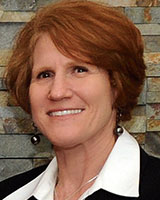
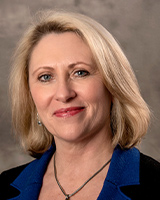 An interview with Maggie Sauer, Director
of the North Carolina Office of Rural Health, and Lisa
Davis, who recently retired from her position as the
Director and Outreach Associate Professor of Health
Policy and Administration at the Pennsylvania Office of
Rural Health. In this episode, they detail the changes in
infrastructure and collaboration they've seen during
their time as directors of their respective State
Offices, and share their excitement for the future.
Listen and subscribe on a variety of platforms at PodBean.
Organizations and resources mentioned in this episode:
- North Carolina Office of Rural Health
- Pennsylvania Office of Rural Health
- Foundation for Health Leadership and Innovation
- State Offices of Rural Health Program
- Federal Office of Rural Health Policy (FORHP)
- National Organization of State Offices of Rural Health
- North Carolina Rural Center
- Mountain Community Health Partnership
- Rural Health Transformation Program, Centers for Medicare & Medicaid Services
- Cecil G. Sheps Center for Health Services Research, University of North Carolina at Chapel Hill
Transcript
Andrew Nelson: Welcome to Exploring Rural Health, a podcast from the Rural Health Information Hub. My name is Andrew Nelson. In this podcast, we'll be talking with a variety of experts about providing rural healthcare, problems they've encountered, and ways in which those problems can be solved.
Joining me today is Maggie Sauer, Director of the North Carolina Office of Rural Health, and Lisa Davis, who's just retired from her position as the Director and Outreach Associate Professor of Health Policy and Administration at the Pennsylvania Office of Rural Health.
As I mentioned, Lisa has just retired, and Maggie, I believe you're retiring at the end of the year. Do you want to tell us a little bit about your career and why you chose to work in rural health originally?
Maggie Sauer: This is a real time of reflection, and I appreciate the opportunity to be here with Lisa Davis, who I respect so greatly. I grew up in a little town in eastern Colorado called Limon. And we had a farm and a ranch 15 miles outside of town, which meant that you had to plan your trips to town very carefully, which also meant you had some intentionality around scheduling your healthcare. So, I was one of those kids that thought I was never going back to rural. I was leaving the town, and I was going to go do something different. And then I went to school and got my master's in speech pathology, and I had the pleasure of going and helping develop technology for people with disabilities who are not going to be able to use speech as a primary mode of communication.
And I think how it comes back to rural health is that, even in that technology development, even when I went to go see patients, we never accepted what we saw in the evaluation site. It was always about following people home, whether it was home or school or work, to see how it really continued to work. And so, when I came to North Carolina 35 years ago, I practiced here at the University of North Carolina in [the] School of Medicine. And then I was like, "What is it that's happening here with people's ability to get insurance? What are the policies that affect that?" I had families who were in during evaluations crying because they could not afford what we were thinking could work for them. And so, it was like, "I've got to understand what's happening on the policy and public health side of this."
So, I went back to school and got my master's in health administration. And I have to credit my career, really, back to growing up in a rural community, because I think that a lot of what happened as a result of that is really seeing from a very personal level how communities come together to make these resources work. And Limon was like that. We had a tornado there at one point, and the community came together to rebuild the town, essentially. And so, a lot of my work then focused on developing community-based chronic disease programs across the state when I was at Duke. And I also want to give credit where credit's due. I was over at the Foundation for Health Leadership and Innovation, which was another program that was started by Jim Bernstein. Mandy Cohen asked me if I would come over to the [NC] Office of Rural Health when she came to the department as the Secretary of Health and Human Services here.
And the first person I called was Tom Morris because I knew him. I had engaged with him while I was at the foundation. And Tom said, "Well, you know, Maggie, it's up to you, but you can help a lot more people if you go to the Office of Rural Health." And I think it's been a journey, but I understand that my roots have been really part of that journey and the mentorship of the people I've worked with who have always been so committed to communities and doing the right thing and making sure rural communities have what they need. And so, as the first Office of Rural Health in the nation, you know, North Carolina has had that reputation. I'm not saying anything that Lisa hasn't done, which is, ground your work in what the community wants. Don't walk ahead of them, walk beside them, listen to them. And so, you know, I think it just comes from growing up and having these experiences with people.
Andrew Nelson: How about you, Lisa?
Lisa Davis: Prior to starting with the Office of Rural Health, I had worked in groups here in Pennsylvania focused on vulnerable populations and those that really needed some support. And then I went to graduate school, and at the end of my graduate program, the associate director of the Office of Rural Health just passed me in the hallway and said rather absentmindedly, "Oh, I referred you to a position at the Pennsylvania Office of Rural Health." And I thought, "Well, I've heard about that office, and I don't really want that job. And I really want to focus on public health and so on." And so, I interviewed for the job and realized that as the first full-time staff person, I would really have the opportunity to shape a statewide program that would serve not only the public health needs in communities, but also very vulnerable populations.
And I did not know that rural health was a thing. And when I began to get involved in rural health, I realized that it was not only a job, it was a passion. And those who I met across the state and across the country were so incredibly smart and absolutely committed to wanting to do the right thing. And so, I was incredibly fortunate to be able to start working in rural health, even though I didn't know it was such a thing, because it has become essentially one of the most important parts of my life.
Andrew Nelson: Lisa, you mentioned earlier how you got started at the Pennsylvania Office of Rural Health, just a few years after the State Office of Rural Health program was first funded by the federal government in 1991. Are there any additional reflections you have about the overall evolution of State Offices of Rural Health over time, as well as the impacts you've seen?
Lisa Davis: Yes. First of all, when I started at the Office of Rural Health in 1994, there was no National Organization of State Offices of Rural Health. And that program evolved over time and then became incredibly valuable to all of us because it was sort of one source. We absolutely had the Federal Office of Rural Health Policy. And I like to say that the Federal Office is a little bit like our mothership. At least for us, about three-quarters of our funding comes from the Federal Office. And they are one of the groups that we go to consistently to do a reality check, to get information, to be able to ask the questions that we need to ask of a federal agency.
And the Federal Office is unlike any other federal agency I've worked with. They are our grant makers, but they are far more than that. They are our collaborators, and they appreciate the State Offices of Rural Health and say, "If it weren't for all of you, we wouldn't be able to do the work that we do." So, it's very collaborative. The relationship with the Federal Office has certainly increased significantly. And also, the State Offices have increased their visibility and their credibility across every state and also across the nation. When you consider, for instance, here in Pennsylvania, for a long time, we were considered to be the "Penn State" Office of Rural Health. And I worked very long and hard to make sure that that was corrected. We were very fortunate to be at the university, but we served the entire needs of the Commonwealth.
So that was a change that took a little bit of time, probably I'd say eight years or so for that to change. But the credibility of the State Offices of Rural Health has been cemented since the program was started. And we really are viewed as the nexus of rural health in every state. So, I think those are some things that have changed.
Maggie Sauer: I want to certainly endorse what Lisa said. And I think the thing that makes each office a little different is where they live. ORH, North Carolina's Office of Rural Health, is situated in the Department of Health and Human Services here at the state. And when Jim Bernstein founded the office, he wanted it to be its own group within state government. And he founded another foundation basically to do things you couldn't do in state government. But I think the importance of that is that we've been able to get state funds to do some of our work. And to Lisa's point, because of some of the things we've learned, we do an ROI on all the state dollars that we get.
And part of that example came from a toolbox and the information that was posted by FORHP on the RHIhub. We use that on a regular basis with the legislators and other folks. And so, I think you have such an incredibly trusted and collaborative nature to all the folks who are contributing to this work. So, for instance, I called Lisa when we were thinking about trying to mirror some of the work that they were doing with rural hospitals and some of the unique financing strategies that they use. And so, trying to thread through what was similar to what we wanted to do, what did they have to have, and that allows us to be good stewards of not only federal money, but state money, calling the Federal Office and saying, "All right, we have this other program, even philanthropy, in the state that's looking at doing a particular project in a certain way." And it's like, "All right, well, what do you see nationally?" so that we can bring the best information or direct people [and] philanthropy to the best information possible so that we can approach each situation as thoroughly with the greatest accounting and stewardship and innovation that we can.
Andrew Nelson: We've talked a little bit about the evolution of the infrastructure and framework of State Offices of Rural Health. What are some changes or trends that you've seen over the course of your time in the rural health environment? And what were the drivers of those changes?
Maggie Sauer: Ten years ago, when I came to the Office of Rural Health, we had always had great leadership and so many things, and we were kind of at the forefront of looking at technology as a way of helping rural communities. We were looking at different kinds of team-based care that we could encourage across the state, because, quite frankly, what that did was create opportunities for economic growth and support of our rural communities. And I think where it resulted for us is, with COVID, we were asked to do a lot of things. We were asked to come in and advise the department on rural hospitals, telehealth. We worked with the safety net groups across the state. We were asked to develop a new database that would allow uninsured people to apply for COVID funds. So, we're like a Gumby doll. And we're not the only ones, right? You have to really be ready to be flexible. And so, I think that time during COVID really pushed us to really project what it was that was going to be the next things that we needed to do for our state. And part of that also became really tight relationships with our Department of Information Technology, with broadband and being able to map that. It also created opportunities for commerce. So, it's really threading and braiding those resources together. And I think over time, what we've seen is creating that dependency across our state government that's grounded in the community relationships that we have and helping people to see that it's not just about health, it's about education. It's about getting a job. It's about access to health, transportation, food, all those things. And so, we come in, I think, as a credible partner into that equation. And I'm just really, really proud of our team. They've worked really hard.
Lisa Davis: I want to say that I love the visualization of Gumby. And so, I'm going to hang on to that if you don't mind. But just one quick statement before I get started, and that is, I've been saying to folks a great deal lately, when I started in rural health 32 years ago, workforce was the number one issue. Thirty-two years later, workforce is the number one issue. Even with all the funding and the programs and the initiatives and the smart thinkers and so on, it really is a huge issue. But one of the challenges I think with that is what is so important is to actually be able to meet with people face to face and talk with them. It's terrific that we can do it virtually, but there's nothing that compares to being able to actually talk with someone face to face. So, I don't want to downplay that at all. But the other, I think, major trends that have occurred obviously is the implementation of electronic health records [EHRs]. I remember back when Meaningful Use Stage One and Two were really important and there was a lot of funding to support that. But helping hospitals understand that technology and EHRs are so important, but what is really important, that it be a system that the hospital can afford and implement, and then continue to implement it as far as the upgrades go, and being able to see how they can connect with their state's hubs so that there might be the potential that they could actually share some data.
Those are some of the changes. I think other changes that have occurred obviously was the Affordable Care Act. That was an enormous change in terms of being able to address the issues of the un- and underinsured and to establish essential health benefits, and to keep kids on their parents' insurance until they were 26, and so on. I think some of those were so important. The other, of course, is the implementation of the One Big Beautiful Bill. And what that means for rural health transformation across the country and within states is very important. Although I do want to say, I think it's a little challenging since we cannot find ways to help hospitals fulfill the losses that they will be experiencing when they begin to see changes in their Medicaid funding. So, I think helping systems through that process is very important.
And also, being able to work within communities so that they can address the needs of those who will become un- or underinsured. The last piece that I want to say that I have learned over the years, and Maggie touched on this, is that rural communities tend to be able to come up with their own solutions, either because of, or in spite of, any sort of external funding or supports that might be available because they're quite creative.
I think that the overwhelming amount of legislation and regulation that has come out over the last 30 years has been in response to a number of different issues that have been coming up. But it is incredibly challenging for healthcare leaders to be able to keep up to date with all of that.
Andrew Nelson: Maggie, you and Lisa both just mentioned the importance of collaboration and relationships and how they played into your work over the years. Could you tell me about some of the collaborative efforts you've been involved in that seem to have been especially significant?
Maggie Sauer: Well, I can give you a really tangible example called the North Carolina Rural Center in North Carolina that looks at developing new and cultivating community relationships that otherwise could not be. Because they are able to, number one, advocate. We're in state government, so it's harder for us to do that. But they work across the rural framework, which includes financial institutions, schools, faith-based, councils of government, and we've really worked hard to work with them so that we can continue to really look at rural health as a community of people, not just providers. So that's been really an important force, I think. And they work very closely with state government as well.
On Friday, I was privileged to go to Spruce Pine, North Carolina. And you may remember that Hurricane Helene came through and really destroyed a lot of people's homes and communities and things. And this particular group is now a community health center called Mountain [Community] Health Partnership, started in a small clinic that was built and that the Office of Rural Health 40 years ago started working with this group. And Jim Bernstein was able to help them. They raised money to build this beautiful clinic. And it was remarkable in a number of ways, which is that it became this sort of hub for not only health, but the community. Luckily, it survived the hurricane, but people would show up every day at four o'clock to get orders about what the community was going to do to help the next day. And this was a situation where people didn't know if family were still alive. They didn't know if their staff were still alive. But fast forward, that community foundation and the work we were able to do together, we celebrated a new clinic for them that will serve the entire region from Spruce Pine, North Carolina, that has whole-person care. There was money that the office was able to work with them to develop a medication-assisted therapy program, a community health worker program, establish a pharmacy program there along with the Area Health Education Center, a residency program. And now they have this beautiful building. It's not about the building, it's that they had philanthropy come together, they had state dollars, they had insurers, and all of us. And so when I look at the real roots of how we do things in rural, it's really because of those relationships.
Lisa Davis: The State Offices of Rural Health differ in the number of staff within each office. Some of them are maybe one staff person, and then there are others, like for instance, Maggie's office, which has a very large staff. Regardless, the only way that our office has been able to do what we've been able to do and to be so successful is through the collaborations and the partnerships, because we can't be everywhere all the time. And we rely on those who we have worked with and built extremely strong relationships with over the years to be able to help us achieve something that is far greater than the sum of its parts. So that is extremely helpful. For instance, we started a large oral health program out of our office, but we worked with all of the oral health programs and the state's oral health coalition to make that a reality.
Working with community and economic development has been absolutely important because of the role that the healthcare delivery system plays in local economic development and viability. There are so many examples of this. And being able to mentor those who are considering either careers in rural health administration or in clinical practice is essential. So, we've been very fortunate to work with the clinical training programs across the state and to be able to offer the rural experience and help, for instance, the Area Health Education Centers be able to offer rural experiences for clinicians.
And I have a great success story. We had an undergraduate student who worked with us during her undergraduate years, and then also while she was in her graduate program. Then, she graduated and worked as the chief of operations for a small rural hospital that converted to Critical Access Hospital status and also converted several rural clinics to Rural Health Clinic status. She has now come back as our new director. So that was a relationship that was nine years in the making. And that, I think, is a great example of being able to be there and mentor those who could potentially become new leaders.
Andrew Nelson: Is there any advice that you have for emerging rural health leaders?
Lisa Davis: Yes. For one thing, I would suggest that they have a really good grasp of what the rural population in their state looks like, where they're located, what their issues are, and to connect not only depending upon where they are within their state, if they're located in the health department, make sure that they have met everyone in the health department who has input into rural health issues and health status indicators. Also, to get to know their Medicaid agency and also community and economic development and aging and all of those sort of state agencies that are so important regardless of their location. I would also suggest that they learn about the issues that are important to their rural communities and to learn about their hospitals, especially their Critical Access Hospitals and their Rural Health Clinics and other kinds of issues like that, to read their state's Rural Health Transformation Plan to make sure that they understand what is happening there.
The other, then, is to do what they can to intersect with the State Offices of Rural Health in their region, first of all, and then to be able to learn about the Federal Office of Rural Health Policy and the other programs that they have. So really, it is initially a great deal of getting out there, information gathering, and being able to create a very strong understanding and picture of what their state looks like in terms of their rurality.
Maggie Sauer: Part of the joy in retiring is I have just been so profoundly impressed by some of the rural health leaders that are coming up. We have, from UNC Chapel Hill, a couple of Morehead scholars that are in their sophomore and junior years. And they're working with the Sheps Center at UNC. They've contacted our office, the Rural Health Transformation Program. And these are young people that are absolutely committed to trying to help navigate these rural landscapes, not only in North Carolina, but they've traveled the world and trying to think about, "What can we bring back?"
I was at another meeting yesterday and a young person who's at ECU, East Carolina University School of Medicine, said, "We have a group of people here that are wanting to make sure that these connections are made between when someone's in the hospital and they're going home to their communities." And in fact, he talked about treating a patient that had a gunshot wound in the chest. And here's a situation where the environment was not clear enough for a helicopter transport. So, they had to send an EMS team out. It took them two and a half hours to get that person to the hospital in Greenville, North Carolina. He said, "That's typical. And we've got to make sure that we follow those people home." And so, I'm encouraged because there are these young people who have worked in this technology, are looking at some of these issues with fresh eyes, and I think we have to encourage them. I think we have to create opportunities for them to be heard, for them to be mentored, because they're the future. And that investment in their ideas is going to be a worthwhile and really critical investment.
Andrew Nelson: Looking forward, what are your biggest concerns and your greatest hopes for the future of rural health as it moves forward?
Maggie Sauer: The biggest concern is, everybody starts by talking about what's wrong with rural. You know, "They don't have this, they don't have that." And while all of that is true, there are a lot of needs in rural. I think if we really want to be innovative and creative, we can create opportunities for us to really use technology as a way of keeping our rural communities there with us in a very intentional way. When we're talking about workforce, you look at our aging population in rural, can we continue to create opportunities for economic prosperity by growing the workforce pipeline in rural communities using our community college systems, starting in school with kids, helping them think about programs that – they don't have to be a nurse or a doctor. You know, they can be an allied health person. They can help practices understand how to run their practices and do that work. And I think that's where the Rural Health Transformation Program can really help develop those pipelines.
Lisa Davis: My concerns are that we will be looking at real changes in the health status of rural residents as they, first of all, age, because in Pennsylvania, we are an aging state. So, what sort of supports will be available for them in their communities or in the facilities that they are in, even though Pennsylvania has very robust aging programs. The other is to be looking at what we're going to be seeing in health status when individuals lose access to care because they cannot afford it. And that could have some real ripple effects in terms of their overall health status. What I think is important is that we have this opportunity with the Rural Health Transformation funds to be able to look at new models of care, whether that be mobile services, whether that be virtual integrated systems, where we're even thinking here in Pennsylvania about having systems of care that are on a regional basis where we would have providers that would have a circuit where they would be providing care across their regions.
So I think that there are some opportunities that we need to be thinking about. I think that for the first year of the One Big Beautiful Bill, there was a lot of grief about what we were going to be seeing in communities and what we were going to be, what hospitals are going to be experiencing. And now we're really moving through that and starting to say, "You know what? Here we are. We need to be thinking about new ways of providing care and doing new services." And here in Pennsylvania, we have a lot of funding that's going into workforce, which I think will be quite an improvement looking at workforce across the full continuum of care.
Rural communities are the backbone of the United States, and they deserve the attention and the support so that they can continue to remain vibrant. And rural communities always tend to take care of their own. They find a way to do that because they are so intrinsically connected.
Andrew Nelson: You've been listening to Exploring Rural Health, a podcast from RHIhub. In this episode, we spoke with Maggie Sauer and Lisa Davis. Look in our show notes for more information about their work and visit ruralhealthinfo.org for all things pertaining to rural health.