

Family Wellness Warriors Initiative
- Need: Improve health and wellness outcomes for those affected by trauma and adverse experiences.
- Intervention: A language, traditions, and customs-specific evidence-based peer support model that trains local communities on education and prevention strategies to address and heal the effects of trauma.
- Results: Peer-reviewed results show decreases in emergency room visits and hospitalizations, over 50% reduction of trauma symptomology, decreases in unhealthy substance use, and improvements in family and spiritual well-being. Model elements have adapted in Canada and several Lower 48 states.
Evidence-level
Effective (About evidence-level criteria)Description
Established in 1982 under the tribal authority of Cook Inlet Region, Inc., Southcentral Foundation (SCF) is a tribal healthcare organization established to improve the health and social conditions of Alaska's tribal members. It provides healthcare to over 70,000 Alaska Native and American Indian peoples in Anchorage, the Matanuska-Susitna Borough, with nearly 13,000 residents located in 55 rural villages – all located within an area of over 100,000 square miles in Southcentral Alaska.
Employing the Nuka System of Care, SCF's healthcare delivery is family-centered and based on relationships built with its customer-owners, the phrase used instead of "patients." Shared decision-making is core to SCF care that is not only rooted in storytelling — because storytelling emphasizes the critical role story has within a person's values, beliefs, and health journey — but also focuses on whole person health: physical, mental, emotional, and spiritual wellness.
With a goal of ending cycles of harm and supporting healthy families and communities, Alaska Native peoples created the Family Wellness Warriors Nu'iju (FWW) in 1999, a trauma-informed model that builds on Alaska Native strengths and values. Its gifted Dena'ina name, Nu'iju, derives from a word that means returning to our (true) selves.
By returning to the strengths and values of Alaska Native and Native American traditions and customs, FWW works to end cycles of harm by building healing relationships, community connection, and resiliency to trauma. With the traditional value of story at the heart of transferring knowledge and building relationships among Indigenous communities, FWW also utilizes the power of stories to allow participants to identify and address root causes of trauma to begin practicing healthy relational skills and building resiliency.
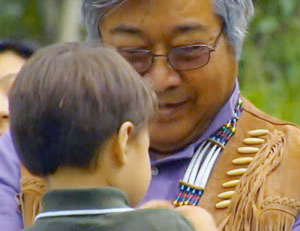
The model also uses peer leadership in its training intensives, learning circles, and therapeutic communities — all tied to Alaska Native and American Indian customs and traditions and guided by the following philosophies: 1) Our Elders Lead the Way 2) Calling the Warriors 3) Healing the Whole Circle and 4) There is a Story Behind our Eyes.
Acknowledging that the most effective way of working with tribal communities is to first gain the trust and commitment of tribal community leadership, key to the program's success are its formal implementation steps. After a community awareness workshop is held with village community members and leaders, a systematic method of relationship building follows. When those relationships are in place, a formal invitation — formality being a part of the evidence-based systematic methods of engaging communities — is extended by tribal leaders, inviting FWW to come to their community.
Also key to the model is using previously trained regional tribal leaders to train new leaders. This allows a sustainable approach empowering community members to train their own while supporting continued relationship building and allowing participants the opportunity to explore healthier ways of relating in a safe, peer-led space.
In summary, the FWW Nu'iju Model implementation follows these five specific phases:
- Phase I: Reaching Understanding
- Community invitation and needs assessment
- Phase II: Establishing Relationships
- Onsite visits with workshops and public forums geared to connecting with community and identifying stakeholders to lead change
- Phase III: Assessing Gaps and Possibilities
- Ensuring community participation which allows for each unique Native community self-determination and ownership of healthcare solutions.
- Phase IV: Developing and Implementing an Action Plan
- Led by the community's leaders and stakeholders
- Phase V: Integrating Solutions and Evaluating Results
- FWW works with the participating region/community to develop their own sustainability plan and assist trained stakeholders in leading further trainings
FWW operates several additional offerings. First is the Nu'iju Healing Place. A 12–18-month peer-led program, Nu'iju Healing Place provides those in corrections with an environment where they can focus on trauma recovery, education and life skills, and healthy relationship skills.
Another training intensive is Arrigah House, a specific community-connected training intensive that, again, explores the impact of stories, including those linked to adverse childhood experiences and intergenerational trauma.
As of 2025, FWW trainings intensives, learning circles, and workshops have been held across the 12 regional corporations in Alaska including communities in Ahtna Country (Copper River Basin), Aleutian Islands, and Pribilof Islands, North Slope Region, Seward Peninsula, Bristol Bay Region, Yukon-Kuskokwim Delta, Cook Inlet Region, Interior Alaska, Kodiak, Kotzebue area, and Northwest Arctic Region.
Other tribal communities adapting the FWW model include the North Shore Tribal Council, Ontario, Canada, the Cree Nation (Cree Health Board), and the Eastern Band of Cherokee (North Carolina). In North Dakota, FWW currently works with the state's Department of Corrections, where the Nu'iju Healing Place community model has been adapted at the James River Correctional Center.
Services offered
In addition to implementation phase offerings, the following services are part of the FWW's work:
- Peer leadership-based training intensives, including:
- Soldier's Heart
- Advanced Leadership Education and Training
- Learning Circle Philosophy Training
- Corrections and reentry support
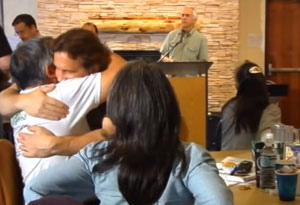
- Therapeutic communities, with veteran and first responder support
- Nu'iju Healing Place
- Arrigah House
- Education and engagement around Alaska Native and American Indian language, customs, and traditions
Results
As of 2025, nearly 4,500 customer-owners have participated in FWW training intensives, learning circles, workshops, and therapeutic communities in the 12 Alaska regions. Additional reach includes participants across Canada, and in North Carolina and North Dakota.
Academic analysis demonstrates that the model is self-sustaining and adaptable. Peer reviewed results have shown improvement in family and spiritual well-being, including reduction of trauma symptomology by over 50%. Statistically significant positive changes measured at 12 months post-intervention revealed increased community connectedness, improved family cohesion, self-esteem, and spiritual well-being, these being measurable protective factors when evaluating behavioral healthcare. Participants also experienced reductions in depression, unhealthy substance use, and anxiety. Decreased need for emergency room evaluation and hospitalization were also noted.
Publications:
Avey, J. P., Wark, K., Andrews, P., Donadio, J., Bradbury, T., & Outten, B. (2024). Acceptability And Feasibility of an Intervention for Alaska Native And American Indian Couples. Family relations. 73(1), 298–317.
Ray, L., Outten, B., & Gottlieb, K. (2020). Health Care Utilisation Changes among Alaska Native Adults After Participation in an Indigenous Community Programme To Address Adverse Life Experiences: A Propensity Score-Matched Analysis. International journal of circumpolar health. 79(1), 1705048.
Avey, J. P., Moore, L., Beach, B., Hiratsuka, V. Y., Dirks, L. G., Dillard, D. A., & Novins, D. (2020). Pilot Of a Screening, Brief Intervention and Referral To Treatment Process for Symptoms of Trauma among Primary Care Patients. Family practice. 37(3), 374–381.
Gottlieb, K., & Outten, B. (2011). Family Wellness Warriors. Family & community health. 34(3), 235–241.
This Family Wellness Warriors video introduces the goal of ending abuse in this generation:
Replication
Any organization interested in the Family Wellness Warriors Nu'iju Model should contact Southcentral Foundation.
Contact Information
Family Wellness Warriors | Nu'iju Southcentral Foundation907.729.5440
fww@southcentralfoundation.com
Topics
Abuse and violence
· Behavioral health
· Child welfare
· Culture
· Integrated service delivery
· Service delivery models
· Trauma-informed care
· Tribal communities
States served
Alaska
Date updated or reviewed
January 22, 2026
Suggested citation: Rural Health Information Hub, 2026. Family Wellness Warriors Initiative [online]. Rural Health Information Hub. Available at: https://www.ruralhealthinfo.org/project-examples/1035 [Accessed 21 October 2026]
Please contact the models and innovations contact directly for the most complete and current information about this program. Summaries of models and innovations are provided by RHIhub for your convenience. The programs described are not endorsed by RHIhub or by the Federal Office of Rural Health Policy. Each rural community should consider whether a particular project or approach is a good match for their community’s needs and capacity. While it is sometimes possible to adapt program components to match your resources, keep in mind that changes to the program design may impact results.