

Northern California Advanced Practice Provider Fellowship Program
- Need: To improve the recruitment and retention of nurse practitioners and physician assistants in rural northern California.
- Intervention: A community of practice and grant program for advanced practice providers sponsored by the California Health Care Foundation and Partnership HealthPlan of California.
- Results: Five rural clinics and one clinic network have joined the program and hosted fellows.
Description
In rural northern California, clinics have faced challenges in recruiting and retaining healthcare providers. While several medical residency programs had been established to draw physicians to the area, similar rural-focused training opportunities were lacking for other types of clinicians, such as nurse practitioners (NPs) and physician assistants (PAs).
In the spring of 2024, the California Health Care Foundation partnered with the Partnership HealthPlan of California to create and sponsor the Advanced Practice Provider Fellowship Program. The program awards grants to rural clinics in northern California so that the clinics can establish new postgraduate fellowship programs, or expand existing fellowship programs, for NPs and PAs, and establishes a community of practice among the participating clinics.
Services offered
Participating clinics come together for quarterly meetings, aided by a team of facilitators, to share strategies, challenges, and lessons learned. The learning community has addressed topics such as didactic curriculum design, recruitment strategies, preparing for accreditation, and evaluation strategies for fellowship programs. The clinics are working together on joint recruiting and advertising efforts to reach the most students possible across different schools. For example, if an applicant is not a good fit for one clinic but might be a good fit for another, the first clinic might refer the applicant to the second. The clinics plan to host a virtual joint recruitment fair in early 2026, which will allow students to learn about multiple residency opportunities at one event and give them the opportunity to hear from current trainees.
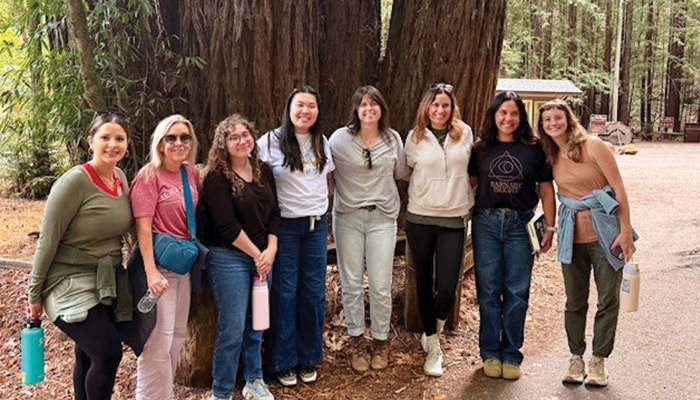
Each of the four implementation grantees received $200,000, distributed over two years. The clinics have used those funds in a variety of ways: some bought training equipment, for instance, while others have used the money to offset lost clinical revenue from mentors taking time to observe, train, and support fellows. Two others received smaller planning grants to explore program design and establish partnerships.
Results
Five clinics and one network have received grants: Open Door Community Health Centers, Shasta Community Health Center, WellSpace Health, Petaluma Health Center, Marin Community Clinic, and Aliados Health (a Health Center Controlled Network). Some of the primary care fellowships are focused in specialty fields, such as women's health, psychiatry, or street medicine, while others have a more general focus. The fellowships last either one or two years, depending on the clinic and how it has structured its program. For the two clinics that had established programs (Open Door and Shasta Community), and are using grant awards to expand, retention rates have proven meaningful: 40%-60% of fellows pursue long-term employment at the health center organization. For the programs that are using grant awards to establish new fellowships, retention data will not be available for a few years. Feedback from trainees has been positive so far, program leaders say.
Program leaders also note that the participating clinics have been supportive of one another and embraced the community of practice model.
Challenges
Precepting and other fellowship-related duties require providers to take time out of their clinical caseload. Busy clinics already overwhelmed by workforce shortages may need to take special care to organize the schedules of providers and to compensate them accordingly.
The recruitment of fellows from a limited candidate pool has also been a challenge, but cooperative efforts between clinics have helped in this regard.
Replication
Program leaders believe this model – rural health providers working together to establish, recruit for, and expand advanced practice provider fellowship programs – could be replicated elsewhere. The "community of practice" element is a new innovation that has shown early success, as program leaders often find it difficult for a single clinic to establish a new fellowship program on its own. Having some seed funding, whether it comes from philanthropy, internal budgeting, or a grant, also offers some flexibility to clinics to be able to purchase equipment and rearrange provider schedules as needed.
Clinics establishing new fellowships are advised to carefully consider what they are able to realistically take on (number and type of providers) and how to build their fellowship program strategically over time.
Contact Information
Kathryn Phillips, Associate Director, Improving AccessCalifornia Health Care Foundation
kphillips@chcf.org
Topics
Clinics
· Health workforce education and training
· Nurse practitioners and other advanced practice registered nurses
· Physician assistants
· Primary care
· Recruitment and retention of health professionals
States served
California
Date added
February 10, 2026
Suggested citation: Rural Health Information Hub, 2026. Northern California Advanced Practice Provider Fellowship Program [online]. Rural Health Information Hub. Available at: https://www.ruralhealthinfo.org/project-examples/1154 [Accessed 11 October 2026]
Please contact the models and innovations contact directly for the most complete and current information about this program. Summaries of models and innovations are provided by RHIhub for your convenience. The programs described are not endorsed by RHIhub or by the Federal Office of Rural Health Policy. Each rural community should consider whether a particular project or approach is a good match for their community’s needs and capacity. While it is sometimes possible to adapt program components to match your resources, keep in mind that changes to the program design may impact results.