

Rhode Island Mental Health First Aid Training
- Need: To provide rural first responders with training in Mental Health First Aid.
- Intervention: A statewide training program created by the Rhode Island State Office of Rural Health and the state Emergency Medical Services (EMS) office.
- Results: Every rural fire department in Rhode Island received training.
Description
The Rhode Island Department of Health had identified a need for Mental Health First Aid (MHFA) training for first responders across the state. In 2019, the Rhode Island Center for Emergency Medical Services (CEMS) approached the Rhode Island State Office of Rural Health (RISORH) to ask whether RISORH staff were interested in conducting trainings for rural fire departments. RISORH staff agreed and underwent the certification process to become MFHA instructors, along with several staff members from the state EMS office.
In 2021, the state EMS office implemented a new requirement that EMS providers in Rhode Island must receive MHFA training as a mandatory part of their recertification process. To help rural EMS providers meet these requirements, RISORH staff held trainings for rural EMS departments across the state at no cost to the departments. Instructor certification was paid for with funding that was written into RISORH's operational grant, and RISORH staff volunteered their time to conduct the trainings.
Services offered
Since the initial round of training sessions, most of which took place in 2021, training sessions for departments have been less frequent. Because of the new state requirement, EMS courses at local colleges now include MHFA training; as a result, new hires are coming into departments already trained in MHFA.
Results
Every rural fire department in Rhode Island received training. Rural departments now also have a trusted resource – their MHFA instructor – who they can call if they are having a tough day or want to talk to someone. Feedback from departments has been positive.
Challenges
Scheduling trainings for rural departments, especially small departments and those that rely heavily on volunteer EMS staff, was challenging at times. Many of the training sessions ended up taking place on weekends.
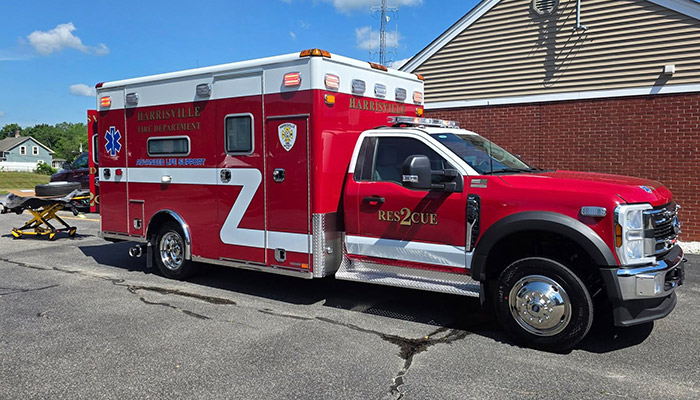
Some smaller departments did not have community spaces to hold training sessions. In response, the town of Harrisville offered up a community space that other departments could use.
Replication
Rural departments often lack the money, staff capacity, or a meeting place to hold MHFA training sessions. In the case of the Rhode Island program, funding for the training was covered by the RISORH grant, trainers were provided by the state, and the town of Harrisville provided a community space where departments from other towns could meet for the trainings.
Other state offices that are interested in implementing a similar training program should consider all the logistical aspects of planning, such as getting the fire departments and chiefs on board and whether they have the capacity and funds to train staff to be trainers.
Contact Information
Jill D'Errico, Senior Public Health Promotion SpecialistRhode Island State Office of Rural Health
jill.derrico@health.ri.gov
Topics
Emergency medical services
· Emergency medical technicians and paramedics
· Health workforce education and training
· Mental health
States served
Rhode Island
Date added
June 24, 2026
Suggested citation: Rural Health Information Hub, 2026. Rhode Island Mental Health First Aid Training [online]. Rural Health Information Hub. Available at: https://www.ruralhealthinfo.org/project-examples/1165 [Accessed 25 October 2026]
Please contact the models and innovations contact directly for the most complete and current information about this program. Summaries of models and innovations are provided by RHIhub for your convenience. The programs described are not endorsed by RHIhub or by the Federal Office of Rural Health Policy. Each rural community should consider whether a particular project or approach is a good match for their community’s needs and capacity. While it is sometimes possible to adapt program components to match your resources, keep in mind that changes to the program design may impact results.