

Major Health Partners Kidney Care Options (KCO) Program
- Need: To improve kidney care for patients in rural Indiana.
- Intervention: A nurse-led, interdisciplinary kidney care program redesigned clinical workflows to identify patients earlier, provide education, address barriers to treatment, and support informed decision-making.
- Results: From 2023 to 2025, 80% to 92% of patients received Kidney Care Options education before initiating kidney replacement therapy.
Description
The nephrology department at Major Health Partners in Shelbyville, Indiana, created a nurse-led quality improvement initiative to improve care for patients with advanced chronic kidney disease. Kidney Care Options provides patient education early in the treatment process, and program coordinators revised clinical workflows for a more proactive, patient-centered approach to kidney care. The program involves collaboration among nephrologists, nurses, care coordinators, dialysis providers, transplant centers, and community resources.
The program shifts kidney care from a reactive model, where patients often first learn about treatment options during a medical crisis, to a proactive model that gives patients time to understand their disease, consider all treatment options, involve family members, and make informed decisions. To support this approach, the care team redesigned clinical workflows and began kidney disease education earlier in the disease process. This approach allows patients to prepare for future treatment before it becomes urgent.
Major Health Partners primarily serves Shelby County but also sees patients from surrounding counties in central and southeastern Indiana.
In 2026, the program received the American Nephrology Nurses Association (ANNA) Clinical Practice Grant.
Services offered
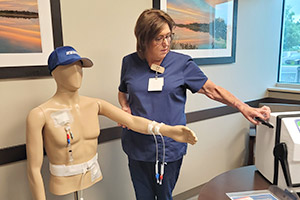
The program provides:
- Individualized Kidney Care Options education throughout the progression of chronic kidney disease to help patients understand their condition and treatment options before kidney replacement therapy becomes necessary
- Ongoing clinical monitoring and care management, including laboratory review, symptom assessment, and monitoring of kidney disease progression
- Identifying and addressing barriers to care, including transportation, financial concerns, health literacy, and other social determinants of health that may affect treatment and outcomes
- Advance care planning to help patients align treatment decisions with their goals, values, and preferences
- Care coordination across the continuum of care, including collaboration with primary care providers, dialysis facilities, transplant centers, palliative care, hospice, and other specialty services
- Transplant evaluation, referral, and transition planning, including support for patients pursuing kidney transplantation before dialysis or transitioning from dialysis to transplantation
- Community outreach and kidney disease education to increase awareness and promote earlier identification and intervention
Results
From 2023 to 2025:
- 80% to 92% of patients received Kidney Care Options education before initiating kidney replacement therapy.
- Optimal start to treatment of end stage renal disease (ESRD) – defined as initiation of hemodialysis with permanent vascular access, planned home dialysis, or preemptive kidney transplantation – ranged from 43% to 69% during the evaluation period.
- Home dialysis utilization increased from approximately 18% to nearly 30% of the dialysis population.
- The number of patients receiving preemptive kidney transplants (before dialysis) increased during the evaluation period.
- Patients received education about home dialysis, in-center hemodialysis, kidney transplantation, conservative kidney management, and advance care planning before kidney replacement therapy became necessary.
Together, these changes helped patients prepare for treatment and improved coordination among nephrology, primary care, dialysis facilities, and transplant centers.
Community fundraising efforts helped patients overcome barriers related to housing, transportation, medications, and other basic needs that affected their health. Patients have received gas cards, furniture, bed bug treatment, and assistance with affording medications.
Challenges
Challenges include:
- Implementing new clinical workflows into existing workflows
- Gaining provider buy-in on starting patient education earlier in the patient journey
- Shifting from a disease-centered approach to a patient-centered culture that meets the patient where they are and supports informed, values-based treatment decisions
Program coordinators addressed these challenges by engaging clinical team members, standardizing workflows, and reminding providers of their shared goals.
Replication
Celebrate the small victories.
Develop consistent workflows that allow nurses and providers to begin education early and continue those conversations over time. Starting patient education early gives patients time to understand their options, involve their support system, and make informed decisions before treatment becomes urgent. Small changes implemented consistently can improve patient preparedness.
Focus on understanding the barriers that keep patients from receiving care. Rather than assuming a patient is unwilling to participate in treatment, explore challenges such as transportation, financial concerns, health literacy, and other social needs that may affect access to care.

Contact Information
Melissa O'Connor, Director of Nephrology and Infectious DiseaseMajor Health Partners
317.421.1912
mroconnor@majorhospital.org
Topics
Care coordination
· Chronic disease management
· Health conditions
· Health literacy
· Healthcare quality
· Hospitals
· Nurses
· Social determinants of health
· Specialty care
States served
Indiana
Date added
July 20, 2026
Suggested citation: Rural Health Information Hub, 2026. Major Health Partners Kidney Care Options (KCO) Program [online]. Rural Health Information Hub. Available at: https://www.ruralhealthinfo.org/project-examples/1167 [Accessed 9 October 2026]
Please contact the models and innovations contact directly for the most complete and current information about this program. Summaries of models and innovations are provided by RHIhub for your convenience. The programs described are not endorsed by RHIhub or by the Federal Office of Rural Health Policy. Each rural community should consider whether a particular project or approach is a good match for their community’s needs and capacity. While it is sometimes possible to adapt program components to match your resources, keep in mind that changes to the program design may impact results.