

Sep 30, 2026
Rural Initiatives Aim to Reach 'Overlooked' Patients in Multiple Sclerosis Deserts
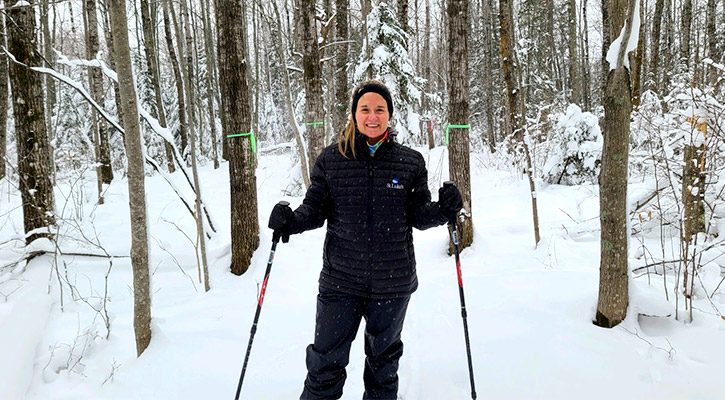
Alyssa Meller considers herself lucky.
When Meller first began to experience numbness in her legs — the first indicator that would eventually lead to a multiple sclerosis (MS) diagnosis — the pieces fell into place about as smoothly as they could. Her primary care provider was attentive and proactive, ordering an MRI and referring Meller, who lived in a rural part of Douglas County, Wisconsin, to a neurologist in nearby Duluth. Her parents, both healthcare providers themselves, helped her to get seen by a specialist quickly. And within four months of her primary care visit, Meller had a diagnosis.
Seventeen years later, Meller's condition has remained stable, with no signs of progression — something she attributes in large part to her early diagnosis and treatment.
Meller's story is unusual, particularly for a patient living in a rural area. In the best of circumstances, getting an MS diagnosis is often a long and complex process. But for people in rural communities, the challenges are compounded: A shortage of specialists in rural areas often means travel and long wait times to see a neurologist, and identifying the signs early — the key to a timely diagnosis — can be difficult for primary care providers without specialized training.
More than 80% of rural Americans live in an MS specialist "desert," according to research funded by the National Multiple Sclerosis Society (NMSS). Organizations including the NMSS hope to plug these gaps in care with enhanced resources and training for rural providers.
…everyone should have the same type of access to these services that I've had.
"I was very, very fortunate to get access to that care within a relatively short amount of time," said Meller, who serves as chief operating officer of the National Rural Health Resource Center (the Center), a nonprofit providing technical assistance to rural health organizations. "And I think everyone should have the same type of access to these services that I've had."
'Overlooked' Symptoms
Only around 13% of people in rural counties have full access to neurological care, according to NMSS research.
"There's a shortage of neurologists nationally, and that shortage is not uniformly applied," said Carolyn Bevan, associate director of telehealth for the Multiple Sclerosis Centers of Excellence (MSCoE), a program of the U.S. Department of Veterans Affairs (VA). "If you live in a rural area, you're less likely to have access to any neurology. And subspecialty neurologists, like MS neurologists, become very difficult to find."
It's "not uncommon" to hear of rural MS patients having to travel three to six hours, or crossing state lines, to receive specialty care, said Alana Skye Campbell, who led a rural pilot initiative as senior director of healthcare access at the NMSS.
In a rural area, there's often not a good bus or train line. You can't just Uber seven hours. It's a very complicated, difficult process of getting to see those MS specialists.
"Think about that travel time compounded by how MS functions as a disease and the symptoms that accompany it: things like fatigue, brain fog, mobility challenges," Campbell said. "In a rural area, there's often not a good bus or train line. You can't just Uber seven hours. It's a very complicated, difficult process of getting to see those MS specialists."
Travel difficulties can lead to delays in diagnosis and treatment, noted Vicki Kowal, senior manager of healthcare access for the NMSS — delays that can be "hugely problematic" when dealing with a progressive disease. Disease-modifying therapies (DMTs) — medications taken orally, via infusions, or by injections — can significantly slow or, in the case of Meller, stop the worsening of MS symptoms over time. But the progression of the disease can't be undone — meaning that the sooner a patient begins treatment with DMTs, the better.
Also complicating the diagnosis process: the fact that MS is often not immediately identifiable, especially for non-specialist providers.
"Multiple sclerosis symptoms are often very similar to other diseases or conditions," Meller said. "And since MS may not be as known or common as these other conditions, they may get overlooked."
Early-stage MS symptoms can include numbness, fatigue, vision problems, and issues with balance or dizziness — relatively common ailments. Symptoms such as fatigue "can easily be attributed to something else" from the perspective of a primary care provider, Kowal said: "Maybe this person is working long hours, or maybe they're a new parent and so they must be tired from that."
Complicating diagnosis further is the fact that the vast majority of people with MS are first diagnosed with relapsing-remitting MS (RRMS), a version of the disease where symptoms can come and go over time. The resolution of symptoms can lead some people to delay seeing a healthcare provider, making a diagnosis take months or even years. People often think there is no need to keep that appointment with a neurologist because their symptoms went away, according to the NMSS, and it's not until they have another relapse that they seek care. By then, permanent damage from MS may have occurred.
Even for neurologists, the complexity of diagnosing MS has in some ways increased over time, Bevan noted. Since an update to the diagnostic criteria in 2024, Bevan has seen general neurologists relying more on their MS-subspecialized colleagues to help them navigate those criteria and confirm diagnoses.
Additionally, she said, "I think some of our disease-modifying therapies certainly have better efficacy, but perhaps more risk associated with them as well, and monitoring requirements that have made general neurologists maybe less comfortable managing them and wanting the backup of a subspecialist to help them make sure they're making the right choice."
Expanding Virtual Care
For VA-based providers, that's where Bevan — a neurologist specializing in MS — comes in to help. The VA's National TeleNeurology Program (NTNP) connects neurologists with rural VA sites around the country that have few, or no, neurologists of their own onsite. Through telehealth consultations, the neurologists help local VA providers diagnose and manage neurological conditions. In cases where an MS subspecialist is needed, Bevan provides virtual consultations to local providers and general neurologists.
While she does field questions about symptom management and how to personalize disease-modifying therapies to meet a particular patient's needs, Bevan said she more often receives questions from providers wanting to confirm a diagnosis: "'Do I have the diagnosis right? And am I treating them correctly?' The big challenge is when there's nuance, where the symptoms are a little less clear or the MRIs are a little bit unusual."
Oftentimes, confirming a diagnosis requires some detective work.
"Because there's a lack of access for people in rural settings, they end up going to a lot of different places," Bevan said: neurologists outside of the VA system, for instance, or multiple VA locations. "There's a lot of fragmentation of care because they can only get certain services in certain places.
"Part of my role is to do the digging and put together a comprehensive story of what has happened to this person: what they have, what they don't have, what they've been treated with already, why they stopped it," she continued. "Once you can create that holistic picture, then it becomes a lot clearer what their diagnosis is."
Through her work at the Center, Meller has seen the importance of rural providers having access to virtual consultations with neurologists and MS specialists.
"That's just paramount for our rural providers," Meller said.
The Center's technical assistance programs help rural hospitals and clinics analyze the services they currently offer and identify opportunities to grow and expand. In some cases, those organizations have identified neurology care as an area for expansion. Currently, the Center is working with its sixth rural healthcare organization to expand access to neurology services.
"Our organization is dedicated to helping our rural providers keep care local," Meller said. "I think if we can continue to provide that education on symptoms and how they reoccur and access to neurology telehealth consultations, it will increase early awareness and start that diagnosis process."
'Boots on the Ground'
The NMSS has also taken advantage of technology to reach rural providers. A neurology ECHO (Extension for Community Healthcare Outcomes) program created in partnership with the University of Mississippi's Center for Telehealth and Emerging Technologies wraps up its first trial year this month.
"Primary care providers have so many responsibilities and play so many roles," Campbell said. "So we had to figure out how to provide this information and training and education in a way that allowed them to learn about MS while recognizing that they're very busy."
But many of the NMSS's rural education efforts have taken place on the ground, with a focus on a different type of provider: community health workers (CHWs). A rural initiative pilot program in Arkansas, Mississippi, and Alabama worked with local communities to develop training opportunities for CHWs. The aim, Campbell and Kowal said, is that CHWs can help to catch early signs of MS and assist patients in navigating and managing their care once diagnosed.
We really wanted to reach community health workers because they're frontline.
"We really wanted to reach community health workers because they're frontline," Kowal said. "They may be the very first people to hear about these symptoms, and they will be the very first people to hear about any access issues to resources like transportation, the ability to pay for an appointment, or whether that person has health insurance."
Ashtyn Mullinax, who serves as CHW lead for the Arkansas Rural Health Partnership, has worked as a community health worker in rural Arkansas for the past six years. A year or two ago, Mullinax said, "I probably couldn't tell you a lot about MS. Now, I can."
After participating in and leading numerous trainings with CHWs across the state — often through collaborative learning sessions that bring CHWs together for education, peer discussion, and shared experiences — Mullinax has become well-versed in MS symptoms and common challenges for rural Arkansan patients. For patients who live an hour or more from an MS specialist, transportation is often a "huge burden," she said. CHWs can also help MS patients navigate their prescriptions and ensure their specialist is in their insurance network, she said.
"There are boots-on-the-ground community health workers getting out there and training [other CHWs]," Mullinax said. "What are the symptoms? Where are the resources? How do we get that MRI scheduled? How do we get funds for someone who doesn't have them? How can they pay for medication that is astronomical? It's filling in all the gaps to make this work."
The pilot program looks slightly different in each state based on community needs, Campbell and Kowal said.
"It was about first starting conversations, listening, learning, and understanding from the clinical stakeholders in those communities where we can work together," Campbell said.
"We know MS, and the community knows everything else," Kowal added.
Also important to the NMSS: making sure the CHW training programs could continue independently into the future.
"We really tried to make sure our efforts became institutionalized," Campbell said. "With or without the Society, they have those resources at the ready."
Gretel Kauffman has been a web writer for the Rural Health Information Hub since 2022. She writes on a variety of rural-specific issues in the Rural Monitor and Models and Innovations. Gretel has a bachelor of arts degree in American Studies from the University of Notre Dame. Full Biography
View all articles by Gretel Kauffman