

Recovery Is Possible: Continuity of Care from Incarceration to Community, with Kelsea O'Leary
Date: August 4, 2026
Duration: 41 minutes
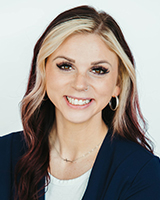 An interview with Kelsea O'Leary,
Behavioral Health Program Manager for the Choctaw Nation
of Oklahoma. In this episode, we learn about the
strategies Choctaw Nation of Oklahoma employs to
facilitate continuity of care for justice-involved tribal
citizens in recovery as they transition to
post-incarceration life. Part 3 in a 3-part series
featuring the 2026 Rural Communities Opioid Response
Program (RCORP) Innovation Tank finalists, with Choctaw
Nation of Oklahoma's work winning second place. Listen to
Part 1
featuring Lincoln County Ambulance District and
Part 2
featuring Mercy Virtual Substance Use Recovery
Program.
An interview with Kelsea O'Leary,
Behavioral Health Program Manager for the Choctaw Nation
of Oklahoma. In this episode, we learn about the
strategies Choctaw Nation of Oklahoma employs to
facilitate continuity of care for justice-involved tribal
citizens in recovery as they transition to
post-incarceration life. Part 3 in a 3-part series
featuring the 2026 Rural Communities Opioid Response
Program (RCORP) Innovation Tank finalists, with Choctaw
Nation of Oklahoma's work winning second place. Listen to
Part 1
featuring Lincoln County Ambulance District and
Part 2
featuring Mercy Virtual Substance Use Recovery
Program.
Listen and subscribe on a variety of platforms at PodBean.
Organizations and resources mentioned in this episode:
Transcript
Andrew Nelson: Welcome to Exploring Rural Health, a podcast from the Rural Health Information Hub. My name is Andrew Nelson. In this podcast, we'll be talking with a variety of experts about providing rural healthcare, problems they've encountered, and ways in which those problems can be solved.
Joining me is Kelsea O'Leary, Behavioral Health Program Manager for the Choctaw Nation of Oklahoma. The Choctaw Nation service area encompasses almost 11,000 square miles across southeastern Oklahoma, making it the third largest tribal land area in the contiguous United States.
Funded by an RCORP behavioral healthcare support grant, the Recovery is Possible project delivers comprehensive case management services directly within contracted jails across the Choctaw Nation area. To get started, Kelsea, can you tell us about this project and what kinds of needs it helps to address?
Kelsea O'Leary: The Recovery is Possible Project really focuses on the full continuum of recovery, not just treatment, but prevention, family healing, reentry support, and long-term recovery stabilization. We serve justice-involved individuals in rural communities, and they're often navigating substance use disorders, mental health challenges, trauma, poverty, and overall limited access to services. Our team provides jail-based services before release, and that includes psychoeducational groups, case management, recovery planning, and linkage to community resources, so individuals have support already in place when they reenter the community that they're going back to. We also work closely with behavioral health providers, peer recovery organizations, corrections, probation, parole, and several community partners to help reduce gaps in care and improve this continuity of services that we provide them.
And then another really important piece of our project is the family recovery. We host Celebrating Families, which is nationally recognized. It's an evidence-based program designed specifically for families impacted by substance use and incarceration. It creates a safe environment for families to rebuild trust, strengthen communication, and learn healthy coping and parenting skills together as a family. In rural communities, there really aren't many programs like this available, so it's been really incredible to watch families reconnect and support one another in recovery.
We also put a huge emphasis on prevention and community education. So that includes Narcan distribution events, overdose prevention education, stigma reduction efforts, and conversations around substance misuse that help normalize seeking support and treatment. A lot of people still struggle in silence because of the shame or misinformation that is in our society today, especially in the smaller rural communities. So even something as simple as educating someone on how to recognize an overdose, carry Narcan, or talk openly about addiction can truly save lives, and that is one of our major goals. At the end of the day, our goal is to help people see that recovery is possible, hence the name of the program, not just for the individual, but for the families and our community as a tribal nation as a whole.
Andrew Nelson: What led you to identify jail-based case management as a priority for behavioral health in your community, and how did you determine this was the right entry point for the RCORP grant?
Kelsea O'Leary: One of the biggest reasons we chose to create a program specifically for the jail-based population was because we recognized a major gap in services that became even more apparent after a 2020 Supreme Court ruling, McGirt vs. Oklahoma. And when the Supreme Court affirmed tribal jurisdiction in much of eastern Oklahoma, tribal nations suddenly assumed responsibility for a significant increase in criminal cases involving tribal citizens. So that shift impacted every part of the justice system. It impacted courts, corrections, probation, parole, behavioral health systems, and then it required tribes to rapidly build infrastructure and services that in many cases just did not exist before. For Choctaw Nation specifically, we realized that there was no formalized system in place to provide meaningful substance use treatment, recovery support, or even reentry planning of that sort for individuals who were already incarcerated. And many of these individuals were cycling through the justice system with untreated substance use disorders, unresolved trauma, co-occurring mental health conditions, and overall, very limited support once they were released.
The reality was that incarceration alone was not addressing the root causes of why people were returning to jail, right? So, we knew if we truly wanted to reduce recidivism and improve outcomes for our tribal citizens, we had to intervene while individuals were still incarcerated: before release, not after a crisis occurred. It's a pretty unique opportunity because for many participants, it may be the first time they've had consistent access to behavioral health support or that recovery education, and it offers them that space to begin thinking about their long-term change. So that's really how the Recovery is Possible project was born. We wanted to create a culturally responsive recovery-oriented system that could begin inside the jail and continue into the community that they return to. Our goal was never just to help someone complete a sentence. It's to help them successfully return to their families and their communities with the support they need, the resources, coping skills, and a solid recovery plan that's already in place and ready to go. We also recognize that justice-involved individuals in rural communities face significant barriers that are often compounded after release, like transportation, housing instability, unemployment, stigma, and lack of treatment access. So, the project was intentionally designed to bridge those gaps through peer recovery support, case management, behavioral health referrals, family programming, and strong collaboration with courts, corrections, and community partners. All of that is tied together in a neat little package with what we call an aftercare plan. And it is a document that they have in hand the day that they are released back into society.
Andrew Nelson: When you're embedding services in jail facilities, I'm sure there are some unique logistical and security challenges. What were some of the biggest obstacles that you faced when getting this partnership set up with correctional facilities? And how did you overcome them?
Kelsea O'Leary: One of the most unique challenges of developing the Recovery is Possible project was that we weren't stepping into an already established framework. We were building the program from the ground up while simultaneously implementing it. So, I think that's true for a lot of grant-funded work. It's like trying to take off in an airplane while you're still building the runway. You have the vision, the goals, and the urgency to begin serving the people immediately, but at the same time, you're actively creating the policies, procedures, partnerships, workflows, and all of those things, safety protocols, in real time. And because this is a jail-based program, there are also logistical and security considerations, of course, that we had to learn and adapt to very quickly. Our staff had to be trained on facility-specific safety protocols, including understanding what items could and could not be brought into the jail environment, for example.
We also implemented internal safety standards for staff while conducting groups and individual sessions. For example, staff are trained to sit closest to the exit door during sessions and to ensure the door remains accessible at all times, because jail doors lock automatically once they shut, as their own safety precautions. And that's one of the ongoing logistical challenges that we still navigate today, on occasion. With turnover in detention staff and all the facilities that we go into, there are times when new officers may unintentionally shut the door behind them while escorting clients into group. And when that happens, our staff have to wave them down, immediately advocate like, "Hey, we need to keep this door unlocked, please," get their attention. And then just let them know that we do prefer that the door stays cracked open, or if they have the ability to have access to the key, to keep it unlocked for our safety; that is ideal. It's not always situationally ideal that a corrections officer is available at the door at all times, especially with limited staff in these more rural areas. So, we do advocate on our own behalf on "Keep that door unlocked."
And then another major lesson we learned early on was the importance of structure and accountability and just maintaining the fidelity of the program that we're trying to build. So, we established a zero-tolerance expectation for disruptive or unsafe behavior during group sessions by clients. At the beginning of each cohort, clients and the group leaders help create ground rules, and every participant is expected to uphold them. So, if someone violates those expectations through negative or disruptive behavior, they're removed from the remainder of the cohort. Similarly, if a participant is placed on lockdown within the facility outside of group sessions, they're excused from the group. And if someone chooses not to attend the group [without] a legitimate reason, like they were submitted to court, or they had a medical appointment, then they're also removed from participation.
Of course, you know, if there's active behavioral issues, we need to address those and limit exposure to those as much as possible. But they weren't created to be punitive. They were developed to protect the therapeutic environment that we're trying to create and reinforce accountability. We realized very quickly that if we wanted clients to take the opportunity seriously, we had to establish consistency, boundaries, and what our expectations are, that mirrored the responsibility required for long-term recovery outside of incarceration. And a lot of these lessons just came through trial, error, adaptation, and collaboration with correctional staff and the participants themselves, just figuring out what is going to work and what is not going to work.
Andrew Nelson: Now, is this an ongoing service that's provided to incarcerated individuals, or is there a set schedule? How does that work?
Kelsea O'Leary: They have to be sentenced through the Choctaw Nation criminal courts. And once they reach about the 18-month mark, they will be incorporated into our psychoeducational group continuum. Each group is 12 weeks long as an evidence-based curriculum, and we have four of them, and they're just on a running schedule, and they keep going. So, everyone will get an opportunity to experience these four groups, and with each completion of a group, the 12 weeks, the court recognizes that for them, and they give them 30 days' time served for that time. So that's another reason why we kind of start as far out as 18 months, because once all of that adds up, it times to where they get about a year, and then they're released. We had to really formulate and figure out what that timeframe's going to look like, because they also get time served with being a trustee or doing classes outside of our program as well. So, try to make the best of the situation with the little knowledge that we have.
Andrew Nelson: You mentioned aftercare. One of the innovations in this project is providing services before release so there is continuity of care after people are released. What does your experience with this program tell you about how early intervention with folks who are in custody can affect post-release engagement with behavioral health services?
Kelsea O'Leary: So, what we've found is that beginning services while individuals are still in custody creates the trust, consistency, connection, before they ever walk out of the facility. And by the time someone is released, they already know their case manager or their peer recovery support specialist we connect them with. They've already participated in psychoeducational groups, they've already started identifying triggers and recovery goals, and they've already had a plan in place for treatment, housing, recovery meetings, or other community services that we've identified in their needs assessment and met those needs on their aftercare plan. And that relationship-building piece is huge, because many justice-involved individuals have had negative experiences with systems in the past and may intentionally be hesitant to engage in behavioral health services. There is that stigma there. And we've also seen that incarceration can provide a rare moment of stability and reflection for some participants.
So, while they're in custody, individuals are more likely to be receptive to conversations about recovery, or trauma, parenting, coping skills, and create those long-term goals because they're removed from some of the chaos and environmental triggers that we're facing in the community. It creates an opportunity to introduce recovery concepts and begin building motivation for that change before release even happens.
And then another major takeaway has been the importance of continuity. Recovery doesn't happen in a single group session, or at the jail door on release day. Individuals do better when there's a warm handoff, which is our goal, is to have a warm handoff into community-based services, rather than expecting them to independently navigate fragmented systems on their own. And because our participants already have well-established relationships with our program staff prior to release, they're much more likely to answer the phone, attend appointments we make for them, engage with peer support, and just simply remain connected once they're back into society.
We've also learned that accountability paired with support is a major key to their success. The structure participants experience in the jail-based setting, like the attendance expectations, group participation, accountability, and consistent support, it helps create a foundation that can transition into community recovery. And when people feel supported, respected, they are well-prepared before release, they're far more likely to engage in the behavioral health services afterwards. Early intervention gives individuals the opportunity to build those skills, those relationships, and establish those recovery supports before they ever return to the same stressors and environments that may have contributed to incarceration in the first place.
Andrew Nelson: I see your grant period started on September 1st, 2022, and goes through August 31st of this year, 2026. Obviously reducing recidivism is one of the goals of the program. At this point, do you have any data on whether participants show lower recidivism rates compared with other justice-involved individuals who didn't get these services?
Kelsea O'Leary: Yes. We're beginning to see very encouraging preliminary outcomes related to recidivism. And honestly, it's reinforcing why this type of early intervention and continuity of care model is so important for the justice-involved populations. And when we first launched the Recovery Is Possible project… 2022 was implementation, but it was the very end. I'm going to reference 2023. That year was really our implementation phase. We were building the infrastructure while actively operating the program. We were still figuring out processes within jail systems, identifying what would best serve both clients and our court system. We were still developing partnerships with corrections and refining how services would even be delivered in the jail setting. And even during that phase, we were still completing needs assessments, aftercare planning, and facilitating psychoeducational groups for the qualifying participants. But by 2024, the program really began gaining that momentum that we're seeing today.
According to our Choctaw Nation's Corrections Manager, the court system saw a 200% increase in individual sentences through the Choctaw Nation criminal courts after McGirt-related jurisdictional changes further highlighted the urgent need for structured rehabilitation and reentry services. In that year, we served 32 clients and saw a recidivism rate of approximately 34%, with 11 of those participants returning through the system. So, while that still showed room for growth, of course, it allowed us valuable insight into where we needed to strengthen engagement or change some structure and further continue our care. Then in 2025, we saw a major shift in both our processes and outcomes. We served 96 clients that year through the program, and only five individuals returned to incarceration. This gave us a 6.25% recidivism rate compared to the national average, which is often cited around 45%. What's also important is that the few individuals who did return were within that six-months-to-one-year post-release period, which we know is often the highest-risk timeframe for relapse and recidivism.
A huge part of that success comes from the structured psychoeducational continuum we built alongside corrections, which I mentioned before: they start at 18 months and continue until the day that they're released. Those curriculums include anger management, Fatherhood and Motherhood is Sacred for our parenting education, life skills, and We Shall Remain, which is a Choctaw-specific relapse prevention curriculum developed with principals rooted in White Bison Wellbriety. We also utilize interactive journals through Change Companies to strengthen engagement and reflection throughout the process. What makes the partnership especially impactful is that corrections fully supports this rehabilitative model. Every 12 weeks, like I mentioned, they get 30 days time served off their sentence as long as they get a certificate of completion from our program for that curriculum. And that incentive structure not only increases engagement and accountability, but it also generated more than $200,000 in cost savings for the Choctaw Nation criminal system, just for 2025.
Andrew Nelson: Another service that Recovery Is Possible delivers is administration of Celebrating Families!, an evidence-based, trauma-informed, family-centered curriculum designed to strengthen family relationships impacted by substance use and incarceration. How do you go about integrating tribal cultural values and practices into the Celebrating Families curriculum and case management services to ensure that they resonate with Choctaw Nation families?
Kelsea O'Leary: That's something that's actually very important to our program. Recovery looks different for everyone, and for many families in our community, spirituality and faith and family connection culture all play a huge role in healing. So, we try to naturally incorporate those values into work we do instead of just treating recovery like it's a completely clinical process, right? So, Choctaw Nation is actually a publicly recognized Christian tribe, and spirituality is something that's deeply woven into all our communities. And because of that, we're encouraged to incorporate our higher power into our teachings and recovery conversations. In Celebrating Families, for example, we begin each session with a prayer before sharing a family meal together, and we typically end each group session with the Serenity Prayer. Those moments may seem pretty simple, but they create a sense of comfort and connection and community for those families participating.
And it just opens up that door to be comfortable to talk about their faith and how they can grow in their faith to sponsor their recovery and what-have-you. And honestly, the family meal itself becomes really powerful. A lot of the families we serve have experienced trauma, addiction, incarceration, long periods of disconnection from one another, and sitting down together, sharing a meal, talking, laughing, and learning together creates a safe environment, and it becomes a part of that healing process. We also try to approach case management and recovery support in a way that reflects Native values, things like respect, accountability, community, and healing the family as a whole, instead of focusing on just one individual. In Choctaw Nation, in particular, our values are faith, family, and culture. And we try to embody that every day in everything that we do with our clients.
Another really important piece is that all of our staff are trained in Native-American-specific motivational interviewing. That training helps staff understand how to engage with participants in a culturally responsive and trauma-informed way that honors the communication styles, historical experiences, and relationship building with the Native community. It helps us approach conversations with empathy and respect and collaboration rather than judgment or confrontation. And it just opens that door to having those conversations. We learn so much from the clients that we serve. "We probably learn more from them than they do us," is what I like to say, because I can tell you, every single contact I have with a client, I'm learning something new. And it's really a beautiful process. I'm not only learning about their recovery world or stigma itself, but I'm learning about culture and how to be most effective in that manner for them. We also incorporate culturally grounded programming, like I mentioned before, the We Shall Remain curriculum, which is Choctaw-specific to us. And it's a relapse prevention curriculum built around the Wellbriety principles. So, programs like that help participants reconnect and establish recovery with their identity and resilience and incorporate culture in that community support.
We do have a strong stream of referral sources. I think that's important to highlight too, because we've worked a long time to build those relationships with these referral sources. And that's really something that we struggled with in the beginning, was just educating on Celebrating Families, what it is, just to get people involved. It took us the first year to even really get what it is out there to get some type of buy-in. Our first buy-in was the drug court program in LeFlore County here in Oklahoma. And from there it's trickled down. Now we have buy-in from Indian Child Welfare, CASA [Court Appointed Special Advocates], multiple sober living programs in our community, as well as our behavioral health therapists within Choctaw Nation. They now are able to recognize what Celebrating Families is, and pair that with specific families that they're working in. And that referral network has been incredibly important, because these families are often already navigating multiple systems at once. So having trusted partners who understand the value of the program helps families feel even more comfortable engaging with it. And a lot more of our referrals come from professionals who've seen firsthand that families need more than just individual treatment. They need support rebuilding relationships, communication, parenting skills, and then just stability within their, I like to say, "new family unit" because we are all new people now. We have two embedded jail-based case managers, and they are both trained and facilitators for the Celebrating Families program, and they participate in every cohort.
Andrew Nelson: What process do you go through to recruit and retain personnel in the rural areas that you serve?
Kelsea O'Leary: For the Celebrating Families training specifically, as of January this year, we are now trained to internally train. So that is really going to give us that leg to stand on to expand our efforts incredibly, and working in both jail-based settings and community-based family programming requires staff to have a really unique and diverse skillset. Our team has to be able to navigate correctional environments, provide behavioral health recovery support, build trust with those families, understand trauma, yet still remain very flexible enough to meet people where they are in very different settings. And we are all very well-trained in navigating that.
One thing we prioritize heavily is training and professional development. All our staff are certified through the state of Oklahoma's case managers, which gives them that really strong foundation in care coordination, ethics, documentation, and just the behavioral health support services realm. In addition to that, all our staff are trained in the Native American specific motivational interviewing, like I mentioned earlier. And that's incredibly important for the population we serve. And because we work in correctional settings, obviously staff have also had to understand jail procedures, safety protocols, professional boundaries, crisis response, and how to maintain those therapeutic environments within a structured facility setting. Then on the community side, they also need skills in family engagement, group facilitation, parenting, education, recovery support, and case management as well. So, it really takes a balance of clinical knowledge, I'd say adaptability, cultural responsiveness of course, and really positive relationship-building skills.
Andrew Nelson: Policymakers often want to know if successful models can be replicated elsewhere in other parts of the country or in other contexts. Are there any elements of this program that you believe would translate especially well to other rural or tribal communities?
Kelsea O'Leary: Absolutely. I believe this program can absolutely be replicated in other rural or tribal communities, I'd say even urban. One of the biggest strengths of the Recovery Is Possible project is that the framework itself is built on evidence-based practices and structured systems that are transferable far beyond our specific service area. Everything from the psychoeducational curriculums we facilitate in the jail setting to our needs assessments, aftercare planning, case management services, and even the Celebrating Families curriculum, they're all grounded in evidence-based models. So, we intentionally built the program around approaches that have already been shown to have effectiveness in behavioral health, substance use recovery, family reunification, and specifically recidivism reduction. Our psychoeducational continuum inside the jails includes evidence-based curriculums, like I mentioned earlier; all areas that directly impact successful reentry in that long-term recovery. And honestly, while our system was developed to meet the needs and expectations of the Choctaw Nation Court system, of course, the larger goal isn't unique to us.
Most justice systems want the same outcomes, right? They want reduced recidivism, healthier families, safer communities, and just individuals who can successfully reintegrate and become a contributing member of society. So, our framework is designed to support exactly that. And I think what makes the model especially valuable for replication and the continuity of care piece is starting services before release, building relationships while individuals are incarcerated, and then continuing support into a community through case management, recovery support, and then offering family programming as well. And that's something many rural communities are still missing. And it's been one of the most impactful parts of our program. Now, there are definitely aspects that are specific to Choctaw Nation context. Of course, you know, for example, our relapse prevention curriculum, We Shall Remain, very Choctaw-specific. We also incorporate cultural practices, spirituality, Native-centered approaches into the way we interact with our clients and our families. Those pieces are tailored to our population and our community values. But the overall structure collaboration with courts and corrections, evidence-based education, accountability, case management, family engagement, peer support, continuity of care, those are all things that could absolutely be adapted to fit other tribal nations, rural communities, and even urban systems. The cultural lens may change depending on the population being served, but the foundation of the model remains strong because it's rooted in all these evidence-based practices, and they're all relationship-centered.
Andrew Nelson: For the people that you work with, and the communities in which they live, substance use and incarceration can carry significant stigma. How have you worked to reduce barriers to participation and help create a welcoming environment for justice-involved individuals and their families?
Kelsea O'Leary: One of the biggest things we've learned is that stigma is in fact one of the largest barriers preventing people from seeking help. Substance use, incarceration, even just behavioral health treatment can carry so much shame, especially in those small rural communities where everyone knows each other. And because of that, we have tried to approach this work in a way that feels welcoming, community-centered, and ultimately just judgment-free. A big part of what we've done is meeting people where they are without creating additional barriers. For example, our community Narcan drives are intentionally designed to allow individuals to receive free Narcan anonymously without providing any type of personal information. We don't ask invasive questions. We don't collect identifying information or make people feel scrutinized for wanting overdose prevention resources. Sometimes people are just getting Narcan for themselves or a loved one, or simply because they want to be prepared to save a life in their community.
That low-barrier approach has really helped normalize overdose prevention conversations and reduce some of the fear and stigma around asking for that help. We've also focused heavily on making prevention and recovery education feel engaging and community-oriented rather than clinical or punitive. And one of the best examples of that was our recovery month event last September. We had an '80s themed glow-in-the-dark 5K that brought together more than 200 community members, and we had speakers with lived experience [that] shared their recovery stories. We provided behavioral health and recovery resources and just created an event that celebrated recovery openly and positively. And what made that event so impactful was that it shifted the conversation around substance use into something hopeful and community-driven. And people weren't showing up to be lectured or judged. They were just showing up to support recovery, connect with resources, and hear real stories from individuals who've lived through addiction and recovery themselves. And it was such a positive response that the event is now an ongoing Choctaw Nation event moving forward.
Andrew Nelson: I think it's great that things like that are growing out of the original structure that you set up.
Kelsea O'Leary: Yes. We also offer a lot of education. Education's been a huge part of stigma reduction for us. Our team provides trainings throughout the entire reservation on topics like current drug trends, opioid misuse, fentanyl awareness, and Narcan administration. But we've also tried to make those trainings interactive and approachable, so people actually engage with that information. So, for example, we utilize drunk goggle simulations to help participants understand impairment in a hands-on way. And we facilitate a mock bedroom activity where participants search a staged teenager or college kids' room for hidden drug concealment items. And that activity really opens people's eyes, because many parents and caregivers and community members as a whole simply don't know what to look for or what current substance use trends look like among youth, or even how easy it is to get their hands on these drug concealment items that look like everyday household items.
Andrew Nelson: In rural areas, when people have access to the Internet, and broadband specifically, telehealth and digital tool tools like that can really expand reach of care. Is that something that you folks have used much, or does Celebrating Families tend to rely more on face-to-face interaction with providers?
Kelsea O'Leary: We do a lot of face-to-face. Up until recently, our program really has not incorporated telehealth services in a major way. And a lot of that comes down to the unique challenges of working within both healthcare systems and the correctional settings at the same time. Because our program operates under healthcare, there are strict requirements around the digital platforms, the technology that we're even allowed to use, to make sure we adhere to the privacy and security of our policies. So unfortunately, those approved systems don't always align with what's available or accessible inside jail facilities.
On the Celebrating Families side specifically, we've also intentionally remained primarily in-person because we feel that it's a way to stay more true to the fidelity of the curriculum. A huge component of Celebrating Families is the shared family meal and the relational connection that happens face-to-face. The curriculum is really built around rebuilding that trust and effective communication and having healthy family interaction in a physical shared space. So, we felt it was important to preserve that in-person experience rather than trying to transition into a virtual format. Because of that, our approach has really focused on meeting people where they are in person, whether that's inside the jail setting within the community, or through family programming, like Celebrating Families. With that being said, we are now entering a season where technology is becoming a little more necessary. Our corrections department recently entered into a contract with a larger jail facility, and they have the capacity to help house sentenced individuals due to the increasing demands on the correctional system. The challenge is that this facility is located about three hours away from our service area. So consistently being able to provide in-person services becomes a lot more difficult for us.
Because of that, we're working currently to establish systems that would allow us to provide that virtual psychoeducational group opportunity, conduct those needs assessments and aftercare plan services for individuals housed there, since it's three hours away. And we're navigating what it looks like from both the security and technology side, while still trying to maintain the quality and engagement of the program. And I think one thing rural communities have taught us is that flexibility and innovation are just so important. While we still strongly value in-person relationship building, especially in family-centered recovery work, we also recognize that technology may become a critical tool in helping us maintain continuity of care and reach individuals who would otherwise have very limited access to services due to geography, like this new contracted jail, to help out with the housing. There's no feasible way we could give them in-person services because of the distance between us.
Andrew Nelson: I'm glad you've been able to find your way to integrating the ongoing services you provide, to maintain that connection with people. What responses have you seen from folks in your community or family members of individuals you're providing services to? Are there any stories you can share that illustrate the program's impact on participants' lives?
Kelsea O'Leary: Yeah, absolutely. The response from the community participants' families with Celebrating Families has honestly been incredibly encouraging, and especially considering Recovery Is Possible is still such a young program, I really think our data tells the story of what our communities were needing all along. And I gave a little bit of that data earlier, obviously, with regard to our jail-based services. And we will look at our recidivism outcomes, and the engagement we're seeing from participants and families. It really reinforces that these services are making a real difference. And even though the program is only about four years old, we've already seen a significant reduction in recidivism among participants receiving services. And that tells us the model is working. More importantly, it tells us there's potential for even greater impact as the program continues to grow and strengthen. But beyond the numbers, some of the most meaningful feedback comes directly from the participants themselves, of course, at the end of each psychoeducational group inside the jail setting.
And then during the second-to-last session of Celebrating Families, we facilitate discussions and surveys with the participants, and we talk openly about what's helped them, what changes they've already started making in their lives, and how they plan to apply those skills moving forward after release or throughout their recovery journey. And honestly, there are so many success stories we could share. We've had participants completely transform the direction of their lives. It's amazing. One client who participated in Celebrating Families obtained permanent housing, bought herself a vehicle, maintained full-time employment, graduated drug court, completed Celebrating Families, which is a 16-week program, very long, and is now actively using her story to advocate for recovery within the community she lives in. And watching someone move from just surviving to truly thriving and becoming a voice of hope for others is just so powerful. And then another participant was involved in our jail-based services while he was incarcerated. And after release, he independently chose to enter a recovery program on his own. He maintained active communication with his peer recovery support specialist we connected him with. He has secured full-time employment, and he's been spoken very highly of by the recovery program director. And that kind of self-motivation and continued engagement after incarceration is exactly what we hope to foster through early intervention and the continuity of care that we're trying to establish.
Andrew Nelson: It's got to be really fulfilling to see those results as you're helping people back into recovery. Looking beyond the grant period, are there any new initiatives or ways in which you want to be able to expand services going forward?
Kelsea O'Leary: One thing we've learned is that the need is much greater than we originally anticipated. And because of that, we're always looking at ways to expand and strengthen the services we provide beyond when the grant ends, right? And one of the biggest areas of expansion we're currently working toward is implementing telehealth capabilities, like I mentioned a second ago. And it's definitely a huge undertaking for us operationally, but it also opens the door to serving justice-involved individuals in ways we haven't previously been able to. So it's another win, is how we look at it. We're also looking at expanding the reach of our Celebrating Families program. Now that we've successfully completed several cohorts in our first four years, we have a much clearer understanding of our team's capacity, what works well, and how to structure these groups effectively. And because of that experience, we feel confident moving forward that we can target larger cohorts that allow us to serve more families while still maintaining the quality engagement that we've established and fostering those meaningful relationship-building opportunities within that program.
Another area we're really excited about is strengthening behavioral health continuity after incarceration. We're currently exploring the development of a referral pathway specifically for participants interested in individual therapy services after release. And the goal would be to connect clients directly with a therapist who specializes in working with justice-involved individuals and re-entry populations, because we know the transition back into the community can come with significant emotional, behavior, and obviously environmental changes. And then I'd say on the prevention and community outreach side, we definitely plan to continue growing our annual recovery month 5K event which is hosted every September. The response from the community was just far beyond what we expected, and it created such a positive and engaging space to talk openly about recovery and substance misuse and behavioral health while reducing that stigma. We're also exploring more innovative stigma reduction initiatives, including developing a stigma simulation experience that would allow participants to walk through scenarios reflecting the barriers and disparities individuals face when living with stigma tied to substance use, incarceration, mental health conditions, or even just a family association with any of those.
And the goal is to help community members and professionals better understand the emotional and systemic challenges many individuals encounter when seeking help or reentering society with those stigmas attached to them. And we're also planning to implement ongoing training opportunities focused on adult Mental Health First Aid for both professionals and community members through the Choctaw Nation service area. We really believe that education is one of the strongest tools we have for strengthening communities and increasing early intervention. So overall, I really think that what we've learned most through this project and working with celebrating families is that recovery support has to be holistic, right? It has to be community-centered, and it has to be ongoing. Recovery does not stop. We work for it every single day. So, the more we continue building systems of support, education, and just continue with that connection within our communities, the greater impact that we're going to see long term.
Andrew Nelson: You've been listening to Exploring Rural Health, a podcast from RHIhub. In this episode, we spoke with Kelsea O'Leary, Behavioral Health Program Manager for the Choctaw Nation of Oklahoma. Look in our show notes for more information about their work and visit ruralhealthinfo.org for all things pertaining to rural health.