

Intersect: Individualized Collaborative Drug Therapy Program
- Need: To make sure patients with chronic conditions are educated about, and able to manage, their medical prescriptions and care.
- Intervention: A rural primary care-based program that uses a multidimensional team approach to connect rural patients with clinical pharmacists via telehealth.
- Results: More than 250 patients have participated in the program.
Description
Arbor Family Health, a Federally Qualified Health Clinic (FQHC) in rural Louisiana, had previously implemented a chronic disease management program that used nurses as certified health coaches. While the health coaches were successful in building relationships with patients and helping them to manage their conditions, they found that many patients did not have a strong understanding of the medications they were prescribed – for instance, they may have known that they were supposed to take a blue pill every day and a yellow pill every other day, but they might not have known or remembered exactly what the pills were for. Additionally, it could be difficult for the patients, health coaches, and different providers to keep track of each patient's prescriptions and how the medications might interact with one another.
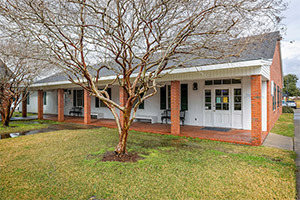
For these reasons, Arbor Family Health leaders wished to integrate clinical pharmacy services into their primary care offerings. However, with the clinic's rural setting, finding clinical pharmacists locally was a challenge. Instead, Arbor Family Health reached out to Xavier University of Louisiana's College of Pharmacy to inquire about forming a partnership. Together, they determined that clinical pharmacy faculty and students at the college would provide services to Arbor Family Health patients via telehealth.
Today, the Intersect program's approach to caring for chronic disease patients includes collaboration between primary care providers, nurse health coaches, and the clinical pharmacists at Xavier University. The program officially launched in its current form in the fall of 2023.
Learn more about the Intersect program in the Rural Monitor article Where Primary Care and Clinical Pharmacy Services 'Intersect': Louisiana Program Helps Patients Understand and Manage Medications.
Services offered
Two certified health coaches conduct monthly check-ins with patients to ensure that they are following their provider's care plan and to learn about any lifestyle changes or challenges they are experiencing. For new patients, these check-ins may be more frequent – once every two weeks, for example – in order to build a trusting relationship between the health coach and patient. Health coaches are also present for provider appointments and may follow up with the patient post-appointment to make sure they have gotten their medicine or made a follow-up appointment if needed.
The clinical pharmacists at Xavier University conduct an annual medication review with each patient over the phone where they answer any questions the patient might have about their medications, make sure the patient is able to access their prescriptions, and assess whether the patient is taking them correctly and safely. For instance, the pharmacist may ask the patient where they store their medications in their house, what they do if they accidentally skip a dose, whether they are able to get their prescriptions filled on time, and what pharmacy they pick them up from. The pharmacists also make sure that all of the patient's medications are included in their electronic medical record (EMR) and that no prescriptions from specialty providers have fallen through the cracks.
Results
More than 250 patients were enrolled in the program at two Arbor clinic locations as of March 2026.
Challenges
Gaining buy-in from patients has been a challenge at times for both the health coaches and pharmacists. For the health coaches, getting in touch with patients who haven't come back in for follow-up appointments after their first visit can be difficult, especially if the patient's phone number or contact information has changed. For the pharmacists, getting new patients to answer the phone for telehealth review calls has been a challenge at times.
Replication
Good relationships, trust, and clear communication between patients, health coaches, providers and clinical pharmacists have been foundational to the success of the program, those involved say. At times, the health coaches have been a valuable bridge between patients and providers, patients and pharmacists, and pharmacists and providers.
From the clinical pharmacists' perspective, allowing for some flexibility in scheduling – knowing that many patients work and are unavailable for a review call during weekdays – is important. Having a contingency plan for when one pharmacist is out sick or unable to make a call due to their academic schedule is also important in order to provide fluid patient care without interruption.
From the health coaches' perspective, patience, empathy, and flexibility are key to gaining the trust of patients and building a positive relationship with them.
Generally speaking, any organization looking to build a similar program will need to build it around the organization's own unique needs and limitations – rather than taking a one-size-fits-all approach – and should expect to continually change and evolve the program based on what's working and what isn't, program leaders say.
Contact Information
Linda Matessino, Director of Grant ProgramsArbor Family Health
225-718-8346
linda@arborfamilyhealth.org
Topics
Cardiovascular disease
· Chronic disease management
· Chronic respiratory conditions
· Diabetes
· Federally Qualified Health Centers
· Health literacy
· Mental health conditions
· Nurses
· Pharmacy and prescription drugs
· Pharmacy workforce
· Primary care
· Telehealth
States served
Louisiana
Date added
May 29, 2026
Suggested citation: Rural Health Information Hub, 2026. Intersect: Individualized Collaborative Drug Therapy Program [online]. Rural Health Information Hub. Available at: https://www.ruralhealthinfo.org/project-examples/1164 [Accessed 19 October 2026]
Please contact the models and innovations contact directly for the most complete and current information about this program. Summaries of models and innovations are provided by RHIhub for your convenience. The programs described are not endorsed by RHIhub or by the Federal Office of Rural Health Policy. Each rural community should consider whether a particular project or approach is a good match for their community’s needs and capacity. While it is sometimes possible to adapt program components to match your resources, keep in mind that changes to the program design may impact results.