

Connecticut Well Water Testing Program
- Need: More frequent water testing among well owners in rural Connecticut.
- Intervention: Initiatives through the Connecticut Institute of Water Resources that offer reduced-cost testing and educational workshops.
- Results: More than 1,000 homes have received testing, with roughly 50% having at least one exceedance over Connecticut health standards.
Description
In Connecticut, where many rural residents rely on private wells for water, UConn Extension educators found that many groundwater users were not regularly testing their wells. The state recommends testing well water at least once a year, but many homeowners were going years or even decades between tests due either to the expense or a lack of awareness around the risks of not testing.
To inform and incentivize well owners, a well testing initiative was created through the Connecticut Institute of Water Resources, which offers testing at a reduced cost and has held educational workshops in rural areas. The program was initially funded by the Institute and offered testing at no cost to the homeowners; the fully subsidized tests were met with high public demand and sold out quickly. With the success of that initiative, the Institute received a three-year grant from the United States Department of Agriculture (USDA) Rural Health Safety and Education (RHSE) program. In its current form, the initiative offers testing to homeowners at a reduced rate. More information can be found on the Connecticut Institute for Water Resources website.
Services offered
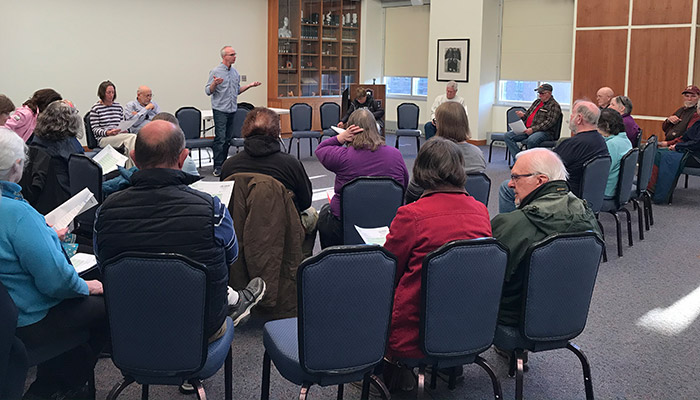
The Institute hosted educational workshops in rural parts of the state, which were free for the public to attend. These hour-long workshops provided a 45-minute overview of well issues and safety, with 15 minutes left for questions at the end. The Institute worked with local health districts, town governments, newspapers, libraries, and other local entities to spread the word about the workshops in local communities. Workshop attendees could also take home a test kit if they wished to have their well water tested at a reduced cost.
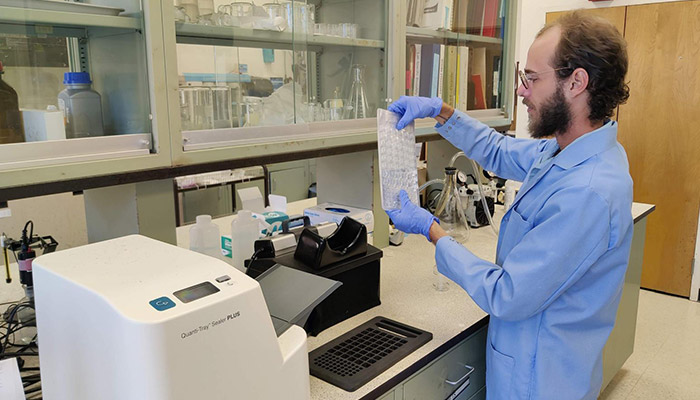
While the Institute is not currently hosting well water workshops, their walk-in testing program is still active. Homeowners can sign up for the walk-in program online and receive a test kit in the mail, which they then deliver to University of Connecticut campus for analysis. The tests check for total coliform bacteria, E. coli, nitrates, sodium, chloride, fluoride, pH, hardness, sulfate, turbidity, iron, manganese, lead, arsenic, and uranium. Each test costs $235, as opposed to the $350 it would cost to get the tests done at a commercial laboratory.
In the fall of 2025, the Institute launched a new PFAS testing program for private well owners, funded by the Connecticut Department of Public Health. The program follows a similar structure as the original well water testing program, with educational workshops, fully subsidized testing, and treatment for homeowners above recommended levels. As of June 2026, the PFAS program was gearing up for its second large educational workshop.
Results
More than 1,000 homes have received testing, with roughly 50% having at least one exceedance over Connecticut health standards. One in three wells had an exceedance of coliform bacteria, which indicates that there may be outside contamination entering the well. One in five wells had a pH exceedance, and around 40% had a uranium level over the Environmental Protection Agency's maximum contaminant level goal, which is the concentration where there is absolutely no risk to the consumer. Around 2% of the wells had either E. coli or arsenic.
The first workshops attracted an estimated 20 people per session, but as the program grew in popularity, they attracted up to 100 people or more. Participants showed a significant increase in their knowledge of well issues after attending.
Challenges
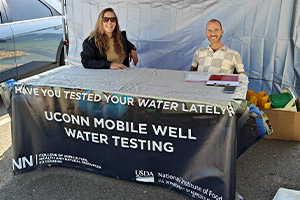
When the initiative first began, educators were meeting with testing participants three times: to educate them, to collect their samples, and to go over the results. They found that some people had difficulty making all three meetings, so they condensed the first two meetings into one in-person meeting and made the results discussion optional and virtual.
Funding is an ongoing challenge. Currently, the program charges $235 for a test – a lower cost than other testing options, but still higher than the program organizers would prefer.
Replication
Program organizers recommend reaching out to similar programs across the country, particularly in states of a similar size, geography, and population. There are a number of similar programs in other states that the Connecticut educators used as references when creating their program.
Contact Information
Michael Dietz, PhD, DirectorConnecticut Institute of Water Resources
Connecticut Institute of Water Resources Well Testing Programs
860-486-2436
michael.dietz@uconn.edu
Topics
Environmental health
· Health screening
· Public health
States served
Connecticut
Date added
July 22, 2026
Suggested citation: Rural Health Information Hub, 2026. Connecticut Well Water Testing Program [online]. Rural Health Information Hub. Available at: https://www.ruralhealthinfo.org/project-examples/1166 [Accessed 11 October 2026]
Please contact the models and innovations contact directly for the most complete and current information about this program. Summaries of models and innovations are provided by RHIhub for your convenience. The programs described are not endorsed by RHIhub or by the Federal Office of Rural Health Policy. Each rural community should consider whether a particular project or approach is a good match for their community’s needs and capacity. While it is sometimes possible to adapt program components to match your resources, keep in mind that changes to the program design may impact results.