

Connected Communities for Healthy Aging
- Need: To help rural older adults navigate aging in place amid shrinking healthcare access, social isolation, a growing need for digital literacy, and other challenges.
- Intervention: A multi-year initiative that works with local partners to build coordinated, community-driven systems that reduce social isolation, strengthen meaningful connections, and improve older adults' access to health, social, emotional, transportation, and technological supports.
- Results: Five rural communities have adopted pilot programs, and more than 8,000 older adults have received support.
Description
Across rural America, communities face shrinking healthcare access, workforce shortages, social isolation, transportation barriers, and a growing need for digital literacy among older adults. In response, the LeadingAge Minnesota Foundation launched Connected Communities for Healthy Aging, a multi-year initiative helping rural communities strengthen the "connective tissue" that supports older adults aging in place. The program works with local partners to build coordinated, community-driven systems that improve access to health, social, emotional, and technological supports for older adults.
Connected Communities for Healthy Aging began in 2020 and has grown to five Minnesota pilot communities. The initiative is grounded in the belief that rural communities themselves are best positioned to identify priorities, build partnerships, and design sustainable solutions.
Pilot communities include:
- Elevate - Perham Health
- Lakes Area Connected Communities - Vivie
- Connected Community of Freeborn County - St. John's Lutheran Community
- Thryve - Guardian Angels
- Willmar Area Connected Communities - Bethesda
While each community identifies its own priorities, all pilots follow a shared roadmap for coalition building, implementation, and long-term sustainability.
Services offered
Connected Communities uses a backbone organization model in which trusted local aging services providers coordinate partnerships across sectors including healthcare, public health, transportation, housing, mental health, faith communities, technology providers, and volunteers.
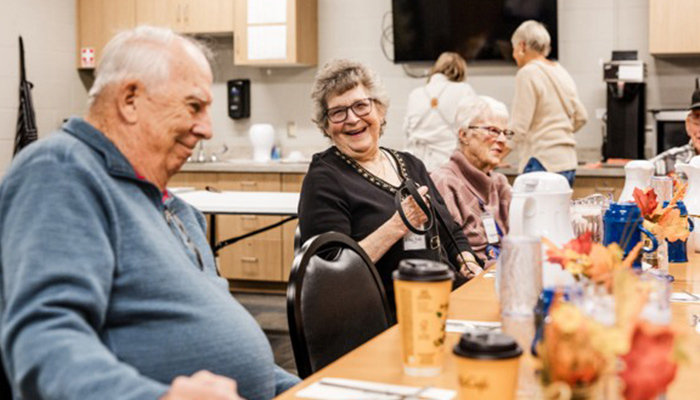
Reducing social isolation and loneliness is a central focus of Connected Communities. Pilot communities strengthen social connection through trusted care navigation, reassurance and outreach programs, volunteer engagement, caregiver and mental health supports, transportation assistance, and connections to local activities and services. These relationship-based approaches help older adults build dependable networks of support, remain engaged in their communities, and age safely at home.
Technology complements this relationship-based work by helping older adults access care, maintain connections, and participate in increasingly digital health and social-service systems. Connected Communities pilots are testing and implementing:
- AI-supported remote patient monitoring
- Reassurance programs
- Technology coaching
- Telehealth supports
- Digital literacy initiatives
- Home-based wellness technology
- Tech-enabled care coordination
In Freeborn County, for example, the Connected Community of Freeborn County partnered with local emergency services and technology providers to expand an AI-supported virtual home care model that helps older adults remain safe and connected at home.
Other communities are embedding digital literacy support into care navigation and volunteer outreach efforts to ensure older adults are not excluded from increasingly technology-dependent systems.
Results
By the end of 2025, the two original "Legacy Pilot" communities reported:
- 8,944 older adults supported
- $1.47 million in estimated health savings and cost reductions
- 668 cumulative community partnerships across all five pilots
Reported impacts include:
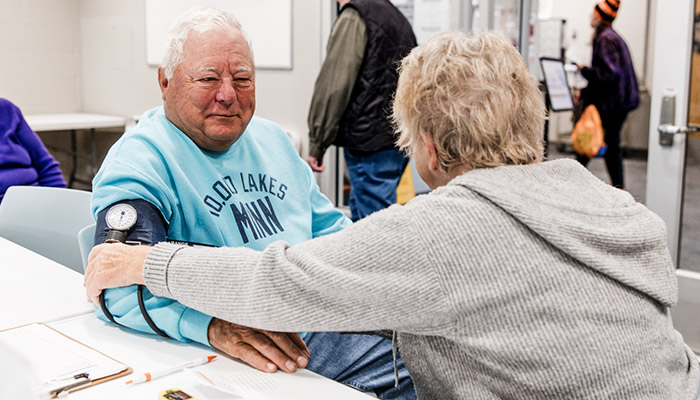
- Increased resource navigation and referrals
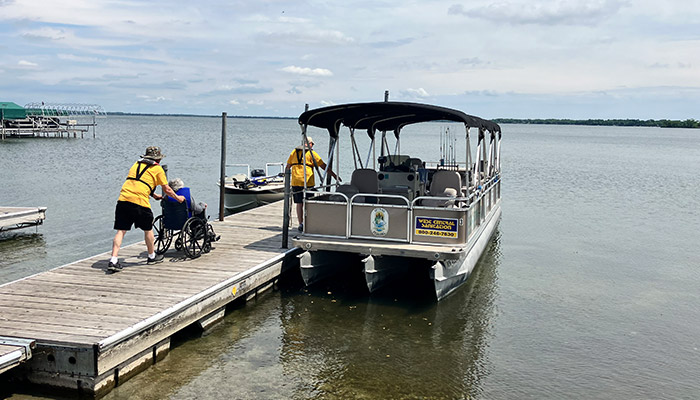
- Improved transportation access
- Expanded mental health and caregiver supports
- Greater social connection and reduced isolation
- Increased volunteer engagement
- Expanded access to remote care technologies
The initiative also demonstrated that rural communities can create new partnerships and sustainability pathways that bridge healthcare and social care systems. Several pilots are exploring reimbursement models and payer partnerships to sustain the work long-term.
Challenges
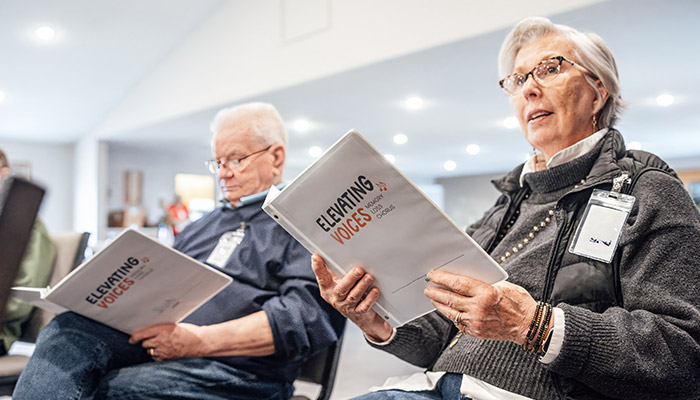
Program leaders say that reimbursement pathways and the changing healthcare landscape have presented challenges. This type of community care is not typically reimbursed, and program leaders express concerns about funding and support for addressing social determinants of health in rural communities.
It takes time to build authentic trust and relationships when working with communities, and requires developing shared interests and goals and maintaining a sense of personal humility. Community conditions and leadership also matter and can take time to get right.
Replication
The Connected Communities Roadmap is a practical framework designed to help other rural communities launch similar efforts. The roadmap emerged from a multi-year developmental evaluation and identifies three core stages:
- Forming a Connected Community
- Transforming a Connected Community
- Sustaining a Connected Community
To support broader adoption, the LeadingAge Minnesota Foundation recently launched an online Connected Communities Development Guide and Digital Toolkit. The toolkit provides practical resources, tools, and lessons learned from the pilot communities to help other rural communities adapt the model to their own local needs and priorities. Learn more in this introductory video.
Contact Information
Gina DiMaggio, Foundation DirectorLeadingAge Minnesota Foundation
Connected Communities for Healthy Aging
651-659-1422
gdimaggio@leadingagemn.org
Topics
Aging and aging-related services
· Home and community-based services
· Human services
· Older adults
· Social connectedness
States served
Minnesota
Date added
August 19, 2026
Suggested citation: Rural Health Information Hub, 2026. Connected Communities for Healthy Aging [online]. Rural Health Information Hub. Available at: https://www.ruralhealthinfo.org/project-examples/1169 [Accessed 21 October 2026]
Please contact the models and innovations contact directly for the most complete and current information about this program. Summaries of models and innovations are provided by RHIhub for your convenience. The programs described are not endorsed by RHIhub or by the Federal Office of Rural Health Policy. Each rural community should consider whether a particular project or approach is a good match for their community’s needs and capacity. While it is sometimes possible to adapt program components to match your resources, keep in mind that changes to the program design may impact results.