

Critical Response: Closing Gaps in Patient Care
- Need: To improve coordination between an emergency department and emergency medical services in rural Iowa.
- Intervention: Hansen Family Hospital updated its protocols to integrate Iowa Falls EMS into hospital operations.
- Results: Staff satisfaction, communication, response time, and adherence to protocols have improved. In addition, Hansen Family Hospital saves $12,885 a month because of the partnership.
Description
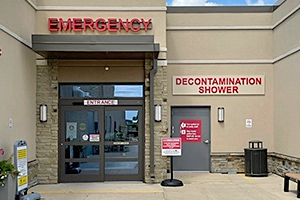
When Hansen Family Hospital, a Critical Access Hospital in Iowa Falls, Iowa, reduced its Certified Registered Nurse Anesthetist (CRNA) coverage, the hospital partnered with Iowa Falls EMS to continue care. Together they updated protocols and integrated emergency medical services (EMS) equipment and expertise into hospital operations.
Services offered
The emergency department (ED) updated its protocols to partner with EMS professionals on IV placement, conscious sedation, and airway intervention.
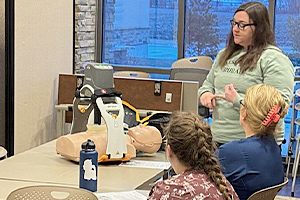
In addition, the ED standardized EMS processes and equipment like a mechanical chest compression system, a device for lifting or repositioning patients, and a carbon dioxide measuring device.
The ED also standardized and updated its handoff tools for patient transfer from primary and specialty care to the ED or other healthcare facilities. This standardization improves communication and continuity of care.
The hospital and EMS train together on topics such as obstetric emergencies, strokes, and hazardous materials decontamination. They also provide public outreach together.
Results
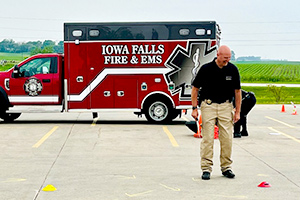
Eliminating 24/7 CRNA call coverage to collaborate with Iowa Falls EMS saves Hansen Family Hospital $12,885 a month. Savings have been reallocated to update equipment and protocols, retain and train staff, and provide patient and community education.
Staff satisfaction improved by at least 45%. Communication between the hospital and EMS staff, pre-notification rates (alerting emergency departments of incoming patients with potential stroke), and adherence to protocols have improved. The response time has also decreased when hospital employees need assistance from EMS personnel with IV placement, conscious sedation, or airway intervention.
Challenges
Challenges in collaborating include understanding each entity's roles and responsibilities and the initial difference in protocols between the hospital and EMS settings.
Replication
Understand what community resources are available.
Contact Information
Brittanee Deeringer, RN, ED Team LeadIowa Falls EMS
641.648.7037
derrinbb@mercyhealth.com
Topics
Care coordination
· Closures of healthcare facilities and services
· Critical Access Hospitals
· Emergency department and urgent care services
· Emergency medical services
· Interprofessional training of the health workforce
States served
Iowa
Date added
November 4, 2026
Suggested citation: Rural Health Information Hub, 2026. Critical Response: Closing Gaps in Patient Care [online]. Rural Health Information Hub. Available at: https://www.ruralhealthinfo.org/project-examples/1172 [Accessed 4 November 2026]
Please contact the models and innovations contact directly for the most complete and current information about this program. Summaries of models and innovations are provided by RHIhub for your convenience. The programs described are not endorsed by RHIhub or by the Federal Office of Rural Health Policy. Each rural community should consider whether a particular project or approach is a good match for their community’s needs and capacity. While it is sometimes possible to adapt program components to match your resources, keep in mind that changes to the program design may impact results.