

Jul 15, 2026
As Alpha-gal Syndrome Spreads, Rural Providers Are on the 'Front Line'
In the last four years, Clark Giles's world has become a bit smaller.
He can't eat in restaurants, and doesn't go to grocery or convenience stores. Everyday things found in other people's homes or offices — certain air fresheners, dryer sheets, scented candles — can cause his ears to start ringing "like cicadas in the trees on a warm summer night" and his brain to fog. Most weeks, the only time he leaves his farm in northeastern Oklahoma is to pick up poultry feed at another farm four miles away.
Giles is one of an estimated 450,000 Americans living with alpha-gal syndrome (AGS), a tick-borne illness that causes an allergy to mammalian products. Reactions range from mild — a rash after eating a steak, for example — to life-threatening, and can be triggered by a range of products that include mammalian ingredients, from food to shampoo to certain medications.
Rural populations are 20 times more likely to develop AGS than urban populations, with people who work or recreate outdoors especially at risk, according to Sharon Forsyth, director of the nonprofit Alpha-gal Alliance.
Alpha-gal syndrome is first and foremost a disease of rural populations.
"Alpha-gal syndrome is first and foremost a disease of rural populations," Forsyth said.
Rural patients also face disproportionate challenges when they do develop the condition: Accessing specialist care and AGS-friendly food can be particularly difficult in small, remote communities. A shortage of allergists in rural counties, and the fact that common medications, vaccines, and medical devices contain mammalian products, make it crucial that rural primary care providers are educated about the condition — a goal of the Alpha-gal Alliance.
"Rural providers, in many ways, are on the front line of this," said Scott Commins, an allergist and researcher at the University of North Carolina at Chapel Hill who studies AGS. "And because it can kind of creep into locations and it's had this slow spread, it's really important that we reach [providers] ahead of time."
A spreading phenomenon
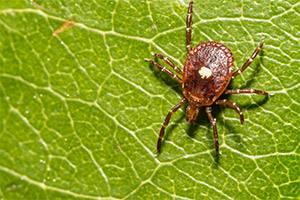
AGS is a relatively new discovery in the medical world: The condition was first described by medical researchers in 2009. Since then, the Centers for Disease Control and Prevention (CDC) has identified more than 110,000 suspected cases, though the CDC estimates that the actual number may be four times as high. Most of those cases are concentrated in the southern, midwestern, and eastern U.S., where lone star ticks, the primary carrier of the disease, are most prevalent.
A patient living far from an allergist doesn't necessarily need to travel to receive an AGS diagnosis. In most cases, primary care providers with knowledge of the condition can diagnose it themselves, Commins says. But many providers aren't familiar with the condition. A 2022 survey of primary care providers across the U.S. found that 42% of providers had never heard of AGS, and that 35% were "not too confident" in their ability to diagnose or manage AGS patients.
That knowledge gap tends to be especially wide in areas where AGS isn't common, Commins noted.
"It's kind of a regional phenomenon," he said. "You could survey a bunch of providers in Oregon and California and they may never have heard of it because they don't really come in contact with patients who have it."
As the range of lone star ticks expands, though, so has the range of AGS.
"As it moves into new places, sometimes those providers are not well versed in AGS," Commins said. "That's why it's super important that we raise awareness amongst the rural providers: they're often the first ones who have patients with it."
…what you don't have is specific educational opportunities for the primary caregivers and the [primary care providers] who are diagnosing this illness.
The spread of AGS in rural areas has increased awareness of the disease among both rural providers and the general public, Forsyth says: "But what you don't have is specific educational opportunities for the primary caregivers and the [primary care providers] who are diagnosing this illness."
Primary care providers "aren't trained to diagnose AGS because it's meant to be an allergist who diagnoses it," Forsyth continued. "But people aren't seeing an allergist, so we have nurse practitioners who are having to diagnose this. Someone in a rural area might be more likely to have heard about AGS [than someone in an urban area], but not have the specific training that they want to be able to diagnose people."
An 'isolating' diagnosis
After a lifetime of working outdoors and serving in the military, Giles didn't think much about tick bites. And when he first heard about people developing an allergy to red meat, he was skeptical.
That changed one night in 2022, when he and his wife strayed from their usual chicken-based meals to have beef for dinner. Giles woke up in the middle of the night with a full body rash. His body went into anaphylactic shock — "itching like crazy," swelling up, his face going numb.

In the emergency room, he recalls, an on-duty doctor poked his head into the room.
"Wow, look at you," he told Giles. "I bet you don't even know what you got a hold of."
Giles had no idea.
"Well, you better find out," the doctor said, "because it nearly killed you."
After describing his scare to a coworker with a red meat allergy, the coworker suggested that Giles might have AGS. She referred him to her own allergist in nearby Tahlequah. A blood test confirmed the condition.
Giles hasn't had a life-threatening reaction since that first night four years ago. But AGS has changed his life in drastic ways. Fumes often send him into dizzy spells and cloud his thinking. The smell of brisket in a crockpot en route to a church potluck, a skunk on the side of the road, a new pair of leather welding gloves left in the car overnight — all of these things have triggered reactions.
"If I can't remember all my sheep's names, that's usually an indication that I'm having trouble that day," Giles said.
He and his wife grow much of their own food on their farm, where they raise chickens and turkeys alongside the sheep. But caring for his sheep comes with challenges, too: he's had to wear a respirator and gloves at times, especially when dealing with birthing fluids in lambing season.
"It's been fairly isolating," Giles said. "If you get it this bad, you've got to be very careful."
Giles was fortunate in that he was able to see an allergist and receive a timely diagnosis. But some of his friends with AGS have struggled with providers who weren't familiar with the condition, he said.
You have to be on the ball and be your own advocate.
"You have to be on the ball and be your own advocate," Giles said. "And if they're providing medication or a procedure, you have to stay involved."
A waiting game
The process of diagnosing AGS is multipart, according to Commins, and includes identification of symptoms, a blood test, and a new diet that avoids mammalian products to see whether symptoms improve. Follow-up typically takes place one to three months after the diagnosis.
"It really becomes a bit of a waiting game," Commins said. "You're not eating the foods that you're allergic to and you're trying to avoid additional tick bites. And if you're doing okay during that period of time, most people don't really need additional follow-up."
From that point, patients typically check in once a year for a blood test to track their antibody levels — which, ideally, will trend downward over time if someone is tick-bite-free. Over time, someone's allergies can even disappear.
To properly diagnose the condition, providers should be well-versed in the symptoms and educated about how to order the correct blood test, which can be "tricky," Commins says. They should also be cognizant of the fact that symptoms can sometimes be delayed and diagnosis can require some lengthy and nuanced discussion.

"The time separation between the meal and the symptoms often means that the providers have to really be thinking about it and trying to elicit [answers]," Commins said. "If you're really crushed for time, like I think many of our primary care rural health folks are, you may not have as much bandwidth in that visit to really delve into a single maybe-allergic reaction."
Post-diagnosis, it's also important that all types of providers are familiar with the medications, vaccines, and medical devices that might trigger a reaction in AGS patients, and able to perform an informed cost-benefit analysis.
"If you're bitten by a rabid animal, you better get the rabies vaccine even though it contains gelatin," Forsyth said. "But other cases are a little more nuanced. For instance, who is heparin appropriate for and under what circumstances? A big part of what we want to do in terms of education in the rural space is to educate providers not just about diagnosis and management of AGS, but about how to manage things like perioperative care, or antivenom, or cardiac surgery."
Large university hospitals tend to have protocols for treatment and AGS-safe formularies, Forsyth added, but most small, rural hospitals don't.
"They're simply not going to have the resources unless somehow these resources are pooled or made accessible to them through other avenues," she said.
Casting a wide net
At least once a week, providers reach out to Forsyth to learn more about AGS and to ask about continuing education opportunities, she said. Many of them are nurse practitioners or other types of primary care providers — most training and outreach efforts have been directed toward physicians up to this point, she noted, overlooking the many rural communities that rely on nurse practitioners or physician assistants for care.
To better reach all types of rural providers and residents, the Alpha-gal Alliance has partnered with the National Rural Health Association for outreach, and is looking into connecting with state-level rural health associations and offices. The Alliance is also working with the University of Kentucky Cooperative Extension on a pilot project that they hope to replicate with other organizations: Ultimately, the goal is to be able to provide different Extension offices with customizable templates for educational materials, instead of each Extension office producing its own materials about AGS. To train rural providers, the Alliance is in the process of working with a university-based medical center to create an alpha-gal ECHO series, which would let providers attend virtual expert-led trainings online.
What we're realizing in the AGS community is that we've got the information, but the bottleneck is trusted messengers and distribution networks.
"What we're realizing in the AGS community is that we've got the information, but the bottleneck is trusted messengers and distribution networks," Forsyth said.
Commins agrees that reaching people is the biggest challenge facing AGS advocates.
"I think the point is to try to saturate it all and hope you get as many folks as you can by casting a wide net," he said.
Recently, Commins started a podcast, "Questions People Ask," which aims to answer common questions about AGS. The first episode covered the background and basics of AGS, while the second was targeted at healthcare providers specifically.
For Giles's part, he hopes sharing his story will help others avoid, and deal with, the condition.
"There's not a whole lot of good sources of information out there," he said. "I can't really do anything to get over this, so I do get some satisfaction from helping other people navigate it. The main thing is just making people aware."
How to Avoid Tick Bites
Part of improving alpha-gal awareness is teaching people how to avoid lone star tick bites. What's effective against blacklegged ticks tends to be "completely useless" against the lone star variety, Forsyth says: With some regional exceptions, "Lone star ticks drink DEET for breakfast."
Unlike other varieties of ticks, which can be largely avoided by sticking to the middle of paths and not brushing against any tall grass, lone star ticks will "hunt" and chase after people. Here are a few tips to protect yourself against them:
- Wear permethrin-treated clothing, and spray permethrin on your shoes.
- Wear tall rubber boots when outside and wrap the top of them with double-sided carpet tape (or duct tape folded in half).
- Carry a lint roller to remove "tick bombs," clusters of hundreds to thousands of larval ticks. These tend to look like dust on your skin and are a common source of AGS.

Gretel Kauffman has been a web writer for the Rural Health Information Hub since 2022. She writes on a variety of rural-specific issues in the Rural Monitor and Models and Innovations. Gretel has a bachelor of arts degree in American Studies from the University of Notre Dame. Full Biography
View all articles by Gretel Kauffman