

Jul 01, 2026
Rural Pediatric Readiness: Improving Emergency Care for Kids
by Allee Mead
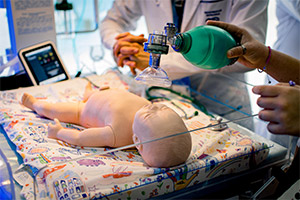
If a sick or injured child comes into your emergency department, do you know what to do? Do you use age-appropriate pain scales? Do you have child-sized blood pressure cuffs and automated external defibrillator pads? Is this equipment in a central location so staff can find it quickly? Do you have policies and trainings so the staff know how to assess, treat, and transfer pediatric patients?
Pediatric readiness is an emergency department's or emergency medical services agency's ability to provide quality care for children. EDs and EMS can improve their pediatric readiness by making sure they have pediatric-specific equipment and policies in place and train their staff on how to care for their youngest patients. In an emergency situation, that preparation can mean the difference between life and death for a child.

According to the National Pediatric Readiness Project (NPRP), when hospitals are highly pediatric ready, there is a 76% lower mortality rate for ill children and a 60% lower mortality rate for injured children. An estimated 2,143 children's lives may be saved every year if every ED in the United States achieved high pediatric readiness.
But rural EDs and EMS tend to have fewer resources and see fewer pediatric patients than urban facilities. Rural facilities also face the challenges of "competing priorities, turnover, and the lack of time" in becoming pediatric ready, Dr. Sanya Desai said. Desai works with the National Pediatric Readiness Quality Initiative (NPRQI) Collaborative, which helps EDs, including small and low-resourced ones, engage in quality improvement (QI) to improve pediatric readiness.
History of the NPRP
NPRP and NPRQI are initiatives under the EMSC Innovation and Improvement Center (EIIC). The EIIC is funded by the Emergency Medical Services for Children (EMSC) program from the Health Resources and Services Administration Maternal and Child Health Bureau. EIIC furthers the EMSC's work through QI, education, and communication.
Dr. Marianne Gausche-Hill is a co-lead for the NPRP. In 2012, Gausche-Hill became involved with establishing the NPRP, after success with a similar program she started in California. In 2013, the NPRP launched its first national assessment to measure emergency departments' readiness to treat pediatric patients.
We wanted every emergency department in the United States to be able to meet these guidelines.
When the EIIC first developed pediatric readiness criteria, the organization reached out to rural facilities for input. "We wanted every emergency department in the United States to be able to meet these guidelines," Gausche-Hill said. "You didn't want it just for high-resourced children's hospitals."
"Every emergency clinician who goes to work wants to do the best job possible. The key was how do we empower them and help them optimize their working environment and the infrastructure in order to be able to do that," Gausche-Hill said. "Now, we can't build a PICU [pediatric intensive care unit] in every hospital and staff it; that's just not going to happen."
Instead, the NPRP helps EDs put pediatric-specific policies in place and provides a list of equipment needed for pediatric emergencies, guidelines, clinical pathways, and checklists. The EIIC has toolkits for EDs and EMS and modules for pediatric emergency care coordinators (PECCs) — champions who promote pediatric readiness at their facilities and agencies.
"Assigning this role [of PECC] is important for children, almost more so than any other patient population, just because they can't truly advocate for themselves," Gausche-Hill said. She added that, based on national assessments of pediatric readiness, assigning the role of a physician and nurse PECC is the single most important intervention needed to achieve and sustain pediatric readiness.
Starting the pediatric readiness journey
Heather Casebeer, RN, is the PECC at Permian Regional Medical Center in Andrews, Texas. About two and a half years ago, Casebeer's then-director brought up the topic of pediatric readiness, and Casebeer volunteered to lead that effort.
"At the time, I was very uncomfortable taking care of pediatric patients. And one of my mentors as a nurse told me that's the thing you need to jump into when you're uncomfortable," Casebeer said. "I thought this would be perfect to help me get over my fear of taking care of children if I just dive right into this."
Casebeer took the NPRP assessment, which showed Permian Regional Medical Center's gaps in pediatric readiness and its score compared to other hospitals. She said the assessment was "very overwhelming in the beginning…It's like over a hundred questions, asking: Do you have all this equipment? Do you have these policies? Do you have this stuff set up for charting?"
It wasn't that we were not taking care of children. It was just very under-recognized.
Casebeer said one step in the pediatric readiness assessment is to estimate how many pediatric patients the ED sees in a year. "We assumed we were seeing less than 1,500. That very first year that I actually kept track…our census was over 2,500. Last year we saw over 3,000," she said. "It wasn't that we were not taking care of children. It was just very under-recognized."
Casebeer said the pediatric readiness assessment does not have deadlines for facilities to meet, which can help the process seem less daunting and more attainable for facilities with "competing priorities."
Andrew Appleby, RN, is the PECC at South Lincoln Hospital District (SLHD), a Critical Access Hospital in rural Kemmerer, Wyoming. In 2021, SLHD completed the NPRP assessment, and "it was relatively low scoring," Appleby said. SLHD had pediatric equipment but no central location to keep it, and the hospital did not have many pediatric-specific policies in place.
We're not the only ones in the nation that have this issue and this is maybe a fairly common population segment that is underserved.
In 2022, Appleby became the hospital's trauma coordinator. The following year, SLHD completed a trauma site survey that the state of Wyoming was conducting. Appleby got involved with the NPRQI Collaborative and "quickly realized that this is a very important thing and that we're not isolated to this." He added, "We're not the only ones in the nation that have this issue and this is maybe a fairly common population segment that is underserved."
Rewriting policies and making other changes
Appleby said it took "a good six-ish months" to become pediatric ready. Creating new policies or taking other facilities' existing pediatric-specific policies and tailoring them to fit SLHD took time, he said, as well as receiving approval for the new policies from medical staff and administration. He said the whole process was "a little time consuming, but well worth it."
Like Appleby, Casebeer in Texas realized her facility did not have policies that specifically addressed pediatric care. With some policies, she was able to add a new pediatric-specific section. With others, she had to completely rewrite the policy.
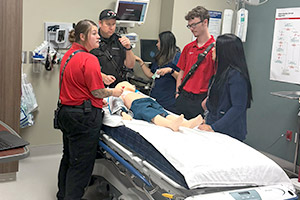
Casebeer also organized training simulations for the ED and other departments. "When we have a code or trauma activation…we have everybody coming to help because there are not very many hands in our ER." In addition, she began including EMS personnel in the simulations, which take place quarterly.
Casebeer also began chart reviews, which offer feedback to staff. Before, she said, "there wasn't any follow-through. After the chart was done, no one ever looked at it again." Through QI initiatives, staff learned they did well assessing and reassessing high-acuity pediatric patients but not with other pediatric patients. They also did not have a pain score that was appropriate for children.
"We didn't have the tools, but we didn't know we didn't have them until somebody gets in there and starts digging around," Casebeer said.
Trainings and other resources
In October 2019, the Georgia Office of Emergency Medical Services and the Georgia State Office of Rural Health (SORH) began discussing pediatric needs. In February 2020, the state EMSC program director assembled a 12-person committee to define criteria for a state pediatric readiness designation as well as identify hospitals to participate in a pilot program.
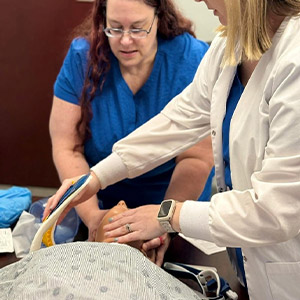
The Georgia SORH created two grant-funded initiatives to encourage participation in the pilot program and provide continuing education opportunities. The first program is a five-year grant awarded to Georgia Southern University to collect county-level data and complete needs assessments.
Eight rural counties participate each year, and university personnel meet with the hospital leaders to discuss the findings and the possibility of pursuing the pediatric readiness designation. "I'll be honest, we're almost finished with the reports, and all of them recommend that the hospitals should pursue pediatric readiness," said Nita Ham, Georgia SORH Executive Director, "because every rural community can certainly benefit from that."
The second program is a four-year grant awarded to the Georgia Trauma Foundation to deliver free continuing education programs at rural hospitals. "Those nationally recognized classes…are difficult for rural hospital staff to attend," Ham said. "They cost money and there's typically travel time involved. You have to be off shift and the hospital has to backfill…so we decided we wanted to take the classes directly to our rural communities."
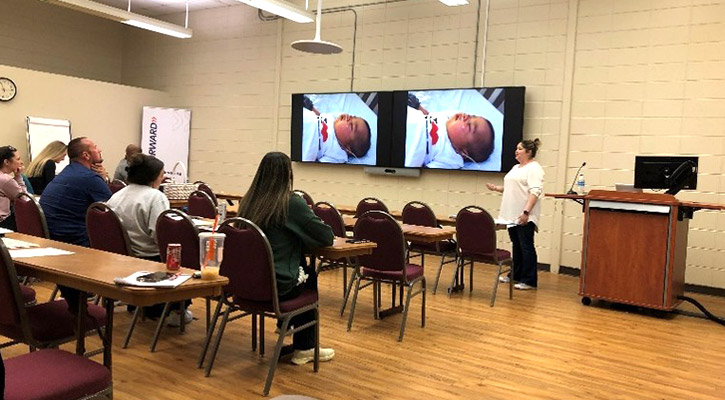
The program sends instructors and equipment to rural hospitals, specifically facilities that have enough room for neighboring hospitals' staff to also participate in the training. "Not only do we deliver quality classes," Ham said, "but this allows the clinical staff to be in their own environment where they feel more comfortable and they can train in the same environment where they will be delivering care."
Not only do we deliver quality classes, but this allows the clinical staff to be in their own environment where they feel more comfortable and they can train in the same environment where they will be delivering care.
"We lovingly referred to it as the Traveling Training Show," Ham said.
Online, nationally available resources include NPRQI, a free web-based platform to help frontline staff conduct QI. Desai said the platform helps ED teams make small, meaningful changes without needing to be experts in QI or technology. The NPRQI team guides ED teams through the QI process. The platform is designed to "take stuff off your plate," she said. "We're taking the data burden away from them and allowing them to really focus on making the changes."
NPRQI has 28 pediatric quality metrics for EDs, and they were designed with "EDs with low resources and low pediatric volume" in mind, Desai said. Participating EDs sample their pediatric patient encounters over two or three months and enter the data into the platform. NPRQI provides one-on-one coaching in data interpretation and QI methodology.
The current EMSC-NPRQI Collaborative cohort has 141 participants. Each participant chooses a focus area, completes monthly sessions, and learns from other participants and subject matter experts.
EDs that engage in QI have a 26-point increase in their pediatric readiness score.
"EDs that engage in QI have a 26-point increase in their pediatric readiness score," Desai said. "But based on the last NPRP assessment, we saw that only about half of EDs that we surveyed did any QI."
All the EMSC resources have been absolutely amazing," Casebeer from Texas said. She uses the free SimBox simulations for training staff.
Improvements in care, confidence, and community perceptions
Since taking the first assessment, Permian Regional Medical Center's score has gone up about 22 points, Casebeer estimated. She has also seen an emotional change in her coworkers: "I love seeing the confidence and the enthusiasm in the staff."
"We see a lot of engagement from rural sites," Desai said. She remembered a PECC from a different rural Texas hospital whose work "was above and beyond the national performance on almost all of the core NPRQI metrics." When the PECC asked for guidance on what to work on next, Desai encouraged her to look at advanced measures but also to share her "incredible work" with hospital leadership.
Appleby in Wyoming said community members used to say that SLHD was unable to take care of patients, constantly transferring them to larger facilities. Now, he said, he and his coworkers "don't hear that anymore."
"I think that was probably the biggest benefit, how our image transformed to the community," Appleby said.
The Wyoming Hospital Pediatric Readiness Project, through the Wyoming EMSC Program, has recognized 10 emergency departments in the state as pediatric ready, including SLHD in 2024.
Georgia currently has ten pediatric ready hospitals, two of which are rural. The SORH's needs assessment program has produced 40 reports so far, and its continuing education program has completed "a total of 85 classes, with over 900 students participating in over 10,000 classroom hours of instruction delivered," Ham said.
Gausche-Hill said 4,593 EDs, or 82.6% of all EDs in the United States, responded to the most recent NPRP survey. "This is the largest number of hospitals that have ever responded," she said.
Partnerships, protected time, and other steps to success
Gausche-Hill said it is important for rural EDs to establish guidelines, build relationships with larger neighboring hospitals, and practice stabilizing children and preparing them for transport if needed. "You want to do it before the child hits the door," she said.
In Wyoming, SLHD often works with Intermountain Primary Children's Hospital in Salt Lake City, Utah — a two-hour drive away. The children's hospital provides training, telehealth, and consultations and often receives pediatric patients that SLHD needs to transfer. Appleby called the children's hospital team "wonderful to work with." He added, "I wish we could get them here more often" for training, which currently happens semi-annually.
Ham praised the Georgia SORH's close working relationship with other state agencies. "The partnerships with these organizations are what really make this work," she said.
Gausche-Hill also recommended pre-calculating drug dosing — instead of trying to determine the correct dosage during an emergency — and said that rural hospitals can reach out to local pharmacists at larger facilities that have already done that work. "You don't always have to reinvent the wheel," she said. "You can borrow from others."
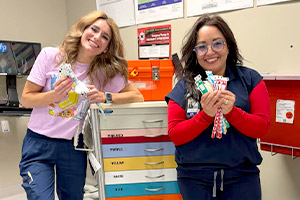
Desai clarified who should be a PECC: "What is sometimes misunderstood is that this is going to be that nurse or physician that likes seeing kids, and so they should see every kid that comes in the ED." She said a PECC is an administrative role to make sure the ED team is prepared to treat children.
Desai also recommended that PECCs "have protected time to do this work" and have that work built into their salary. When Casebeer in Texas first started this journey, the hospital blocked off time during her regular shift for her to focus on pediatric readiness.
Casebeer also serves as the Pediatric Readiness Improvement and Simulation Mentor (PRISM) in her region of Texas and answers neighboring facilities' questions.
"Children don't pick where they get sick or injured," Casebeer said. "I think that they deserve the best care they can get regardless of where they are."

Allee Mead is a web writer for the Rural Health Information Hub. She has written on important rural issues, including maternal mortality and farmers' mental health, and has presented nationally on RHIhub's opioid resources. Originally from rural North Dakota, she has a master's degree in English. Full Biography
View all articles by Allee Mead