

May 27, 2026
A New Network of Rural Providers in Arkansas Looks to Take On The 'Needs and Pain Points' of Behavioral Healthcare
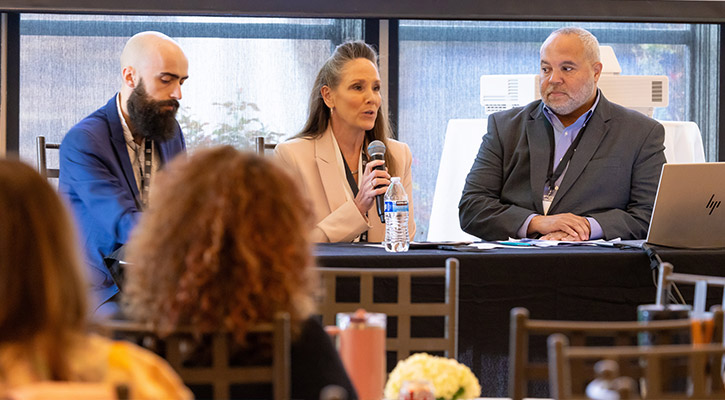
A new network of primary care providers in southern Arkansas is exploring ways to improve access to mental and behavioral health resources in the region.

The Arkansas Rural Behavioral Health Access (ARBHA) Network, formed last year through a planning grant from the Federal Office of Rural Health Policy, aims to find answers to a question familiar to rural providers everywhere: How do we make sure all patients are able to get the care they need — and how do we make that care as seamless and convenient as possible? While that's a big question, it's only the first of many that ARBHA is seeking to solve.
"How do we take care of people in our community and keep them close to home?" said Kim Shuler, chief executive officer and co-founder of the Arkansas Behavioral Health Integration Network (ABHIN), which oversees ARBHA. "We have an opportunity to connect and hear from [providers] about what their specific needs and pain points are, and to find solutions."
Getting started
ABHIN, a statewide nonprofit, formed in 2019 with the goal of promoting integrated mental and behavioral healthcare throughout Arkansas. The organization offers a range of educational and training opportunities, including monthly webinars for providers and an internship program that places Master of Social Work (MSW) students in primary care clinics.
As ABHIN staff connected with primary care providers across the state, they heard a familiar refrain from rural providers, Shuler said: "They said, 'We're really interested [in behavioral health integration], but in our area we don't really have the resources or tools to get started. What would that look like? How would we get started? Could you help?'"
In rural communities where behavioral and mental health resources are sparse, primary care providers are often the first — or only — point of contact for people in need of care. It's not uncommon for providers in southern Arkansas, where ARBHA is focused, to have to send patients hours away to the nearest city to receive more advanced mental or behavioral healthcare, according to Shuler.
We know that in rural communities, primary care physicians are the anchor of behavioral health services.
"We know that in rural communities, primary care physicians are the anchor of behavioral health services," said Rachel Blanton, a project consultant for ABHIN. "How do we figure out resources that better serve the providers and the patients in those communities? What does it look like when we don't just take it as the expectation that a patient with psychosis is going to board in the emergency department for three days and then get a really expensive bus ride to Little Rock?"
Those are the questions that Shuler and Blanton — and a network of primary care providers across southeastern Arkansas — have set out to answer with ARBHA.
"All of these are small primary care practices with providers who are deeply committed to their communities," Shuler said. "They're invested in bringing the best possible care, and I truly see them as pioneers and the catalyst for improved healthcare in their areas."
A lack of resources
Dichelle George, a primary care physician in Warren, Arkansas, first became involved with ABHIN two years ago, when Shuler reached out to her about hosting a MSW student at her private practice clinic. Warren, a town of about 6,500 people and the seat of Bradley County, has "a general lack" of mental and behavioral health resources, according to George, and convincing patients to take advantage of the resources that are available can be challenging.
"It's very difficult to get your patients to go to a separate clinic for behavioral or mental health," George said. "They don't want that stigma."
George's clinic sees between 20 and 30 patients a day. When a patient comes in exhibiting symptoms of acute mental illness, the only option the clinic currently has is to send them to the emergency room, she said.
"If you have one patient who comes in like that, you'll be off your schedule by two hours or you'll have to call the police or an ambulance," George said. "It's very different from having someone in your office that can deal with mental illness."
The MSW intern that ABHIN sent worked as a counselor at George's practice for the length of the school year — a process that began with a two-day in-person training "bootcamp," followed by weekly virtual supervision and onsite supervision at the midterm point and end of the year — before leaving at the end of his clinical rotation. During that time, George noticed a significant difference in her patients' willingness to receive mental healthcare: When she asked patients whether they would like to talk to an in-house counselor, every one of them said yes.
Ideally, George said, she'd like to see every primary care clinic in the region have an in-house counselor. She'd also like those clinics to have access to a central network of psychiatrists that could help with more advanced questions and cases. She hopes that ARBHA's work can help to make this vision, or something like it, a reality.
"I think having a mental health person in the primary care office would lead people to get the treatment they need sooner," George said. "It wouldn't be something you would need to go home and think about. That part of the puzzle is not waiting to happen."
A 'ripple effect'
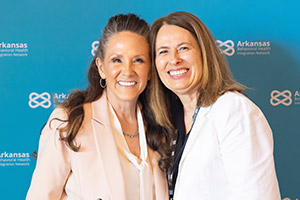
From those early conversations with providers, Shuler developed a vision of ARBHA — a network to gauge the needs of rural clinics, look toward solutions, and make sure that rural providers had a seat at the table in policy and programming discussions. Currently, the network includes partners in Sevier County, Pope County, and Bradley County, where George is based.
"It's been this gradual process," Shuler said. "Building that trusting relationship has taken some time. It's not just, 'Let me call this random primary care clinic in southern Arkansas and say, hey, we have a great idea. Would you like to participate?'"
ABHIN's past work with rural providers in the area served as a helpful basis for developing the network, Shuler and Blanton said.
"The relationships were already there when we said, 'Hey, we really want to develop the network,'" Blanton said. "Then everybody raised their hand and was like, 'Yep, I'm ready. We trust you.'"
Shuler and Blanton have also been careful to accommodate providers' busy schedules and to compensate them for their time, they noted.
"Because they're already working so much, we try to build that into the value of our grant: making sure that we're not just asking them to jump in and pick their brains for hours upon hours and contribute intellectually to this work," Blanton said. "It's really important that we make sure that we're honoring their contributions in that way."
Going forward, ARBHA leaders hope that the network's impact is felt beyond southeastern Arkansas. Eventually, they want to build interest in membership statewide through peer-to-peer outreach among providers.
I definitely see a ripple effect. You know what they say in medicine: see one, do one, teach one.
"We want to bring awareness and we want to bring resources," Shuler said. "I definitely see a ripple effect. You know what they say in medicine: see one, do one, teach one."
Making sure rural providers' perspectives are represented in discussions around policy, billing, and training programs is also a priority for ARBHA, Blanton added: "How can we bring their voices to the table in settings like that or create more forums for them to communicate directly?"
Already, Shuler said, she is encouraged by the communication and relationship-building she's seen between providers in the network.
"It has been really heartwarming to watch as they have gotten together," Shuler said. "Watching them organically start supporting and sharing some of their knowledge and resources has been really amazing."

Gretel Kauffman has been a web writer for the Rural Health Information Hub since 2022. She writes on a variety of rural-specific issues in the Rural Monitor and Models and Innovations. Gretel has a bachelor of arts degree in American Studies from the University of Notre Dame. Full Biography
View all articles by Gretel Kauffman