

Jun 10, 2026
'Good Stewards': Rural Healthcare Experts Discuss Governance Board Best Practices
by Allee Mead

About five years ago, Gunnison Valley Health (GVH) CEO Jason Amrich asked Board of Trustees chair Mark Kaufman, MD, and other board members to attend a Colorado Hospital Association meeting, where they listened to a presentation about governance.
After that presentation, Kaufman recommended that the GVH board create its own governance committee. "That was the start of trying to understand how we could improve our board development and functioning process," Kaufman said.
"The governance committee also creates the expectation of performance across the board," Amrich said. He praised the governance committee's work on the board's bylaws and policies, calling that effort "the catalyst for our board's performance."
Roles and expectations

A healthcare facility's board "first and foremost defines the mission and purpose of the organization," Brock Slabach, National Rural Health Association (NRHA) Chief Operations Officer, said. "Not only does it define it, but it also holds the organization to that mission and purpose."
Slabach also stressed the importance of a healthcare board understanding its role within the organization. "Governance is different and apart from operations," he said. "They're not the operators; they're governing the organization in terms of a broader picture."
Darrold Bertsch agreed: "It's important for the board not to get involved in the daily operations of the organization. Board members have one employee, and that's the CEO." A former healthcare executive, Bertsch serves on the board of Coal Country Community Health Center and Sakakawea Medical Center, a Critical Access Hospital (CAH), in Mercer County, North Dakota. The facilities are separate organizations with separate boards of directors, but they share a CEO. The two facilities "have integrated governance," he said, with two members serving on both boards.
Board members have one employee, and that's the CEO.
To illustrate his point about boards' roles, Bertsch gave the scenario of a staff member being rude to a patient and that patient complaining to a board member. The board member should listen to the concern but not discuss the complaint with the employee. Instead, the board member should inform the CEO or encourage the patient to contact the healthcare facility.
Along with understanding their roles on the board, members need to understand the board's larger organization. "The most important thing is for the board to be acutely aware of its organizational structure and bylaws," Slabach said. For example, a county hospital's board has to follow certain legal requirements.
"Boards must also understand and help community health centers (CHCs) address increasing complexity in the U.S. healthcare system…and be aware of policy and regulatory changes that impact their organizations in order to partner with CEOs on strategy," said Emily Heard, National Association of Community Health Centers (NACHC) Vice President of Health Center Governance.
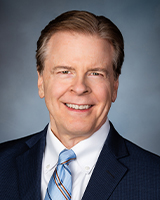
Boards also act as the fiduciary for the healthcare facility. "They're responsible to secure adequate resources for the organization to fulfill its mission," Slabach said. "They make sure that they're good stewards of the money entrusted to the hospital or to the FQHC [Federally Qualified Health Center] and then, more importantly, setting up safeguards through processes like audits and oversight that help to verify and to maintain that integrity throughout the entire organization."
Finally, Slabach added that board members should be "reflectors" of the healthcare organization. Board members are not spokespeople for the facility, but they can still enhance the facility's relationship to the community it serves.
Recruiting new board members
Recruiting board members can be difficult for rural healthcare facilities. Tanya Case is a board member for DRH Health, a rural health system in Duncan, Oklahoma, and also serves on the American Hospital Association (AHA) Board of Trustees Committee on Governance. Hospital boards need qualified individuals from different age groups and professions, she said, but there is a limited pool of people who are able and willing to serve on a board, especially those working and raising a family.
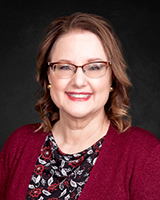
"Our lives are busier," Case said. "When you're asking someone who already leads an organization or holds a demanding position to spend several hours at an evening board meeting after a full day of work, that's a tough ask." Case said hospitals may need to rethink the traditional evening meeting model and instead hold board meetings during business hours, while encouraging local employers to support employees who take on these important community leadership roles.
CHCs have another consideration while recruiting board members, since 51% of CHC board members must be patients of the health center. Heard from NACHC said, "CHCs can leverage the well-established relationships the clinical staff have with patients to identify individuals who could be an effective patient board member," adding that some health centers train their staff to identify future board members and make recommendations about possible candidates to the CEO and the board. Other recruitment strategies include contacting the CHC's Patient Advisory Committee if one exists, handing out or hanging up flyers, or posting an interest form on the health center's website or social media.
Board orientation
After recruiting comes training new board members. One key aspect of orientation is teaching board members how CAHs' and CHCs' finances are different from other organizations and businesses. "A banker's business is totally different than a Critical Access Hospital," Bertsch from North Dakota said. Board members need to learn about cost-based reimbursement for a CAH and regulatory requirements for CAHs and CHCs.
Bertsch also recommended that board members tour the healthcare facility so they can better understand the organization and people they're serving.
Toniann Richard is the CEO of HCC Network in west central Missouri. "The compliance side of an FQHC board can be a little overwhelming and could be daunting for somebody just looking at it," she said. She explained it's important to walk new board members through the expectations and explain the support that board members have in this work.
Alexis Foster, National Rural Health Resource Center Lead Program Specialist, co-created a training for healthcare facility boards. "We really wanted to be able to provide them with general information, because sometimes this is their first time being on a board," Foster said. "They really just want to understand what's expected of them."
The training walks board members through roles and responsibilities as well as required documents board members need to sign. The training provides different scenarios that a board might face and explains what to do and not to do. "It truly allows them to practice working through different discussions and situations," Foster said.
The training also explores "building those successful relationships with staff, staying engaged as board members, forming a strong bond with that CEO," she said.
Ongoing education
Since each board is different, "there is not one approach to supporting board development," Bethany Adams, National Rural Health Resource Center Program Advisor, explained. She added the Center has "a multi-technical assistance approach."
When the National Rural Health Resource Center assists a struggling hospital with developing turnaround strategies, Adams said her organization starts with the hospital's board. The Center performs a financial operational assessment and holds "conversations with the board, providing them the information in a meaningful way that helps them to understand the impact of their decisions," Adams said. She added that the Center has helped seven hospitals prevent closure.
Adams said the Center's training also compiles best practices and helps board members consider quality improvement as well as financial success. The Center offers in-person workshops and virtual learning collaboratives. Adams said participants also benefit from networking through these programs.
The Center meets with a healthcare facility's board and answers any questions that board members have. "We build a working relationship with them right from the get-go," Adams said. "We help boards learn how to think strategically forward and remain focused on transformational strategies that position the organization for the future."
Most of the Center's work is supported through the Federal Office of Rural Health Policy (FORHP). Organizations do not pay a fee to access this programming. Through these programs, participants complete leadership team agreements, which help them hold themselves and their teams accountable.
Case's health system in Oklahoma works with a healthcare performance improvement company that offers board governance training, but she said other hospitals could access resources from AHA. She added the AHA Committee on Governance can answer people's questions or direct them to someone who can help. "You learn so much just by being around other people on other boards," she said.
You always have more to learn as a board, even if your board's been around a long time.
"You always have more to learn as a board, even if your board's been around a long time," Case said. "I think that board governance is something that is always evolving, especially in today's rapidly complex, ever-changing healthcare environment."
Learning together with boards from other healthcare facilities can help keep costs down and provide valuable insights from peers. At a previous job, Bertsch helped organize a regional board training in North Dakota, funded by the state's Flex program. Board members and CEOs from neighboring healthcare facilities gathered and learned about different topics. The state department of health presented on CAH regulatory requirements, a public accounting firm talked about reimbursement, an attorney spoke about fiduciary responsibilities, and the Center for Rural Health (North Dakota's State Office of Rural Health) spoke about its work and best practices for board members.
Strengthening relationships
Amrich said the board's governance framework and the trust between the CEO and board helped GVH weather recent challenges, such as transitioning to a new electronic health record.
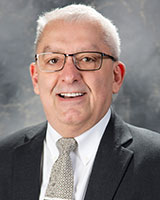
Bertsch also stressed the importance of a healthy relationship between the CEO and the board. "I've been fortunate in my career [as a former CEO] that I've always had supportive board members and, more importantly, a supportive board chair, because a lot of the communication takes place between the CEO and the board chair," he said.
As a CEO, Richard in Missouri discussed the importance of transparency with her board, "making sure that I'm providing them with enough information that they can be informed and comfortable with that governance role and not feel the need to step into an operational space."
At HCC Network, Richard said most board members "max out their role" in terms of how many years they can serve. HCC Network board members can serve a total of nine years. "In my almost 20 years in this role, I think there's been three instances where somebody has had to resign from the board during a term or not renew their next term" due to personal reasons like moving or becoming a caregiver, Richard said.
Our board is really great at opening doors for us.
"Our board is really great at opening doors for us" in the community, Richard said. She discussed the healthcare that HCC Network provides in the local jail. One HCC Network board member is the county captain of the sheriff's department. He helped inform HCC Network on providing care for incarcerated individuals. "Just yesterday [HCC Network] got a phone call from the sheriff saying that this program is running better than it ever has," Richard said.
Improving meetings and overall performance
The environment in the boardroom can determine the board's success. Bertsch in North Dakota recommended that no one person should dominate discussions during board meetings. "A good board chair will solicit input from a variety of folks, and board members need to feel comfortable that they can ask whatever question that they want," he said.
Case in Oklahoma stressed that board members should be able to disagree with one another while deliberating, but then board members need to unify once a decision has been made.
In Colorado, GVH board members can come to board meetings an hour early to visit a section of the hospital. This board rounding allows board members to meet frontline staff and see the work they do.
In addition, Amrich said the board labels agenda items so members "can get into that right frame of mind for the type of conversation they will be having." The labels can identify topics like oversight or indicate whether the board is just discussing an item or needs to make a decision about it. Board meetings include a meeting review, in which members discuss what went well, what could be improved, and if members stayed in their "governance lane."
Slabach from NRHA recommended that boards evaluate their own performance: "How do they feel about the job that they're doing and what are the gaps that they may need to attend to in order to be better at some of those functions?"
In 2023, working with a software company, the GVH Board of Trustees in Colorado completed a self-assessment. The assessment allowed the board to compare itself to other boards across the country. The GVH board then developed action plans to address areas needing improvements.
The board completed another assessment in 2025 and showed improvement in the eight domains measured. Board members reported overall satisfaction with their governing performance, with 60% rating it as "outstanding" (up from 29% in 2023) and 33% as performing well.
"The fact that we can improve from an already pretty high-performing board and then go even above and beyond, to me, is a pretty awesome success story," Amrich said.
But boards shouldn't stop at just evaluating their own performance. Bertsch recommended that board members complete an annual evaluation of the CEO: what's going well, what opportunities there are for improvement, and if the CEO is involved in the larger community. "As a CEO, I would occasionally attend city council meetings, county commission meetings…to give them updates so that they know what's happening in our healthcare industry locally and on a national level," he said.
Case suggested having board members review one another's performance but added, "It's a very mature board that can do that."
Resources for Board Members
- American Hospital Association
- Trustee Toolkit, with assessments, checklists, and other resources
- National Rural Health Association
- National Rural Health Resource Center
- Delta Region Community Health Systems Development Program for boards of directors
- Visionary Board Leadership and the Transition to Value, a six-video series for CAH board members
- National Association of Community Health Centers
- Board Governance page, featuring consultation services, trainings, toolkits, and free technical assistance resources
- Health Center Board Roles & Responsibilities, a two-page resource
- Health Center Board Roles and Responsibilities eLearning Course, for new board members
- Tips for Effective Health Center Board Meetings
The importance of boards
Case from Oklahoma serves on local boards for museums and orchestras but said these boards "are very different from hospital boards in that they do not take the same amount of time."
"Being a hospital board member is hard work," Case said. "It is extremely time-consuming, and it is different than other community boards that most people are used to serving on…It's not something that you just show up to a meeting and give your input and leave."
"It's really a selfless undertaking," Heard from NACHC said. "People are really dedicated to their communities and making sure that people and patients in their communities are receiving quality care."

Allee Mead is a web writer for the Rural Health Information Hub. She has written on important rural issues, including maternal mortality and farmers' mental health, and has presented nationally on RHIhub's opioid resources. Originally from rural North Dakota, she has a master's degree in English. Full Biography
View all articles by Allee Mead