

Nov 23, 2026
Black Lung Disease Is on the Rise. Here's How Rural Health Systems Are Helping Miners
 Eastern Kentucky
is known for its deep roots in coal mining, with
commercial operations there dating back to the late
nineteenth century. The industry's impacts are widely
felt in the region — and, for many former and
current miners, in the body.
Coal workers' pneumoconiosis — more commonly known as black lung disease — affects an estimated one in 10 underground coal miners who have worked in mines for at least 25 years, research has found. For miners in central Appalachia, that number is closer to one in three.
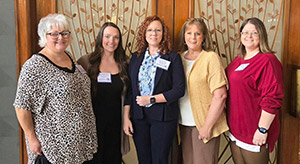
"Historically, the region has relied heavily on the coal mining industry for employment and economic opportunity," said James Herald, chief executive officer of Big Sandy Health Care, which operates a network of Federally Qualified Health Center (FQHC) clinics in Eastern Kentucky. "Because of that, our population is very saturated with active, inactive, and disabled coal miners."
Big Sandy is one of 15 grantees in the current cohort of the Federal Office of Rural Health Policy's (FORHP) Black Lung Clinics Program. The program funds Black Lung Clinics across the U.S. that serve active, inactive, retired, and disabled coal miners; services include outreach and education, screening, benefits counseling, patient care coordination, and various forms of rehabilitation and treatment.
"The coal mining population has, at many times in the past, not had the level of access to healthcare screening and treatment needed to combat the disease," Herald said. "I'm very proud of the services that we're able to offer coal miners in the region and beyond."
An 'Arduous Process'
Black lung disease occurs when coal dust particles are inhaled and build up in the lungs, causing inflammation and scarring. In more severe cases, pneumoconiosis can become progressive massive fibrosis and lead to complications such as heart or respiratory failure. While black lung symptoms can be managed through pulmonary rehabilitation and other interventions, damage is permanent and cannot be undone.
"We don't have any medication to treat the scarring, but medical care is still available for people with black lung," said Cecile Rose, medical director of the Miners Clinic of Colorado at National Jewish Health (NJH), another Black Lung Clinics Program grantee.
Care can include "improving functional capacity through things like physical therapy," putting people on inhalers, or providing supplemental oxygen, Rose said. "We are focused on making sure we're taking care of the whole person, even if there's not a good medication to reverse the disease."
Black lung disease was previously on the decline, with cases hitting a record low in the late 1990s. Since then, though, the U.S. has seen what the Centers for Disease Control and Prevention (CDC) described as an "unprecedented" uptick in cases; researchers have suggested that this increase may be due to new mining technology, which increases exposure to silica.
Black lung can't be cured, but the chances that the condition will progress decrease if exposure to coal dust stops or is limited, Rose said.
"Coal workers' pneumoconiosis can progress even after you remove the miner from exposure," Rose said. "But what we know is that if you can limit the dose of exposure, then the risk for progression declines. Early diagnosis allows you to reduce exposure before miners are in that really high-risk group for having progressive disease."
Federal regulations give miners diagnosed with pneumoconiosis the right to move into a position with lower exposure to coal mine dust while retaining their employment; this is a primary motivator for screening and early diagnosis, according to Rose. The U.S. Department of Labor's Federal Black Lung Program also provides compensation, and medical coverage when applicable, to coal miners disabled by pneumoconiosis and the surviving family members of miners who have died due to the disease.
But navigating the benefits claim process can be a whole other hurdle for miners with pneumoconiosis, Rose said.
Applying for black lung benefits can be an arduous process, and it takes time.
"Applying for black lung benefits can be an arduous process, and it takes time," Rose said. "Western miners typically have to travel long distances to see a black lung provider. If they have black lung, they have to show that they're disabled by it, which is sometimes a high bar to meet. And if they do have a good black lung claim with the Department of Labor, it's often contested by the mine operators. So it becomes a very prolonged and often contentious process."
'There Is a Need for It Around Here'
Like patients at many other grantees, those at Big Sandy Health Care aren't alone in navigating this process. Big Sandy's black lung program provides counseling assistance to miners pursuing state or federal black lung benefits claims, with a team of five counselors traveling to Big Sandy's primary care centers across a five-county region.
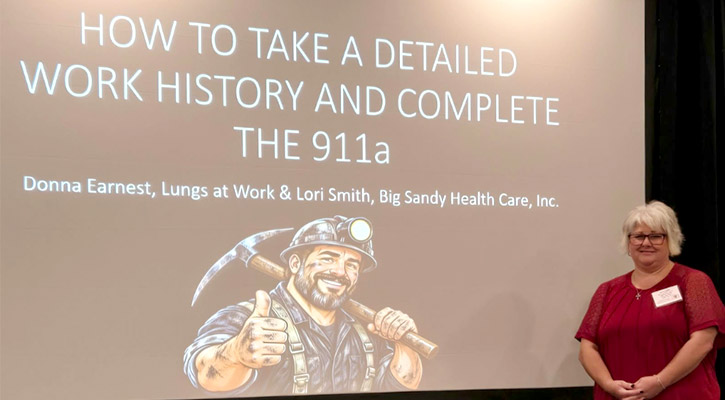
The program also provides a full array of clinical services for coal miners with pneumoconiosis, including what Herald refers to as "complete pulmonary evaluations": detailed reports by a physician that include occupational and medical histories; X-ray, spirometry, and blood studies; and a physical exam. These medical reports are often "valuable" in assisting miners in their benefits claims, Herald noted.
Many of the black lung patients at Big Sandy find their way to the program through word of mouth or outreach events, such as booths at local festivals, said Terra Ray, who serves as program director of the black lung benefits counseling program.
When a miner comes in for benefits claim assistance, Ray or one of the other four counselors sits down with them and walks them through the questions on the application, helping them to fill it out. The counselors send the completed application to the Department of Labor and then help schedule an official medical exam required by the department. If the results show evidence of black lung, the counselors will typically refer the miner to an attorney.
In the meantime, Big Sandy also helps miners address other upstream drivers of health. The health system employs 13 community health workers who serve as a bridge between miners and providers and who can help connect patients to resources for food insecurity, housing, transportation, nutrition services, and other barriers. The community health workers can also provide limited healthcare treatment, Herald said, such as taking blood pressure readings and measuring A1Cs.
"They kind of operate in spaces that you don't always see, but they're certainly essential to better healthcare access and better healthcare outcomes as a result," Herald said.
An estimated 250 miners receive benefits counseling at Big Sandy each month, and Big Sandy physicians complete an average of 60 pulmonary evaluations.
These miners become like family.
"These miners become like family," Ray said. "They're really grateful for our program."
For Ray, the work has personal significance. Ray's father is a retired miner.
"Being a coal miner's daughter has made me want to do the job better," she said. "I dive into these claims and I'm like, 'I'm going to do the best I can for you,' because I know what it was like for my father to be a coal miner. Working in the black lung program is very special to me, and there is a need for it around here."
'Life-Changing' Services
Just to the east, in Southwest Virginia, Stone Mountain Health Services has taken a slightly different approach to its benefits claim assistance.
After helping patients complete black lung applications, Stone Mountain noticed that many of its miners were going into legal hearings without representation, according to Bradley Johnson, a respiratory therapist at Stone Mountain who oversees the black lung program.
"We wanted to help them," Johnson said. "The miners asked, 'Can you come to hearings with me to help me get through this?'"
That question formed the basis of Stone Mountain's legal representation model, which provides free lay services to coal miners seeking legal benefits. The program allows trained lay representatives to appear at hearings with the miners and to speak for them, present evidence for them, and testify. Stone Mountain has one part-time and two full-time lay representatives.
Between July 2018 and June 2025, lay representatives sat in on 694 hearings — many of them virtual — and represented coal miners and survivors from 18 different states through the benefits process. While Stone Mountain is grant-funded to serve nine counties in Southwest Virginia, miners and survivors come from "everywhere" for services, according to Johnson.
Receiving benefits is "life-changing for a lot of these miners," said Jody Willis-Hill, a family nurse practitioner at Stone Mountain and director of the black lung program. She cited as an example one miner who recently had a successful lung transplant after going through the lay representation program.
If someone had not been there to help him get that insurance coverage, I don't know where he would be today.
"If someone had not been there to help him get that insurance coverage, I don't know where he would be today," Johnson said.
A Light Bulb Goes Off
In Colorado, National Jewish Health — a Denver-based medical center that specializes in respiratory diseases — has been part of the FORHP Black Lung Clinics Program since 2003.
"We have had occupational pulmonologists who have been taking care of patients with work-related and exposure-related lung diseases for years and years," Rose said. "But it wasn't until we became a grantee for the Black Lung Clinics Program that the core services were really brought together in a very organized way."
At that point, Rose said, NJH incorporated outreach, medical screening services, and benefits counseling for miners and began building relationships with rural health partners across Colorado and Arizona.
"We went from just being a very fine diagnostic and treatment center for miners to providing this much more comprehensive array of services," Rose said.
In 2025, NJH introduced its new Miners Wellness Initiative, a collaboration between the Miners Clinic of Colorado and its NJH colleagues in pulmonary rehab and physical therapy. Two physical therapists joined the Miners Clinic team with the goal of assessing, and helping to improve, patients' physical function.
With the average patient age in the Miners Clinic approaching 70, the Miners Wellness Initiative is an "effort to take that extra step" to help an aging population, Rose said.
"These are folks who are at risk for lung disease, but they often have a lot of comorbidities," she said. "And some also have tremendous challenges in day-to-day activities of daily living and functionality."
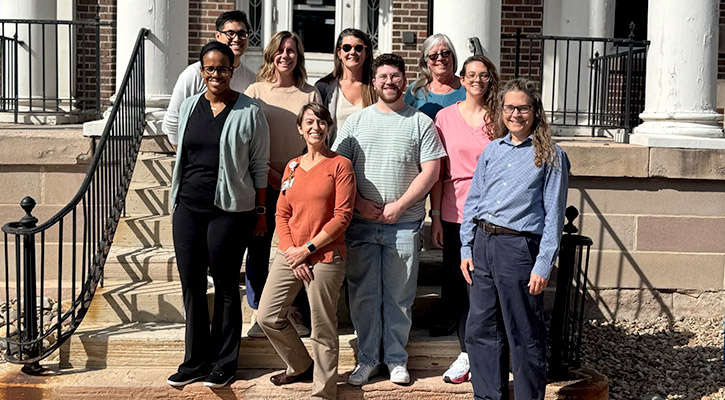
The first step is assessing a patient's physical function through a questionnaire and an in-person mobility screening system that tests physical capabilities, mobility, and balance, said Allison Zangle, one of the physical therapists leading the initiative. A patient is then placed into one of three mobility categories: no limitation, preclinical mobility limitation, or mobility limitation.
Those in the no limitation category are told to continue with their current activity regimen, while miners in the preclinical mobility limitation category are given an individualized exercise program with recommendations for strength, balance, and aerobic conditioning exercises. Miners in the mobility limitation category are advised to talk to their local provider for a physical therapy referral closer to home.
"I think a lot of miners, because their work is very physical, have historically never formally exercised," Rose said. "They went to work and they worked really hard. But then when they retire from mining, there's no habit of ambulation and exercise and stretching and the other kinds of things that Allison and her team are now bringing to this population."
Teaching the miners about the benefits of exercise, outside of the daily physical exertion of maintaining their home and their land, "has been kind of a light bulb that we see go off in a lot of them," Zangle added.
The initiative has seen 80 miners over the last year while traveling throughout rural Colorado, about a quarter of whom have fallen into the mobility limitation category. Many have been "thrilled to be getting information on how to improve their day-to-day functioning," Zangle said.
"Especially in the more rural communities, these miners are wanting to stay in their home as long as they can," Zangle said. "So how can we help to keep them in their home safely as long as possible? It's been really interesting to see that, and to help miners achieve something that's really important to them."

Gretel Kauffman has been a web writer for the Rural Health Information Hub since 2022. She writes on a variety of rural-specific issues in the Rural Monitor and Models and Innovations. Gretel has a bachelor of arts degree in American Studies from the University of Notre Dame. Full Biography
View all articles by Gretel Kauffman