Dec 10, 2025
In Rural Communities, Where Child Care Is Often Scarce, Healthcare Organizations Are Finding Creative Ways to Help

By the end of 2020, the administrative office building on the campus of Franciscan Health Rensselaer, a Critical Access Hospital in rural Jasper County, Indiana, was eerily quiet. Most administrative staff had transitioned to remote work months earlier, and the executives who remained soon relocated to the hospital across the road.
But the building didn't stay quiet for long. Today, it is filled with the sounds of over 60 infants and children. Appletree Rensselaer, a nonprofit childcare center, opened in the space in early 2023. The center leases the building from Franciscan Health at a steeply discounted rate — just enough to cover the cost of utilities.
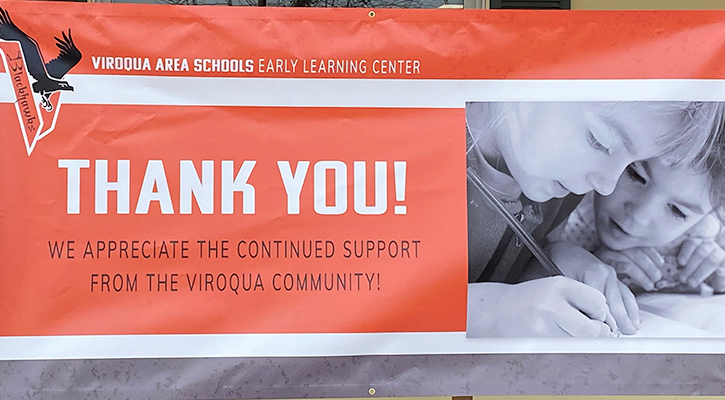
In rural Viroqua, Wisconsin, a former assisted living facility that closed during the pandemic has been similarly transformed. In 2022, Vernon Health sold the 12,000-square-foot building — valued at over $1.5 million — for $400,000 to Viroqua Area Schools (VAS). The VAS Early Learning Center opened the following year, after renovations funded with the assistance of the federal American Rescue Plan Act and the Wisconsin Department of Children and Families. Today, 75 children are enrolled at the center.

Vernon Health CEO David Hartberg described the sale and conversion of the facility as a "win-win" for the hospital, the school district, and the broader community. "We identified a practical use for a building that remains in good condition, within a service line that we are unlikely to pursue independently," he said. "And it is helping to address one of those needs that almost all communities, but especially rural communities, are struggling through."
As childcare challenges persist and intensify across the nation, a growing number of urban health systems have begun offering in-house centers for the children of their employees, according to a 2022 KFF Health News article. But in rural communities, where shortages tend to be more acute, healthcare organizations may lack the resources to provide the service on their own.

"Mostly, what I hear is, 'We're a small Critical Access Hospital, we are already operating on very thin margins, we are not the experts on child care in our community, and independently building a childcare center is not the right move. Instead, we want to work together with community partners to build a solution collaboratively,'" said Marie Barry, Director of Community Economic and Workforce Development at the Rural Wisconsin Health Cooperative (RWHC). Two of the forty rural hospitals she works with in the RWHC network have closed childcare centers over the past decade due to financial strain.
That doesn't mean leaders are turning their backs on the issue. Barry has witnessed a range of roles played by the hospitals she works with in rural Wisconsin — from acting as a convener of local partners to subsidizing slots offered by existing childcare providers. Some hospitals, like Vernon Health and Franciscan Health Rensselaer, are supporting local childcare solutions through the discounted sale or lease of vacant facilities.

"In the healthcare sector, the pandemic left us with a lot of empty buildings, so I believe there are more opportunities around the nation," said Franciscan Health Rensselaer Chief Operating Officer Carlos Vasquez. "We never planned on having a daycare here — but I can tell you, it has been good to us."
We never planned on having a daycare here — but I can tell you, it has been good to us.
Beyond the direct impacts on his staff whose children are enrolled at the center, Vasquez feels that the partnership has had a noticeable impact on the community's support for the hospital. "This is the best marketing that I can do, to be quite honest — to have moms, who actually make the decisions in healthcare, taking their kids to the center and being so grateful," he said.

The partnership emerged after Vasquez reached out to a local philanthropic foundation to ask if they were aware of any mission-aligned organizations who might be interested in the building. The foundation connected him with Appleseed Childhood Education, a parent-led nonprofit that had formed after the county's only licensed childcare center closed in 2018.
"I don't think we ever would have thought about the hospital as a potential partner," said Anthony Butler, former Executive Director of Appleseed. "We turned first to the schools, we turned to the college, we turned to the county — but once we connected with the hospital, that was a slam dunk for us."
An Evolving Landscape
In recent years, child care has risen to the forefront of policy discussions at the national, state, and local levels. Barry has noticed increased interest in the issue among healthcare leadership since the start of the pandemic, when program closures "made a lot of people aware of how cobbled together people's childcare solutions were." But according to researchers, the challenges plaguing the sector — and the affordability and availability issues faced by many families — are nothing new.
"For a long time, child care has been thought of as a family issue or even more narrowly, perhaps, as a women's issue," said Tessa Conroy, Associate Professor of Agricultural and Applied Economics at the University of Wisconsin-Madison. "Was there ever a time when this market was working well? Probably not. It just didn't have to because we had more children being cared for at home."
As workforce shortages have intensified, however, political and industry leaders have become more aware of the close link between childcare availability and labor force participation. For example, a 2021 survey commissioned by the Bipartisan Policy Center found, "Over 4 in 5 rural parents who are personally or their spouse/partner is not currently working say child care responsibilities influenced their decision to not work."
I would guess that most rural healthcare providers are seeing firsthand how employees are struggling with childcare needs and how it's affecting their ability to work.
This link may be of particular concern for healthcare organizations. "About three quarters of the healthcare workforce is female, and this is an issue that primarily affects working women," said Conroy. "I would guess that most rural healthcare providers are seeing firsthand how employees are struggling with childcare needs and how it's affecting their ability to work."
The rural childcare market has clear differences and faces unique challenges compared to the urban market, according to Marnie Werner, Vice President of Research and Operations at the Center for Rural Policy and Development. She is the author of Rural Child Care Solutions: From the Ground Up, a 2022 analysis of the childcare landscape in rural Minnesota.
The report notes that family providers — who care for a smaller number of children and are often based in private homes — are much more common than childcare centers in rural Minnesota but have been declining steadily in number for over 20 years. "The growth in center capacity almost kept up with the loss of family care in the Twin Cities but has not at all kept up with the loss of family care in rural areas," said Werner.
In her report, she offers a succinct explanation for this phenomenon:
Rural areas have inherent characteristics like sparser population that make child care programs more difficult to maintain, particularly centers, with their higher overhead costs compared to family child care. To recover these higher costs, a center must be able to enroll enough children and charge a high enough rate to cover expenses.
The higher average incomes and demand for childcare slots from thousands of employees of a typical urban health system have a much greater chance of keeping an in-house center financially viable. However, a small center created by a rural healthcare organization will always have a harder time breaking even.
In some cases, the impacts on recruitment and retention may help to balance the books. For example, Kaniksu Community Health in rural Sandpoint, Idaho, has offered onsite child care since 2022. In a December 2024 column for the Idaho Capital Sun, director Kelly Schmier wrote that the center operates "at a break-even level" and "has increased staff retention and satisfaction so much that our turnover rates have decreased from 38 percent to just 19 percent."

Werner believes that the right approach to the issue will vary from organization to organization and community to community. On the whole, though, she senses that "most rural employers are not in a position to create their own center." Rather, many of the rural childcare solutions highlighted in her report were developed and supported by multiple funders, organizations, and community partners.
Appletree, for example, is supported by a long list of partners including the City of Rensselaer, Jasper County, philanthropic and grant funding, local businesses, and individual donors. In addition to leasing affordable space, Franciscan Health also provides affordable meals to the center, prepared in accordance with federal nutrition standards.
Probably the best thing employers can do is to show up at those community meetings and figure out how they can help.
In many rural communities, there is a growing "embrace of the idea that this has to be a community-wide solution," said Werner. "Probably the best thing employers can do is to show up at those community meetings and figure out how they can help."
A Cooperative Model

In 2016, collaboration among eight employers in rural Mercer County, North Dakota, led to the formation of Energy Capital Cooperative Child Care (ECCCC). The nonprofit cooperative provides care for around 75 children in a renovated church building in Hazen. Its founding members include a Critical Access Hospital, a Federally Qualified Health Center, and a nursing home.
According to Erin Laverdure, ECCCC board member and past president, the original impetus came from her employer, Basin Electric Power Cooperative. In her role as Project Coordination Representative, Laverdure was tasked with exploring solutions to the local childcare shortage, which was having a significant impact on recruitment and retention.
"We didn't think that we were the only ones struggling with these issues, so I just started pounding the pavement, visiting with the leaders of other organizations," she said. "They were asked if they would like a seat at the table as we brainstormed possible solutions, and I found them to be proactive and absolutely ready to roll up their sleeves and get to work."
For Darrold Bertsch, then-CEO of Sakakawea Medical Center, the invitation came at the right time. In a recent community health needs assessment, inadequate childcare availability had been identified as the number one priority among community members.
But he didn't feel the hospital was well-positioned to tackle the issue on its own. "In rural communities, you don't have the resources to do it yourself when you're a smaller healthcare organization," said Bertsch, who retired in 2023 but continues to serve on the ECCCC board.
Other employers shared his reluctance. "We all wanted to see it happen, but we didn't want to be personally responsible for housing the child care, for employing the workers, for keeping track of all the regulations and rules and knowing how to apply them," said Laverdure.
Their solution was to create a separate, nonprofit entity, with a board comprised of representatives from each of the founding employers. Eligibility for the cooperative's services is not dependent on employer affiliation.

Soon after the formation of ECCCC, a member of New Bethel Congregational Church in Hazen approached the board with an opportunity. Their church was in the process of decommissioning, and the congregation was hoping to find a use for the building that would carry on their mission of serving local children.
"The members of the church were compelled to offer us that space to purchase, but at a wonderfully reduced price," said Laverdure. "It was tremendously helpful."
The building was in good condition, but significant renovations were needed to meet the needs of a childcare center. The employers each "came to the table with what they could give," and much of the labor was provided by local leaders and community volunteers. The center opened its doors in May 2017, a little more than a year after the employers first convened.
I feel that our community partners, our healthcare partners included, were and are the definition of servant leaders.
"I feel that our community partners, our healthcare partners included, were and are the definition of servant leaders," said Laverdure. "They not only said, 'Yes, let's do this' — they physically did it. And that was very inspiring to see."
Persistent Challenges
Despite the successes of ECCCC, Appletree, and the VAS Early Learning Center, there is still a need for additional childcare slots in each community. All three programs have waiting lists. And all are licensed to serve a higher number of children than are currently enrolled — but are limited by the same familiar issue: workforce shortages.

Childcare jobs are high-stress and high-stakes and offer notoriously low pay. As noted in the Early Childhood Workforce Index 2024, published by the Center for the Study of Child Care Employment at the University of California, Berkeley, "The ECE [early childhood educator] workforce as a whole earns less than 97% of all other occupations in the United States."
Conroy observed that these conditions "on the supply side of the childcare market" are often overlooked in policy discussions. "I think it will be really difficult to improve the childcare situation for families without first improving it for the workers within the industry," she said.
Both Appletree and the VAS Early Learning Center offer insurance benefits to employees. ECCCC staff — many of whom are young parents — are eligible for free child care. Recently, through the North Dakota Child Care Workforce Benefit, the cooperative began receiving payments from the state for the costs of providing that care. (Other states, including Kentucky and Rhode Island, offer similar programs.)
"We're closer to breaking even than we ever have been," said Laverdure. "We had been operating at a deficit for a while, leaning very heavily on partner contributions and knowing that that wasn't really sustainable in the long term. So the state program came at a very good time."
In her role at RWHC, Barry has encouraged rural healthcare leaders to speak up in state-level childcare policy discussions regarding the economic impacts of local shortages. She also encourages them to advocate for policies and programs that they view as beneficial to local childcare providers.
"One thing I find challenging is glamorizing these very scrappy, isolated local solutions that are good and important and that our hospitals engage in because they need a solution today," she said. "But this is a systems-level problem and ideally we need a systems-level solution that helps all communities, regardless of their local capacity to get a project like this over the finish line."
While Barry celebrates the progress made in places like Viroqua, Hazen, and Rensselaer, she is careful not to lose sight of the need for more comprehensive reforms. There is, after all, more at stake than only the health of the local business community.
"That birth to three period is so important for kids, and there are lifelong health implications of a lack of access to quality early childhood education," said Barry. "So if we want to think about how we are improving health outcomes for communities as a whole, child care is a part of that."