June 15, 2022
For the 240,000 rural Americans with complete kidney failure, it's likely that very few knew they even had kidney disease. According to the Centers for Disease Control and Prevention, kidney disease is usually silent; 90% of people with kidney disease don't know they have it. With research pointing to the high costs of kidney disease for pediatric and adult patients alike — mostly covered by Medicare — experts and researchers discuss rural disparities around access to disease-stabilizing treatment and to renal replacement therapies.
June 1, 2022
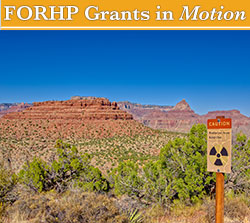
Nuclear weapons testing from 1945 to 1962 and uranium mining from 1943 to 1971 exposed workers and community members living near the mines or testing sites to harmful levels of radiation that can lead to cancer and other illnesses. Radiation Exposure Screening and Education Program (RESEP) grants help healthcare organizations provide screenings, referrals for medical treatment, and other services to this population. Two grantees, the Navajo Area RESEP and the Southwestern Utah RESEP, share their stories.
October 20, 2021
A common health condition, epilepsy impacts rural populations in many ways, including the ability to drive. Medical and public health experts join an advocacy organization to review the condition's impact and outline rural management approaches — including seizure first aid.
July 28, 2021
Researchers and rural communities are working together to address rural cancer prevention and control, with federal funding supporting a wide range of projects. From targeting health behaviors, to making cancer screening and vaccination more accessible, to increasing rural participation in clinical trials, efforts to reduce rural cancer burden are underway across the country.
July 14, 2021
Essentia Health created the Remote Patient Monitoring program to allow some patients to recover at home while still having access to medical attention. Program launch was accelerated to treat COVID-19 patients, but Essentia plans to continue the program after the pandemic to treat other chronic diseases.
June 30, 2021
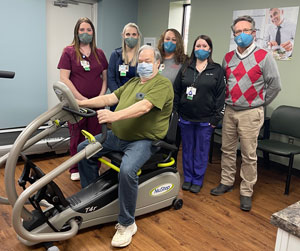
On the list of leading causes of death, chronic obstructive pulmonary disease, or COPD, impacts millions of rural Americans and their quality of life. Though limited treatments are available for COPD, research indicates that pulmonary rehabilitation (PR) provides major benefits, yet is currently under-prescribed and facing challenges from COVID-19 and from reimbursement policies. Researchers discuss the potential that tele-PR might bring to rural areas, and rural healthcare leaders highlight the benefits of their PR programs for service areas.
June 16, 2021
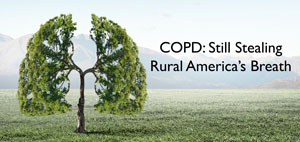
Chronic obstructive pulmonary disease, or COPD, is a condition that continues to steal rural America's breath. Researchers, philanthropists, and healthcare professionals talk about new rural research efforts and the impact of COVID-19 on COPD. Also discussed is the importance of pulmonary rehabilitation, an impactful treatment long known to improve quality of life and now backed by new research proving it decreases death rates in select patients.
March 31, 2021
Bringing focus to rural housing quality as a social determinant of health, a healthcare organization joins a service organization and housing experts to explain housing's impact on health and how these organizations can work together to improve rural population health.
February 10, 2021
Graham Adams, PhD, Chief Executive Officer of the South Carolina Office of Rural Health (SCORH), shares how his office is responding to the COVID-19 pandemic and addressing social determinants of health like employment.
February 3, 2021
Aaron Wernham and Scott Malloy of the Montana Healthcare Foundation share how their foundation responded to the COVID-19 pandemic by providing technical assistance, organizing webinars to clarify emergency declaration orders, and creating a grant application assistance initiative.