

Aug 17, 2026
Rural West Virginia Health Center Helps Patients Access Prescriptions
by Allee Mead
Mountain Laurel Integrated Healthcare (MLIH) in West Virginia has come a long way since its founding. It originally began in 1970 as two mental health agencies merged into one. In 2020, it became a Federally Qualified Health Center (FQHC) Look-Alike in order to provide primary care along with mental healthcare.
Travis Tomblin, MLIH Informatics Officer, said many of the clinic's patients at the time struggled to attend primary care, dental, or eye appointments at other healthcare facilities. Now MLIH provides primary care, dentistry, chiropractic services, mental health (including substance use treatment), and other services. MLIH sees patients from Logan, Mingo, McDowell, Wyoming, and Boone counties.
MLIH previously had a pharmacy onsite, but it was a separate facility leasing out the space. "Over the years, we noticed that, as we grew, they didn't really grow as fast or were as flexible" and it was difficult to coordinate medication management, Tomblin said. In addition, some patients were not able to pick up their prescriptions the same day as their primary care or mental health appointments.
"Imagine that you don't have reliable transportation" and need to get a ride from a loved one, Tomblin said. "You go through your primary care visit, you see your dentist, and then you go to the pharmacy window and you get told that your medicine's not going to be ready until tomorrow. It's disheartening."
You can come to our organization and have a primary care visit, a mental health visit, and a dental visit in the same day and only have to make one trip, and your pharmacy's onsite too.
In 2022, MLIH received the Federal Office of Rural Health Policy (FORHP) Small Health Care Provider Quality Improvement Program grant, which allowed it to integrate pharmacy services at its service delivery sites. MLIH opened its own onsite pharmacy in August 2023.
"You can come to our organization and have a primary care visit, a mental health visit, and a dental visit in the same day and only have to make one trip," Valorie Patrick, Chief Medical Officer, said, "and your pharmacy's onsite too."
Benefits of integrated services
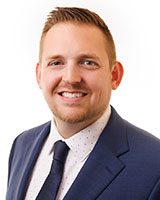
MLIH's full-time pharmacist, Patrick Duty, PharmD, previously worked in independent and big chain pharmacies, where he said he was beginning to experience burnout: "A lot of times I struggled when I worked in retail…because I was trying to spend an hour on the phone with the doctor's office trying to get medicine changed for a patient," he said.
Now, he said, "I'm working closely with our patients and our providers to make sure they're getting the care that they need, the prescriptions that they need. I really like building those close relationships with patients and gaining their trust." He added that the MLIH providers have "been very welcoming to me here."
I really like building those close relationships with patients and gaining their trust.
The MLIH pharmacy fills prescriptions the same day providers prescribe them. "[Patients] can leave here with their medicines the same day that they see the doctor. That helps a lot," Duty said.
Since some patients' medications need prior authorizations from insurance companies, Duty works with the nursing staff to get those approved as quickly as possible. Instead of having to call providers in other facilities about prior authorizations, he can go down the hall and talk to them in person. Nurses start the prior authorization process while Patrick gives patients a medication sample if available.
Patrick said that MLIH, including the pharmacy, will serve patients who walk into the clinic around closing time. "There's not a quit time until we've served all of our patients for the day," she said, adding that this service can ease patients' anxieties, knowing they will be seen even if they arrive near the end of the business day. She added this was not the case with the previous pharmacy, since it ran independently of MLIH.
Medication management
Duty works with MLIH providers to review patients' prescriptions and see if any are duplications from previous providers, if any are no longer necessary, or if patients need to change or add medications.

Duty also completes comprehensive medication management with patients, in which "we sit down and we look at their medicines…making sure patients know what they're taking their medicine for, know how to take it, know what side effects to look for, know how to manage those if they happen," he said.
"A lot of them have a hard time understanding these complex medication regimens that they're on," Duty said.
However, he said he doesn't have as much time to do comprehensive medication management as he would like: "I'm the only full-time pharmacist we have, so it's hard for me to really, really dive in."
Compliance packaging and community-based mental health
In addition to medication management, the MLIH pharmacy offers compliance packaging, which organizes medications into blister packs to take at specific days and times, for patients with multiple prescriptions or those who may forget to take their medications. For example, one blister pack in the compliance packaging contains any prescriptions or supplements to be taken in the morning, while other packs are for noon, evening, and bedtime doses. Patients can receive compliance packaging for seven to 28 days of medications at a time.
This compliance packaging also helps one MLIH program reduce rehospitalizations. Assertive Community Treatment (ACT) is a community-based mental health program for patients with delayed diagnosed chronic conditions and a history of hospitalizations.

Many ACT patients "are dually diagnosed, and there are severe mental illness patients," Patrick said. Many experience homelessness, often losing track of their prescriptions. Through MLIH's new pharmacy services, some patients receive a month's worth of medication at a time in compliance packaging while others receive the compliance packaging weekly.
In addition, ACT team members meet with patients four times a week. Some patients meet with counselors while others meet with a provider or case manager. During these sessions, the ACT team makes sure the patients still have their medications. "If they don't and they've lost them again, we do what we can to obtain their medicines again," Patrick said.
Before Duty began working with ACT, the ACT program averaged about three rehospitalizations each month. Since October 2024, zero of the 50 patients in the program have been rehospitalized.
Addressing patient barriers
In addition to keeping track of multiple medications, the cost of prescriptions is a challenge for many patients. When patients can't afford a specific medication, Patrick works with Duty. "He lets us know, if I need to prescribe a blood pressure pill, what those cheapest options are going to be for those patients," Patrick said. As an FQHC Look-Alike, MLIH can access the 340B Drug Pricing Program to help lower prescription costs for patients.
If they can't afford their medicines, we make sure they get them anyway.
"If they can't afford their medicines, we make sure they get them anyway, [even if] we've got to put it on a charge account until we can figure out what resources we can get for that patient," Patrick said.
Patrick remembers a patient who had had an organ transplant but could not afford the anti-rejection medications. Patrick worked with the MLIH pharmacy and the patient's transplant team to reduce the cost of their prescriptions. Another patient was paying almost $500 a month for prescriptions, and the MLIH pharmacy was able to lower that monthly payment to less than $170.
Duty also lets providers know if a patient has gone several days past a specific date without refilling a prescription. Nurses then call patients to ask if they need help picking up a prescription or if there are other reasons they have not come to the pharmacy.
MLIH also offers transportation for people who need help getting to MLIH as well as some delivery services for prescriptions. MLIH's transportation department completed 6,912 transports in 2025.
"A majority of that is for substance use patients, because getting your driver's license back is hard, paying off your fines is hard," Tomblin said. In addition, older adults may need a ride to appointments.
Recognizing successes and looking forward
In 2025, MLIH received a HRSA Community Health Quality Recognition Badge in the National Quality Leader - Heart Health category. "We're one of only seven look-alikes in the nation that got that last year," Tomblin said.
"I don't know that we would've been able to do so without [Duty]'s integration," Patrick said.
MLIH is also working to create career pathways for pharmacists and pharmacy technicians. Duty created a pharmacy tech training program, which was approved by the West Virginia Board of Pharmacy. The MLIH program involves 20 hours of introductory training then 500 hours of on-the-job training. MLIH currently has one pharmacy tech in training.
In addition, MLIH has become a preceptorship site for Marshall University School of Pharmacy, and Duty is expecting his first student in January 2027.
We couldn't have found a better person for [this work].
Tomblin praised Duty's work, saying, "We couldn't have found a better person for it." He added that Duty's and the providers' ability to work together has improved health outcomes.
During MLIH team meetings, Patrick said, "We talk about challenges and we praise the good things that we've done. We talk about our care gaps and our care managers and our quality indicators and what we need to focus more on."
Improved health outcomes
Tomblin reported the following outcomes from MLIH's integrated pharmacy services:
- 104,051 prescriptions have been filled since the pharmacy's opening.
- Controlled high blood pressure increased from 40.7% to 62.5% of patients with this condition.
- Aspirin treatment for ischemic vascular disease (IVD) increased from 72% to 86% of patients with IVD.
- Statin therapy compliance increased from 77% to 91% of patients on a statin.
- Tobacco cessation improved from 70% to 85.7% of patients who reported using tobacco.
- Uncontrolled A1C rates dropped from 48.8% to 30.3% of patients with high blood glucose levels.
"We get a lot of compliments about our service," Duty said. "We've increased naloxone access to our substance use patients since opening the pharmacy. I think that number went up by 60% or more."
In addition, Duty reported that 41% to 43% of MLIH patients use MLIH's pharmacy. Tomblin said other health centers tend to have 11% to 20% of their patients use the onsite pharmacy.
"One of the reasons why we can be so successful is because they're choosing to use our pharmacy," Duty said. "Those close relationships with the patients and the providers just make it that much easier."

Allee Mead is a web writer for the Rural Health Information Hub. She has written on important rural issues, including maternal mortality and farmers' mental health, and has presented nationally on RHIhub's opioid resources. Originally from rural North Dakota, she has a master's degree in English. Full Biography
View all articles by Allee Mead