

Aug 05, 2026
Indiana Kidney Program Improves Outcomes Through Proactive Care and Education
by Allee Mead
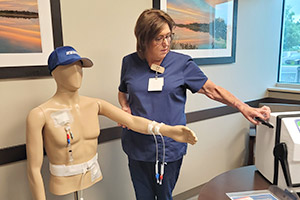
In 2016, nurse Kelly McGee became ill while admitting a patient for homecare and was subsequently hospitalized. There she received a new diagnosis of end-stage kidney disease (ESKD). "I literally thought I was dying after being given this diagnosis. No one really said, 'You're going to be okay. ESKD isn't a death sentence,'" she said.
Having recently received a life-changing diagnosis, becoming unable to work, and struggling with feelings of fear and isolation, McGee was angry and stunned when she overheard a healthcare provider refer to her as a "trainwreck" before entering the room.
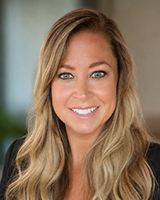
McGee started dialysis and later received a kidney transplant. In 2023, she became the Chronic Kidney Disease Coordinator at Major Health Partners (MHP) in Indiana. She has helped develop the Kidney Care Options (KCO) Program, providing early patient education and intervention, care coordination, patient advocacy, and assistance navigating challenges.
Melissa O'Connor, Director of Nephrology and Infectious Disease, also has a personal connection to kidney disease. A registered nurse, she watched her father live with chronic kidney disease and undergo dialysis for years. He died of kidney disease and heart failure in 2022. "It made me even more passionate about advocating for these patients and being a strong voice," she said.
Kidney Care Options
 MHP serves rural Shelby County and patients
from surrounding counties in central and southeastern
Indiana. MHP offers transportation assistance to help
patients access care, while virtual appointments are
available in some circumstances.
MHP serves rural Shelby County and patients
from surrounding counties in central and southeastern
Indiana. MHP offers transportation assistance to help
patients access care, while virtual appointments are
available in some circumstances.
The KCO program is a nurse-led, interdisciplinary initiative designed to educate and support patients throughout their kidney disease journey. By engaging patients before disease progression becomes advanced, the program allows them time to learn about treatment choices, involve family and community supports, and make informed decisions.
"When patients are given knowledge early, they gain not only treatment options, but also confidence, dignity, and ownership of their care," O'Connor said.
Nephrologists, nurses, care coordinators, dialysis providers, transplant centers, and community resources work together to deliver and improve care. The KCO program also places a strong emphasis on follow-up, helping patients navigate challenges, answering questions, and adjusting care plans as patients move through the different stages of kidney disease. If patients are referred elsewhere, the care team makes sure patients get where they need to go and connect with the right people or program. The care team also discusses mental health with patients and helps them access resources.
Changing kidney care
Before this program was implemented, O'Connor said, many patients first learned they needed dialysis during an emergency hospitalization. While some urgent dialysis starts are unavoidable, she believed too many patients were reaching that point without enough time to understand their options.
We owe it to them to be proactive and give them opportunities months before kidney disease progresses.
"These patients should never be making life-changing decisions during the worst days of their lives," O'Connor said. "We owe it to them to be proactive and give them opportunities months before kidney disease progresses."
To implement this program, MHP had to change longstanding clinical workflows, gain provider buy-in on starting patient education sooner, and help employees shift from a disease-centered approach to a patient-centered culture. MHP worked through this challenge by engaging team members and discussing shared goals for patient care.
Educating earlier
Earlier in her career, McGee frequently saw older patients, some in their 90s, start dialysis without fully exploring whether or not it would improve their quality of life. The KCO program takes a different approach, emphasizing education and shared decision-making. Patients learn about available treatment options and are empowered to choose the path that best aligns with their goals, values, and quality of life. "We also share with them, 'At any point, you can change your treatment plan,'" she said.
Although McGee shares her own experience with kidney disease when appropriate, she is careful not to influence patients' decisions. "I don't push them down the same paths I took," she said. "Their journey is personal, and the decision is theirs to make."
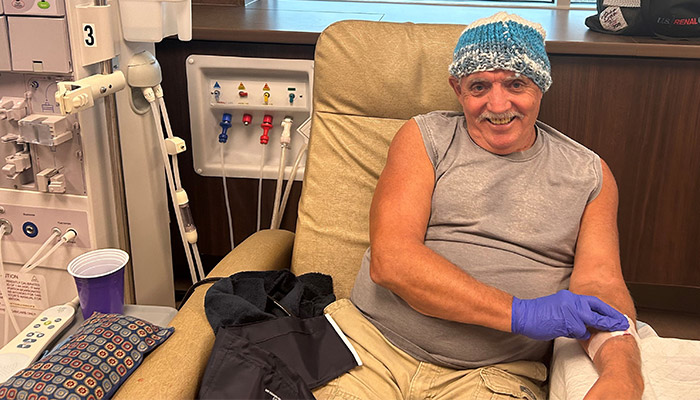
O'Connor said the patient education itself hasn't changed in the nephrology department, but the timing has. "We start the conversations early," O'Connor said. "We're no longer waiting until a crisis forces the conversation." Care team members sit down with patients to discuss their goals and any social determinants of health. She added that if a patient is not ready to talk, employees wait and try again later.
"Every conversation buys a patient something healthcare too often cannot provide. It's time," O'Connor said. "We give them the time: time to process, time to ask questions, time to involve their family, and time to make a decision long before crisis occurs."
Addressing 'non-compliance'
Rather than labeling patients as "non-compliant," McGee and O'Connor encourage everyone to understand the barriers preventing patients from following their treatment plan. Missed appointments or medications are often symptoms of larger challenges, such as lack of or limited transportation, low income, limited health literacy, or competing family responsibilities.
McGee and O'Connor said this culture change at MHP was not a formal training or process. Instead, they led by example. They also ask their colleagues, "'Hey, take a step back. Have you ever thought about it this way?'…Nearly every patient you develop a relationship with has struggles in some way, shape, or form," O'Connor said.
To address food insecurity, the MHP nephrology department started a food pantry. This is now a shared resource, benefiting not only nephrology patients but helping others in crisis as supplies allow. In addition, MHP partnered with Gleaners2Go, a program sponsored by Gleaners Food Bank of Indiana, to establish a distribution site in Shelby County. Participants can order groceries online and pick them up.
Improving patients' health
Within three months of program implementation, over 83.3% of patients received KCO education before starting renal replacement therapy (treatments like dialysis or transplant). By 2025, 92% of patients received education. In 2025, five MHP patients received kidney transplants. Some patients in the program receive kidney transplants without going through dialysis.
O'Connor said results from the KCO program exceed national benchmarks for optimal kidney replacement therapy starts, preemptive kidney transplants, and home dialysis utilization among prevalent patients.
MHP received a grant to offer dinners with doctors: a community education program with presentations on chronic disease. One doctor gave the presentation in Spanish to reach Spanish-speaking community members.
O'Connor and McGee recently published a manuscript in the American Nephrology Nurses Association's Nephrology Nursing Journal, discussing the importance of identifying patient barriers rather than labeling patients as "non-compliant."
Success stories
In addition to providing proactive kidney care and community education, the KCO program addresses patients' other needs. McGee and O'Connor recall a patient who was living in a van. He had been told by previous healthcare providers to "just get a job." But McGee decided it was more important to address concerns like housing and a refrigerator for his insulin.
McGee, O'Connor, and their team helped this man apply for Social Security Disability Insurance, find an apartment, get a ride to appointments, and receive gas cards and food. One day, this patient brought in gas cards to help other patients.
McGee remembers a dialysis patient who was sleeping on the floor. MHP raised money to buy this patient a bed. Another patient needed a babysitter to watch her children during her dialysis appointments. She shared her story online and a community member paid for the children to attend summer camp.
Other patients have received help with medications, furniture, and eliminating bed bugs. MHP Nephrology was able to raise funds to help with small basic needs by hosting a golf benefit.
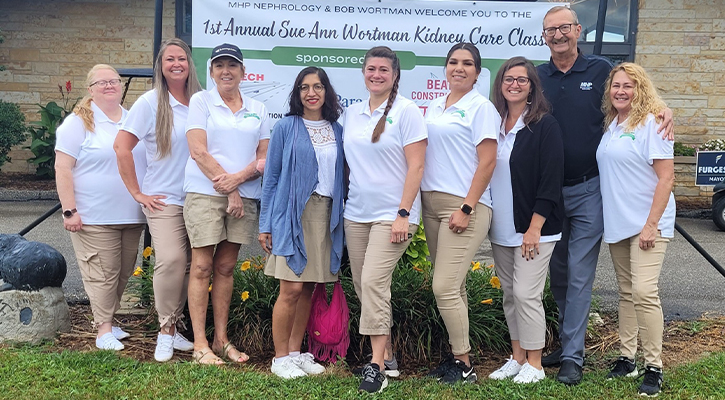
"One of the greatest opportunities in healthcare is to think outside the box and continually ask how we can better serve our patients," O'Connor said. "By providing education, advocacy, and purposeful follow-up, we can help patients feel supported as they navigate difficult decisions and uncertain circumstances. No one should walk the kidney disease journey alone, and no one should have to."

Allee Mead is a web writer for the Rural Health Information Hub. She has written on important rural issues, including maternal mortality and farmers' mental health, and has presented nationally on RHIhub's opioid resources. Originally from rural North Dakota, she has a master's degree in English. Full Biography
View all articles by Allee Mead