

Mar 11, 2026
'Our Peers Can Be The Best Teachers': Rural Hospitals Learn From One Another at Innovation Potluck
How does burnout feel?
One by one, people in the crowd shouted out answers.
"Hopeless." "Exhausting." "Numb." "Surviving, not thriving." "Like I want to quit my job."
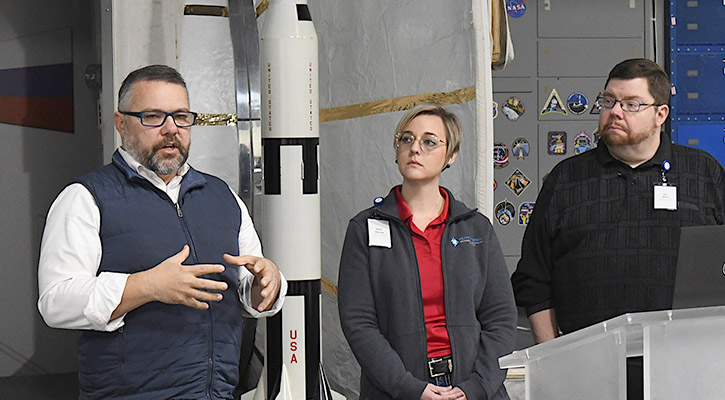
On two days in early December, roughly 100 rural healthcare providers, hospital administrators, academics, nonprofit leaders and government officials gathered in Hutchinson, Kansas, to commiserate over the common woes of rural provider burnout and turnover — and, more importantly, to exchange ideas about how to prevent it.
The second annual Rural Workforce Innovation Potluck brought together healthcare professionals from around the country — from Maine to Texas, and Oregon to Puerto Rico — to share their own experiences in rural recruitment, retention, and bridging workforce gaps: what's worked for them, what hasn't, and how others might be able to replicate their successes.
Today is about coming together with solutions and showing each other how we did it.
"Today is about coming together with solutions and showing each other how we did it," Benjamin Anderson, chief executive officer (CEO) of Hutchinson Regional Medical Center (Hutch Regional) and one of the event's organizers, told participants. "Each dish represents an innovation and the recipe is how we did it. We want others to be able to replicate what we have prepared."
…
The idea of a "potluck"-style event first formed when Anderson and John Henderson, then the chief executive of a hospital in Childress, Texas, got to know one another. At the time, Anderson was CEO of another hospital in rural Kearny County, Kansas.
"We thought it would be really cool if we could exchange statistics and financials and get our teams together," Anderson said.
Their teams, along with teams from two other rural hospitals, convened in Kansas to do just that. They put their heads together and compared notes, with a few simple rules. The first: "No jerks." The second: Participants must share "an established and solid conscience" about what rural healthcare should and shouldn't be. The third: No matter how frustrated they may be, all involved must maintain some sense of hope for the future, and the drive to make change happen.
"The [participation] fee was your innovation," Anderson said. "How'd you get that specialty clinic going? What about your lab do you find special or innovative? We each brought something special to share with each other."
Six months later, "We reflected that it was perhaps the most valuable learning experience we'd had in all of our careers," Anderson continued. "We weren't learning from fancy consultants. We were learning from each other. We realized our peers can be the best teachers."
Those were the principles Anderson had in mind when the TLL Temple Foundation reached out to him years later, having heard about work Anderson and his team had done to expand maternal care in Kearny County, and asked for help learning about rural maternal health in their home region of east Texas. With funding from the TLL Temple Foundation, facilitation by Maine-based rural healthcare consulting firm Stroudwater Associates, and the contributed innovation of rural healthcare leaders from every part of the country, the first official annual potluck event took place in 2024 in Clifton, Texas.
This year's potluck in Hutchinson featured presentations from eight rural healthcare systems and organizations, with every region of the U.S. again represented. Each of these sites had a few things in common, Anderson noted: a "transformational leader with the proven ability to lead change," the autonomy and independence to make change happen, a tendency toward solutions-based thinking, and a "unique" workforce-related innovation to share. The event was funded by the ABIM Foundation, the United Methodist Health Ministry Fund, the LOR Foundation, the Patterson Foundation, and the Sunflower Foundation.
Throughout the day, participants were given several challenges: to identify at least one idea to test in their organization, to get to know at least three or four people, and to schedule a call with one or more of them. Some had gotten a head start on the second goal the previous night, at a welcome dinner that included a case-based discussion on provider burnout.
"It's important to get the good stories out there," Brock Slabach, chief operating officer of the National Rural Health Association, told potluck participants before the innovation presentations began. "We're told all the time about how bad things are in rural and how everything is just a big mess."
…
A range of good stories followed.
Some involved training programs: a family medicine residency program at an FQHC in rural Alabama; New England-based initiatives to train community health workers (CHWs) and familiarize physician assistant students with behavioral health and substance use disorder treatment; a program at the University of Illinois College of Medicine Rockford that trains family medicine residents in surgical obstetrical care.
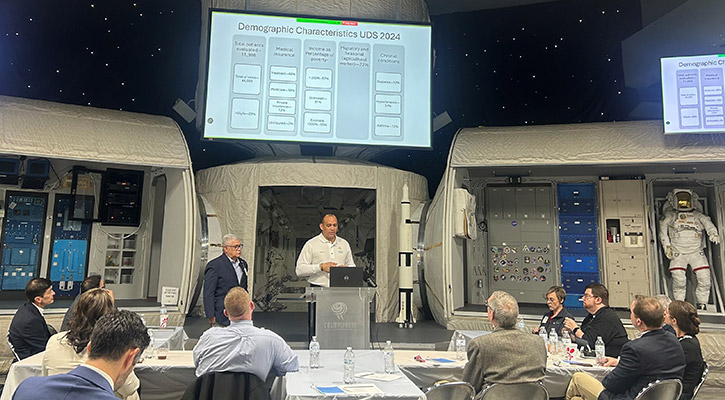
Other presenters compared ways their hospitals had changed their approach to recruiting providers — and keeping them.
Administrators from Columbia Memorial Hospital in Astoria, Oregon, described how they'd worked with their hospital board and a consultant to create a new strategic plan after observing the "incredibly limited" local access to specialty care and "burned out and aging" medical staff. The healthcare system ultimately partnered with Oregon Health and Science University for a clinical collaboration in which the hospital leases providers from the university.
"We recruited people who wanted to live in the community," Columbia CEO Erik Thorsen said. "We found providers who liked the prestige of working for an academic medical center, but enjoyed practicing in a rural environment."
Today, Columbia Memorial Hospital is the largest Critical Access Hospital in Oregon, Thorsen shared, with a full radiology clinic and other specialty clinics as well.
Hutchinson Regional Medical Center leaders discussed how they'd reworked their benefits system after interviewing providers about their experience living in Hutchinson and asking team members what factors — such as transportation, child care, housing, or medical coverage — might prevent them from growing their families. To make life in Reno County as appealing as possible for recruits, the hospital also created a down payment assistance program to encourage homeownership and is in the process of opening a STEM-focused child care center in partnership with the YMCA of Greater Wichita, the Cosmosphere space museum, and Horizons Mental Health Center.
"What are we doing to support our own people and to make sure we're doing what is the most socially responsible for our team?" said Katie Marcum, Compensation and Benefits Manager.
Southwest Health System in Cortez, Colorado, described how they'd begun involving the community more in their recruitment efforts, personalizing site visits to recruits' interests and having community members host dinners and tours, and created a physician-led recruitment and retention task force to improve communication between providers and leadership.
"We needed to change not only the way the hospital recruited, but the way the community recruited," chief medical officer (CMO) Jennifer Gero said. "Recruitment is not just one person's job — it's everybody's job."
…
Between presentations, Gero said she'd seen the potluck as an opportunity to "expand [her] bubble" as a relatively new CMO.
"I've enjoyed getting to meet other rural hospital leaders and expanding my knowledge of what other rural communities are going through, the challenges they've faced, and seeing their success stories of what's going well so we can bring them back [to Colorado]," Gero said.
Thorsen, the CEO from Astoria, Oregon, said he'd been "hoping to be surrounded by innovative, strategic-minded high achievers." He had not been disappointed.
"I think I've learned something from every single presentation that we could take home to help us continue the journey we're on," Thorsen said.
How can we work together to make healthcare better instead of making it a competition?
Rachel Boyles and Jessica Henderson, the chief ancillary officer and chief human resources officer of Golden Valley Memorial Healthcare in Clinton, Missouri, had come to the potluck just to listen. Their hospital was in the midst of a "mix and match" learning experience with Hutch Regional, they said, which involved administrators visiting each other's facilities and learning best practices from one another.
Like Thorsen, Henderson said "every single" presentation had resonated in some way, from the struggle of recruiting and retaining medical assistants to the process of starting a residency program.
"How can we work together to make healthcare better instead of making it a competition?" Boyles said.
After the last presentation of the day, which outlined workplace violence prevention efforts by Titus Regional Medical Center (now CHRISTUS Health – Mount Pleasant Hospital in Texas, participants broke into small groups to debrief and share their takeaways from the day.
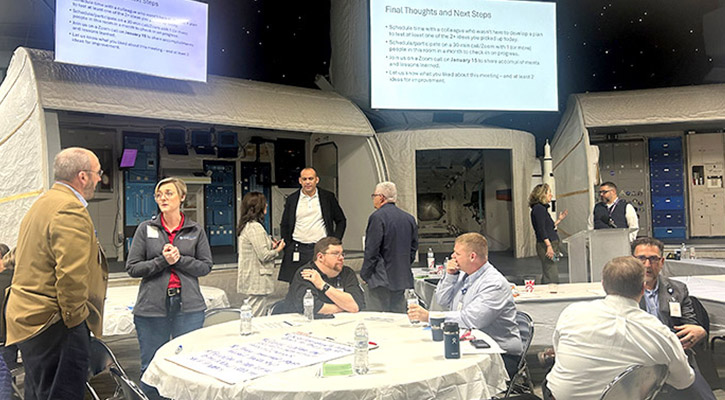
Common themes emerged: "Risk-taking." "Moral courage." "Listening first, then identifying opportunities for change." One group concluded that a "necessary ingredient" to each of the success stories shared seemed to be "passionate and capable leaders," leading to a discussion about succession planning. Someone asked if rural hospitals might work together to make recruiting a regional, collaborative effort; someone else shared insights from their experience doing just that.
Finally, participants were given their last challenge of the day: to find someone they hadn't spoken to yet and to share one actionable step they planned to take going forward.
One administrator said he'd already begun texting an auto mechanic to come help his staff with oil changes on site, a Hutch Regional benefit that Anderson had mentioned earlier in the day. Someone else said they'd already made dinner plans with "the Astoria guys" for an upcoming trip to the Pacific Northwest. "I've come to the realization that we need to do some board work," another administrator said, "and others have shared ideas about how to do that."
Three weeks after the potluck, Anderson was already starting to think about next year's gathering, lining up meetings with potential funders and exploring ideas for themes.
"This learning model can be deployed to solve just about any problem," Anderson said. "Diabetes? There's 100 people around the country that are all about it. Food? We can get together and solve community hunger. Mental health? AI? So long as people are doing crazy stuff, you can get them together."
Potluck Presenters
- Cahaba Medical Care, a Federally Qualified Health Center (FQHC) in Alabama, partnered with the University of Alabama at Birmingham to develop a family medicine residency program that provides care in rural and underserved parts of the state, along with a nurse practitioner residency, rural psychiatry residency, and medical assistant program. Twenty of the family medicine residency program's 47 rural and frontier site alumni now work in rural areas.
- Leaders from the New England Rural Health Association outlined two New England-based initiatives: the Massachusetts Rural Workforce Training Network, which trains and supports rural community health workers (CHWs); and the Vermont/New Hampshire Rural Behavioral Health Workforce Training Network, a new consortium to train physician assistant students in behavioral health and substance use disorder treatment.
- The
Structured Training for Rural Enhancement of
Community Health in Obstetrics (STRETCH-OB)
program at the University of Illinois College
of Medicine Rockford trains family medicine
residents to provide high-quality maternity care,
including surgical obstetrical care.
Read more about the STRETCH-OB program in our Rural Health Models & Innovations. - Hospital General Castañer in Puerto Rico uses CHWs to fill care gaps in rural areas. The hospital's Optimization Virtual Care Project uses nurses and CHWs to perform home visits and increase access to care through technology.
- Hutchinson Regional Healthcare System
- Titus Regional Medical Center
- Southwest Health System
- Columbia Memorial Hospital

Gretel Kauffman has been a web writer for the Rural Health Information Hub since 2022. She writes on a variety of rural-specific issues in the Rural Monitor and Models and Innovations. Gretel has a bachelor of arts degree in American Studies from the University of Notre Dame. Full Biography
View all articles by Gretel Kauffman