


Substance Use and Misuse in Rural Areas
Substance use and misuse have been prevalent in rural areas for many years. While alcohol and tobacco use have long been common in rural communities, illicit drug use and prescription drug misuse were once thought to be urban problems. That changed as a methamphetamine crisis swept rural America in the 1990s and early 2000s, followed by an opioid epidemic that began around the start of the 21st century with the misuse of prescription opioids and evolved with the availability of illicit semi-synthetic opioids, like heroin, and then synthetic opioids, such as illegally manufactured fentanyl.
Substance use can be especially hard to address in rural communities for multiple reasons, including stigma, workforce shortages, and limited resources to support prevention, treatment, and recovery. According to SAMHSA's Results from the 2025 National Survey on Drug Use and Health: Detailed Tables, a higher percentage of nonmetro residents aged 12 or older received substance use treatment for drugs than their counterparts in small metro and large metro counties.
| Treatment Received For | Nonmetro | Small metro | Large metro |
|---|---|---|---|
| Drugs | 2.5% | 2.1% | 1.4% |
| Alcohol | 1.1% | 1.4% | 1.3% |
| Drugs and alcohol | 0.6% | 0.6% | 0.5% |
| Substance use | 3.0% | 3.1% | 2.2% |
| Source: Substance Abuse and Mental Health Services Administration (SAMHSA), Results from the 2025 National Survey on Drug Use and Health: Detailed Tables, Table 5.18B. | |||
Some factors that may contribute to substance use and impact access to treatment, recovery, and support services in rural America include:
- Poverty
- Unemployment
- Lack of access to behavioral health and/or mental health services
- Isolation and hopelessness
- Stigma
- Transportation
| Substance Use | Nonmetro | Small metro | Large metro |
|---|---|---|---|
| Alcohol use by youths aged 12-20 | 25.5% | 25.9% | 25.4% |
| Binge alcohol use by youths aged 12-20 (in the past month) | 7.6% | 9.0% | 7.4% |
| Cigarette smoking | 20.0% | 17.5% | 14.3% |
| Smokeless tobacco use | 6.5% | 3.7% | 2.7% |
| Marijuana | 18.8% | 21.1% | 21.8% |
| Illicit drug use | 21.8% | 23.9% | 24.5% |
| Misuse of opioids | 2.8% | 2.6% | 2.3% |
| Cocaine | 0.9% | 1.5% | 2.0% |
| Hallucinogens | 1.9% | 2.8% | 3.6% |
| Methamphetamine | 1.5% | 1.1% | 0.7% |
| Inhalants | 0.4% | 0.6% | 1.0% |
| Source: Substance Abuse and Mental Health Services Administration (SAMHSA), Results from the 2025 National Survey on Drug Use and Health: Detailed Tables, Tables 2.46B, 2.48B, 2.37B, 2.40B, 1.74B, 1.71B, 1.109B, 1.77B, 1.83B, 1.89B, and 1.86B. | |||
Substance use disorders can result in physical, mental, social, and health consequences for the individual using substances and their friends and family members. Some of these impacts include poor academic performance, poorer health status, changes in brain structure, changes in relationships, impacts on employment, and increased risk of death from overdose and suicide. Rural communities can also be impacted through increasing crime rates and reduced economic productivity.
This guide covers the broader impacts that substance use has in rural areas and some of the challenges rural communities encounter when addressing substance use and related issues. It highlights strategies for prevention, treatment, and recovery, including efforts to reduce stigma, strengthen community-based services and supports, and prevent substance use among youth. The guide shares information on finding funding to support programs to address substance use and misuse in rural areas as well as resources to help guide program development. Specific substances highlighted in this guide include:
Related Toolkit

Frequently Asked Questions
- What is the difference between substance use, misuse, and substance use disorders (SUDs)?
- What effects does substance use have on a rural community? What challenges do rural communities face in addressing substance use and its consequences?
- How can rural communities address substance use?
- What strategies can be used to reduce stigma related to substance use in rural areas?
- What do we know about the misuse of specific substances in rural America and what is being done to prevent misuse, reduce harms, and offer treatment and other support services?
- What support services can rural communities implement to help people in recovery?
- How can rural primary care providers help address substance use and connect their patients to SUD treatment?
- What can be done to discourage youth from using drugs and alcohol?
- How can rural areas develop local options for those who need treatment?
- How can rural communities support recovery?
- Where can communities find funding to support programs and services to address substance use and misuse?
What is the difference between substance use, misuse, and substance use disorders (SUDs)?
In broad terms, substance use is any consumption, including the inhalation, injection, ingestion, or other absorption, of mood- or behavior-altering substances, such as alcohol, nicotine, opioids, stimulants, and other drugs.
Substance misuse is the use of any substance outside the prescribed instruction or intended purpose of that substance, such as off-label usage of prescription drugs, binge drinking, or underage drinking.
Substance use disorders (SUDs) can result from the prolonged use of any substance, or substances, and can affect not only the individual but also their family, friends, and community. The Substance Abuse and Mental Health Services Administration (SAMHSA) defines SUDs as:
“when the recurrent use of alcohol and/or drugs causes clinically significant impairment, including health problems, disability, and failure to meet major responsibilities at work, school, or home.”
Some behavioral signs individuals with SUD may show include:
- Lack of motivation
- Changes in friends, hobbies, or activities
- Repeated absences or poor performance at work or school
- Neglecting children or household duties
- Motor vehicle accidents
- Changes in, or trouble maintaining, sleeping or eating patterns
- Increased need for privacy
- Losing control of emotions
- General changes in overall attitude
- Deterioration of physical appearance and grooming
- Needing money, including stealing money or valuables
- Persistent dishonesty
- Secretive or suspicious behavior
What effects does substance use have on a rural community? What challenges do rural communities face in addressing substance use and its consequences?
Substance use and misuse within a rural community can present many problems. These can include increased crime, abuse, violence, suicide, intimate partner violence (IPV), motor vehicle accidents caused by driving while intoxicated or under the influence, infectious disease outbreaks, fetal alcohol spectrum disorder (FASD), neonatal abstinence syndrome (NAS), risky sexual behavior, homelessness, and unemployment, which may all be the result of using 1 or more substances.
These problems — while similar in suburban and urban areas — are exacerbated by several unique challenges rural communities may experience:
- Behavioral health services are not as readily available in rural communities, and in communities where services are available, the range of treatment options may be limited.
- Limited or no high-speed broadband services at home or in the community can impact the ability of rural populations to access behavioral health treatment and services via telehealth.
- People who need SUD treatment may be more hesitant to seek it because of privacy issues associated with smaller communities and stigma associated with substance use. Behavioral health workforce shortages in rural areas make it more difficult for individuals seeking treatment. For more information on rural behavioral health professionals, see How do the distribution and characteristics of the healthcare workforce compare across rural and urban areas? on our Rural Healthcare Workforce topic guide. Our Exploring Rural Health podcast episode, Availability of Behavioral Health Providers and Services in Rural Areas, with Holly Andrilla, also details several 2022 data briefs from the WWAMI Rural Health Research Center describing the availability of behavioral health providers in rural areas.
- Patients may need to travel long distances to access SUD treatment services, which may be especially difficult for patients who may have had their driver's license suspended or revoked. Other rural transportation barriers may include limited public transit services, vehicle access, cost, or weather. To learn more about transportation barriers rural residents face, see Do rural residents experience greater travel burdens in accessing healthcare? on our Transportation to Support Rural Healthcare topic guide.
- Law enforcement and prevention programs may be sparsely distributed over large rural geographic areas or have limited resources. Increased rates of substance use and violence in rural communities can create additional burden and strain on small, local law enforcement jurisdictions.
- Providers may not offer SUD treatment because they hold stigmatizing views about SUD or are afraid of being stigmatized themselves for providing services.
- Rural communities often lack affordable housing and support services for long-term recovery.
- Fewer participating/enrolled providers or limited SUD treatment options may compound affordability barriers for rural populations.
For more information on the prevalence of violence and abuse in rural areas and its impacts, see our Violence and Abuse in Rural America topic guide.
How can rural communities address substance use?
Prevention programs can help reduce substance use in rural communities, particularly when focused on preventing adolescents from initiating substance use.
Counselors, healthcare professionals, teachers, parents, law enforcement, community members, faith-based partnerships, and others can work together to identify substance use and related issues or problems in their community and develop prevention and education strategies to curb substance use by:
- Using the Sequential Intercept Model (SIM) to identify available resources and gaps within a community to develop strategies for people with SUDs at each point in the criminal justice system and direct them to treatment options. In the video below, Julie Truitt, a technical expert lead with the RCORP-Technical Assistance (RCORP-TA) program, briefly describes SIM and discusses her experience using the model when providing technical assistance to rural communities working to address and reduce substance use:
- Using the Strategic Prevention Framework (SPF) to better assess and understand substance misuse and related issues in a community, build local prevention resources, and develop prevention programs
- Holding community or town hall meetings to invite discussion from community stakeholders while raising awareness of the issues
- Using tools and resources such as the Community Conversations about Behavioral Health Toolkit to guide focused and productive conversations
- Training law enforcement regarding liquor license compliance, underage drinking, detection of impaired drivers, naloxone delivery, and more
- Using community-based participatory research approaches and community action boards to inform SUD preventive approaches for rural youth like the Growing Resilience project
- Inviting speakers to talk to school-aged children to help them understand the consequences of substance use
- Incorporating Screening, Brief Intervention, and Referral to Treatment (SBIRT) or other evidence-based approaches to screen for substance use and misuse in rural healthcare facilities and primary care visits to identify at-risk children and adults
- Collaborating with churches, service organizations and clubs, and employers to provide a strong support system for individuals in recovery, which might include support groups, tobacco quitlines, and other recovery services
- Training volunteers to identify and refer individuals at risk, including Mental Health First Aid training
- Developing a formal substance use prevention, treatment, or recovery program for the community based on its specific needs
- Providing care coordination and patient navigation services for people with SUD
- Providing specialized programs and counseling to discourage substance use by pregnant women
- Collaborating with schools, human services providers, and local service organizations to ensure families affected by SUDs have adequate food, housing, and mental health services
- Providing emergency departments, first responders, and the public with training and access to overdose reversal drugs
- Forming a community coalition with community members, partners, healthcare providers, policymakers, and other interested stakeholders, focused on the specific needs and issues related to substance use and misuse
- Incorporating faith-based groups and partnerships into substance use prevention and treatment programs and activities. See the RCORP-TA video, Faith-Based Partnerships, to learn more
The Rural SUD Info Center serves as a clearinghouse of evidence-based practices and information on prevention, treatment, and recovery for rural communities working to address SUD and related issues. The Rural SUD Info Center is a collaborative effort of the three RCORP Rural Centers of Excellence (RCOEs) on Substance Use Disorders that provide technical assistance to HRSA-designated rural communities. See our page about the RCORP program funded by the Federal Office of Rural Health Policy (FORHP) to learn more about federal efforts to help rural communities address opioid use disorder, substance use disorder, and related health conditions.
A 2026 RCORP-TA data brief, Unmasking the Rural Substance Use Burden: The Need to Move Beyond Macro-Level Data in Substance Use Policy and Planning, examined 2024 National Survey on Drug Use and Health (NSDUH) data on four drug categories (opioids, stimulants, vaping, and alcohol) to determine health-related differences and service gaps of rural, non-rural, and national communities to better understand substance use trends, and, in turn, inform policies and interventions in rural communities.
Existing healthcare facilities in a community can play an important role in addressing substance use and SUDs. A 2020 Flex Monitoring Team brief, Engaging Critical Access Hospitals in Addressing Rural Substance Use, outlines a framework for Critical Access Hospitals (CAHs) to address the substance use needs in the communities they serve that starts with building a foundation based on a community health needs assessment, engaging community members for input, and screening for substance use. Then CAHs can explore appropriate prevention, treatment, and/or recovery strategies and interventions they can implement to meet the needs of the rural patients they serve.
A July 2020 U.S. Department of Health and Human Services (HHS) Office of the Assistant Secretary for Planning and Evaluation research brief, Strategies for Rural Communities for Addressing Substance Misuse among Families Involved with the Child Welfare System, outlines 9 programs to address substance misuse and related issues for families that focused on improving timely access to SUD treatment, enhancing care coordination and case management services, providing transportation to treatment and healthcare services to reduce access barriers, and providing transitional housing along with outpatient treatment.
For additional activities and evidence-based interventions to address SUD, see the Evidence-Based and Promising Substance Use Disorder Program Models section of our Rural Substance Use Disorders Prevention, Treatment, and Recovery Toolkit.
What strategies can be used to reduce stigma related to substance use in rural areas?
Reducing stigma requires several approaches focused on providing education and using communication strategies to increase knowledge and awareness about a complex medical condition. The ultimate goal is to change beliefs, perceptions, and attitudes toward substance use disorder and the types of treatments that exist to help people recover and lead healthy, fulfilling lives. This can include sharing information on the science behind addiction and how it can impact anyone, developing marketing plans and campaigns to provide accurate information on SUDs, and sharing positive stories of recovery.
According to the National Institute on Drug Abuse (NIDA), word choices matter when talking about SUDs, to a person with a SUD, or to a person in treatment or recovery. Using language that focuses on the individual, and not their medical condition or substance use, can help build connections and acknowledge a person outside of their behavioral health condition. Using non-stigmatizing language applies to clinical settings as well and may be unique based on the population being served, such as pregnant women and mothers. In the video below, Lisham Ashrafioun, co-principal investigator for the Rural Communities Opioid Response Program-Rural Center of Excellence on SUD Prevention, discusses the types of stigma that can be present in rural communities and highlights strategies to reduce it:
Stigma reduction strategies should be tailored to the specific needs of rural communities. A 2016 report from the National Academies of Sciences, Engineering, and Medicine outlines the different types of stigma people may experience and offers suggestions on where to target stigma reduction strategies. Education, empowerment practices, and peer support are interventions that can be used to help individuals reduce self-stigmatizing behaviors and beliefs. Mass public media messaging campaigns, education, community programming, and contact strategies are interventions that can be used to help reduce public stigma in communities. Addressing and reducing structural stigma can require interventions such as strategies focused on legal and policy changes and professional education to change cultural norms, community conditions, and institutional practices.
Some examples of programs, models, and resources to reduce stigma in rural areas include:
- The RCORP Rural Center of Excellence (RCOE) on Substance Use Disorder Prevention facilitated Community Conversations in rural communities to create exposure and share the experiences of people with SUDs and discuss stigma from the various points of view, including those with lived experience, impacted family members and friends, healthcare providers, and other groups. The RCORP RCOE also produced a video series sharing positive stories of people in recovery aimed at reducing stigma in rural healthcare settings.
- The Beaufort County Behavioral Health Task Force in North Carolina developed the Riverfront Talks: Substance Matters Podcast to interview and share stories of people with lived experience and those working with people in SUD treatment and recovery settings.
- The University of Rochester Medicine Recovery Center of Excellence developed a campaign focused on reducing stigma related to SUD in rural care settings that followed two evidenced-based methods, sharing information about recovery and offering opportunities to be in contact with individuals in recovery, to address and reduce stigma for healthcare providers and staff working in rural areas.
- In 2021, the Great Lakes Prevention Technology Transfer Center (Great Lakes PTTC) worked with 18 participants across 6 states to offer a community of practice focused on learning and fostering strategies and practices to reduce stigma in rural communities. The resulting report, Community of Practice: Preventing and Reducing the Stigma of Substance Use Disorders in Rural Communities: Implementation and Lessons Learned, outlines the structure the rural learning community followed, shares lessons learned by the Great Lakes PTTC, and includes related topics and project documents.
- A 2025 Great Lakes Addiction Technology Transfer Center (Great Lakes ATTC) webinar, Substance Use and Mental Health Stigma in Rural Areas, uses a case study example to discuss the impacts of stigma and outlines starting steps a rural community can take to implement a stigma reduction program.
- End the Stigma is an example of a stigma reduction media campaign from the Indiana Rural Health Association.
- See the Stigma Associated with Substance Use Disorders section of our Rural Substance Use Disorders Prevention, Treatment, and Recovery Toolkit for additional information on stigma reduction in rural areas.
What do we know about the misuse of specific substances in rural America and what is being done to prevent misuse, reduce harms, and offer treatment and other support services?
Alcohol
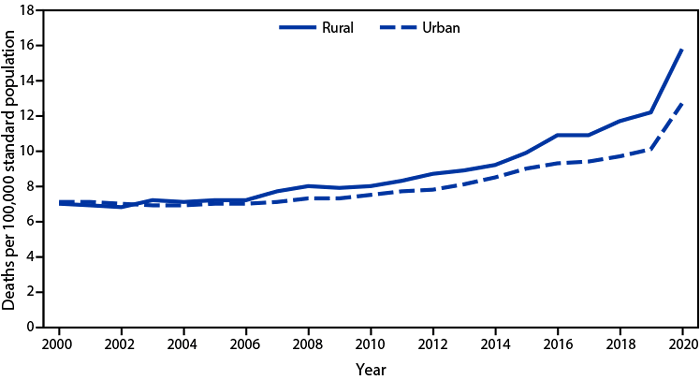
The Centers for Disease Control and Prevention (CDC) outlines many short- and long-term health risks caused by excessive alcohol use, but alcohol misuse can also have larger impacts on population health. A 2022 CDC Morbidity and Mortality Weekly Report (MMWR), QuickStats: Age-Adjusted Rates of Alcohol-Induced Deaths, by Urban-Rural Status — United States, 2000–2020, reported that from 2000 to 2020, the rate of alcohol-induced deaths more than doubled in rural counties from 7.0 to 15.8 per 100,000 population. The same CDC MMWR reported that rates of alcohol-induced deaths edged higher in rural areas starting in 2005 compared to urban areas and that rural rates remained higher and increased faster from 2005 through 2020 when compared to rates in urban areas.
According to SAMHSA's Results from the 2025 National Survey on Drug Use and Health: Detailed Tables, alcohol use patterns differ by frequency of use, age group, and geography. Lifetime alcohol use was somewhat higher in nonmetro areas than in large metro areas for both youth and adults. For adults, rates of past month alcohol use, past year alcohol use, and past month binge alcohol use were all lower in nonmetro areas compared to large metro areas. Youth in nonmetro areas had slightly higher rates of past month binge alcohol use compared to their large metro counterparts and lower rates of past month alcohol use and past month heavy alcohol use compared to youth in large metro areas. Heavy alcohol use in the past month among adults was the same in nonmetro and large metro areas.
| Age group | Nonmetro | Small metro | Large metro |
|---|---|---|---|
| Lifetime alcohol use | |||
| Aged 12-20 | 33.5% | 32.9% | 31.1% |
| Aged 21 or older | 86.0% | 86.6% | 84.5% |
| Past year alcohol use | |||
| Aged 12-20 | 25.5% | 25.9% | 25.3% |
| Aged 21 or older | 58.9% | 65.8% | 66.1% |
| Past month alcohol use | |||
| Aged 12-20 | 12.7% | 15.0% | 13.2% |
| Aged 21 or older | 39.6% | 50.1% | 50.7% |
| Past month binge alcohol use | |||
| Aged 12-20 | 7.6% | 9.0% | 7.4% |
| Aged 21 or older | 17.5% | 22.0% | 21.8% |
| Past month heavy alcohol use | |||
| Aged 12-20 | 1.2% | 2.1% | 1.7% |
| Aged 21 or older | 5.3% | 6.0% | 5.3% |
| Source: Substance Abuse and Mental Health Services Administration (SAMHSA), Results from the 2025 National Survey on Drug Use and Health: Detailed Tables, Tables 2.45B, 2.46B, 2.47B, 2.48B, and 2.49B. | |||
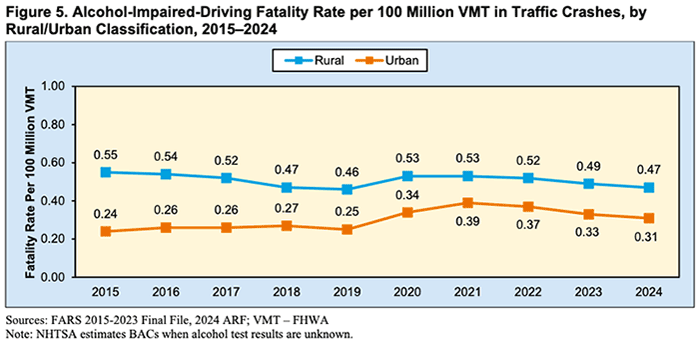
Alcohol-impaired driving is also a concern in rural areas. According to the 2026 National Highway Traffic Safety Administration (NHTSA) report Traffic Safety Facts, 2024 Data: Rural/Urban Traffic Fatalities, there were 11,904 people in the U.S. killed in crashes involving alcohol-impaired drivers in 2024. Rural areas accounted for 41%, or 4,851, of these fatalities, and 30% of all rural traffic fatalities were related to alcohol. The same NHTSA 2026 analysis reports a consistently higher alcohol-impaired-driving fatality rate per 100 million vehicle miles traveled in rural areas compared to urban areas from 2015 through 2024.
To learn more about how alcohol contributes to higher rates of cancer in rural areas, see What contributes to higher incidence rates of cancer in rural areas and what can be done to reduce the risk? on our Cancer Prevention and Treatment in Rural Areas topic guide.
Alcohol Prevention in Rural Areas
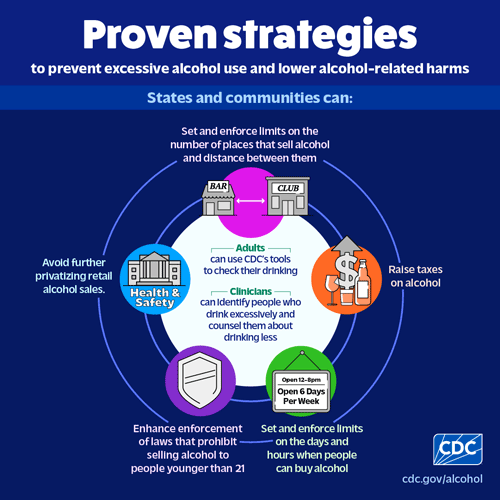
Evidence-based community prevention strategies to reduce alcohol use and excessive alcohol use are rooted in limiting the availability of alcohol in communities to support healthier behaviors and safer environments. The Community Preventive Services Task Force (CPSTF) is an independent panel of public health prevention experts that provides evidence-based recommendations and guidance on community-level health promotion and disease prevention interventions. CPSTF recommends several interventions geared toward alcohol prevention for communities, including those in rural areas:
| Intervention | CPSTF Finding | Release Date | Applicable Setting(s) |
|---|---|---|---|
| Electronic screening and brief intervention (e-SBI) | Strong evidence | August 2012 | Healthcare settings; communities; educational institutions and childcare facilities |
| Dram shop liability | Strong evidence | March 2010 | Commercial and business settings |
| Maintaining limits on hours of sale | Strong evidence | February 2009 | Commercial and business settings |
| Maintaining limits on days of sale | Sufficient evidence | February 2008 | Commercial and business settings |
| Regulation of alcohol outlet density | Sufficient evidence | February 2007 | Commercial and business settings |
| Increasing alcohol taxes | Strong evidence | June 2007 | Commercial and business settings |
| Enhanced enforcement of laws prohibiting sales to minors | Sufficient evidence | February 2006 | Commercial and business settings; criminal justice system |
These community alcohol prevention interventions are targeted at adults and minors. To learn about the status of alcohol policies in your state, see the CDC's Addressing Excessive Alcohol Use: State Fact Sheets.
Rural Program Examples
- Communities Mobilizing for Change on Alcohol is a community-organized intervention to promote and implement policies and strategies to reduce youth access to alcohol in Cherokee Nation.
- keepin' it REAL Rural is an evidence-based drug and alcohol prevention program specifically focused on middle school students in rural areas.
- In Rural Idaho, Prevention Is Everywhere shares how a small community on the Nez Perce Reservation prioritized prevention and worked to reduce risk factors leading youth to substance use.
- Isanti County SafeCab Program, a collaborative partnership among local businesses, law enforcement, various state initiatives, private foundations, taxi companies, and media, provides safe transportation from participating businesses to patrons' homes 24/7 as an alternative to driving impaired.
- Native Communities: Alcohol Intervention Review (NativeAIR) shares summaries of evidence-based prevention interventions for alcohol misuse and fetal alcohol spectrum disorders that can be sorted by delivery method; estimated costs; target participants; and setting, including reservations, rural areas, and community settings.
- Staggered Sentencing for Repeat Drunk Driving Offenders is an impaired driving prevention program for repeat offenders.
Risk Reduction Strategies for Alcohol Use in Rural Areas
According to a 2021 article in Nutrients, over 200 disease and injury conditions have been linked to alcohol use and the risk varies by the amount of alcohol intake. Alcohol use can impact an individual's health but also have negative health impacts for non-drinking individuals who interact with someone using alcohol, such as partners, family members, children, coworkers, and others. In addition to limiting the availability of alcohol in communities, programs that support or work to develop and implement protective factors at the individual, family, and community levels can help reduce alcohol-related impacts.
Alcohol Treatment in Rural Areas
The National Institute on Alcohol Abuse and Alcoholism (NIAAA) outlines the types of treatment available for alcohol use disorder (AUD), including behavioral treatments, the three FDA-approved medications for AUD (acamprosate, disulfiram, and naltrexone), and mutual support groups. According to a 2022 Current Addiction Reports article, Treatment of Alcohol Use Problems Among Rural Populations: A Review of Barriers and Considerations for Increasing Access to Quality Care, examined existing research on rural versus urban treatment gaps for AUD and found that treatment for AUD is often more difficult for rural residents to access and maintain than for their urban counterparts, which means they are less likely to receive care for AUD. The 2022 article shares recommendations to target and address barriers to AUD treatment for providers and patients as well as barriers related to individual and community stigma. Alcohol Use Disorder: Addressing Stigma and Treatment Access in Rural America is a 2020 Rural Monitor article on alcohol treatment in rural areas that shares the perspectives and experiences of 3 treatment programs located in Louisiana, Texas, and New Mexico. How One New Mexico County is Taking a Community-Wide Approach to Treating Alcohol and Substance Use Disorders, a 2023 Rural Monitor article, shares the approaches a tribal community consortium took to address AUD and other SUDs in the communities it serves.
Rural Program Examples
- CMH Addiction Recovery Program is an outpatient treatment program at a Rural Health Clinic offering medication treatment, counseling services, peer support, and other behavioral health services for SUDs, including alcohol and opioids.
- NativeAIR also shares examples of evidence-based alcohol treatment programs.
Methamphetamine
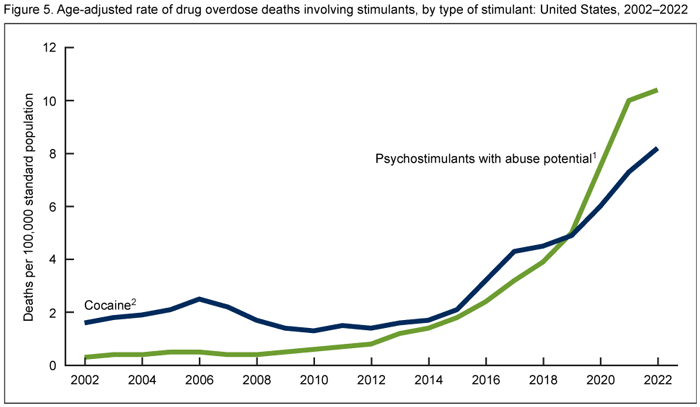
Methamphetamine is a highly addictive synthetic stimulant. NIDA describes the short- and long-term health effects of methamphetamine use and its high addiction potential. Patterns and Characteristics of Methamphetamine Use Among Adults — United States, 2015–2018, a 2020 CDC MMWR, found nonmetro areas to have the highest annual average rate of methamphetamine use for adults aged 18 or older at 9.5 per 1,000, compared to 7.9 per 1,000 for small metro areas and 5.2 per 1,000 for large metro areas. According to a 2024 National Center for Health Statistics (NCHS) data brief, Drug Overdose Deaths in the United States, 2002–2022, the age-adjusted rate of drug overdose deaths involving psychostimulants with abuse potential — including methamphetamine, amphetamine, and methylphenidate — increased more than 34 times between 2002 and 2022.
SAMHSA's Results from the 2025 National Survey on Drug Use and Health: Detailed Tables found that methamphetamine use in the past year was highest in nonmetro areas among people aged 18-25 and those aged 26 or older. Additionally, the 2025 NSDUH data (Table 1.89B) reports that 1.5% of people aged 12 or older in nonmetro areas reported using methamphetamine in the past year.
| Age group | Nonmetro | Small metro | Large metro |
|---|---|---|---|
| Aged 12-17 | <0.1% | 0.2% | 0.1% |
| Aged 18-25 | 0.6% | 0.4% | 0.4% |
| Aged 26 or older | 1.7% | 1.2% | 0.9% |
| Source: Substance Abuse and Mental Health Services Administration (SAMHSA), Results from the 2025 National Survey on Drug Use and Health: Detailed Tables, Table 1.89B. | |||
Methamphetamine Use, Mental Health Comorbidities, and Treatment in Rural and Urban Areas, 2016-2019, a 2026 policy report from the WWAMI Rural Health Research Center, provides additional prevalence data describing adult lifetime methamphetamine use by level of rurality for census regions and rural versus urban counties for each state.
Methamphetamine Prevention in Rural Areas
All 50 states and some territories have state laws and other regulations to address methamphetamine and its precursor chemicals to prevent use, local production, and distribution. The 2024 Legislative Analysis and Public Policy Association report, Methamphetamine and Precursors: Summary of State Laws, details state laws, regulations, and other restrictions related to methamphetamine and its chemical precursors for all 50 states. According to a 2025 Drug Enforcement Administration report, most of the methamphetamine available in the U.S. is produced outside of the country and brought in. Raising awareness and providing education and training to law enforcement, rural community leaders, schools, and other organizations to address substance use and misuse in rural areas on the health and social risks of using illegal drugs can help efforts to limit and prevent access to methamphetamine.
Methamphetamine Treatment in Rural Areas
There are no FDA-approved medications for the treatment of stimulant use disorder, including methamphetamine. According to the 2020 SAMHSA resource guide, Treatment of Stimulant Use Disorders, treatment for this type of substance can be based on 4 practices indicating a strong evidence base:
- Contingency management is a type of behavioral therapy that incentivizes changes in specific health behaviors and is considered the primary intervention for individuals with stimulant use disorder with the strongest evidence base. The intent is to create motivation via timely incentives in the form of items, or vouchers or gift cards for items and services, that support patient well-being and recovery — cash payments are not permitted. For more details on evidence-based contingency management services and limits on incentive values for SAMHSA programs, see SAMHSA's 2025 advisory Using SAMHSA Funds to Implement Evidence-Based Contingency Management Services.
- Community Reinforcement Approach focuses on developing and building social and drug refusal skills. This therapy seeks to identify factors that reinforce stimulant use and encourages an individual to make changes in their behavior and engage in new or different activities that do not involve stimulant use.
- Cognitive behavioral therapy (CBT) works to help an individual identify and understand their current problems, issues, challenges, and experiences in order to make realistic changes in their health behaviors and thought processes to improve their health. According to a 2024 article in The American Journal of Drug and Alcohol Abuse, digital CBT is an effective treatment to reduce substance use overall. The 2020 SAMHSA resource guide highlights how computer-based CBT (cCBT) may improve access to treatment in rural or remote areas given the digital treatment delivery format.
- Motivational interviewing is a person-centered approach that focuses on addressing ambivalent feelings and insecurities in an effort to motivate an individual to reduce, stop, or cause a change in stimulant use.
The University of Vermont Center on Rural Addiction (UVM CORA), a federally funded RCORP RCOE on Substance Use Disorders with a focus on treatment, offers contingency management provider training.
Rural Program Example
Opioids
Opioids are classified by their origin. A natural opioid such as morphine or codeine is found in the opium poppy plant. Semi-synthetic opioids are modified natural opioids such as oxycodone. Synthetic opioids are manufactured and not naturally occurring. Examples of medicinal use of opioids include the treatment of moderate to severe pain and, in the case of methadone and buprenorphine, the treatment of opioid use disorder (OUD).
Prescription opioid misuse, also known as the non-medical use of prescription opioids, generally refers to using prescription opioids in any way not directed by the prescriber, including taking someone else's medication, using the medication in different amounts, using the medication more frequently, or using it for longer than directed. Any prescription opioid carries risks of misuse, physical dependence, and opioid use disorder, particularly when used in ways other than prescribed.
Semi-synthetic and synthetic opioids that are produced and manufactured illegally are illicit drugs, such as fentanyl and heroin.
Misuse of prescription opioids and use of illicit opioids can lead to people developing a drug tolerance, dependence, addiction, or overdose. Injection drug use can increase the risk of HIV, hepatitis C, and other infections when injection equipment is shared or reused.
A Public Health Emergency resulting from the widespread opioid crisis was first declared on October 26, 2017, and has been renewed and extended since that time. Results from the 2025 National Survey on Drug Use and Health: Detailed Tables (Table 1.92A) show that 6.5 million adults misused prescription opioids at least once in the previous year, with approximately 846,000 of those adults living in a nonmetropolitan area. According to the 2025 NSDUH data (Table 1.92B), nonmetro rates of opioid prescription misuse in the past year for youth aged 12-17 were higher than their counterparts in small metro and large metro areas and nonmetro rates of opioid prescription misuse in the past year for adults were higher than their counterparts in large metro areas, 1.8% compared to 1.6% and 1.5% for youth and 2.7% compared to 2.3% for adults, respectively.
| Age group | Nonmetro | Small metro | Large metro |
|---|---|---|---|
| Illicit drug use | |||
| Aged 12-17 | 10.8% | 12.2% | 10.7% |
| Aged 18 or older | 22.8% | 25.1% | 25.9% |
| Any use of opioids | |||
| Aged 12-17 | 10.4% | 11.1% | 10.1% |
| Aged 18 or older | 25.8% | 23.9% | 20.0% |
| Misuse of opioids | |||
| Aged 12-17 | 1.8% | 1.6% | 1.5% |
| Aged 18 or older | 2.9% | 2.7% | 2.3% |
| Use of illicit drugs other than marijuana | |||
| Aged 12-17 | 5.0% | 4.7% | 4.2% |
| Aged 18 or older | 7.3% | 8.4% | 8.8% |
| Source: Substance Abuse and Mental Health Services Administration (SAMHSA), Results from the 2025 National Survey on Drug Use and Health: Detailed Tables, Tables 1.71B, 1.108B, 1.109B, and 1.114B. | |||
| Fentanyl Use | Age group | Nonmetro | Small metro | Large metro |
|---|---|---|---|---|
| Any fentanyl use | Aged 12 or older | 1.2% | 1.3% | 1.2% |
| Fentanyl misuse | Aged 12 or older | 0.2% | 0.4% | 0.4% |
| Illegally made fentanyl (IMF) use | Aged 12 or older | 0.2% | 0.2% | 0.3% |
| Source: Substance Abuse and Mental Health Services Administration (SAMHSA), Results from the 2025 National Survey on Drug Use and Health: Detailed Tables, Table 1.116B. | ||||
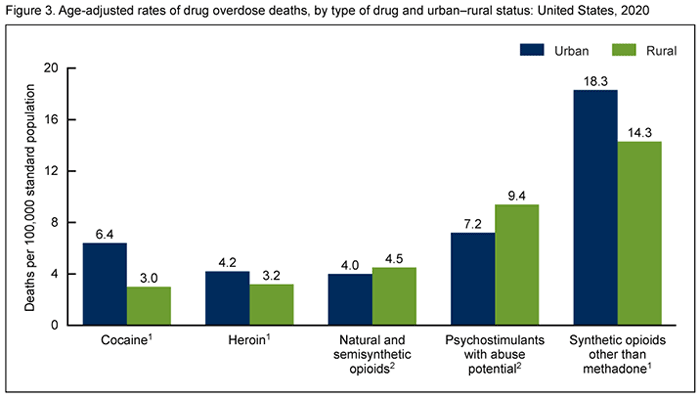
A 2022 NCHS data brief, Urban–Rural Differences in Drug Overdose Death Rates, 2020, reported that in 2020 the rate of drug overdose fatalities was slightly lower in rural areas (26.2 per 100,000) compared to rates in urban areas (28.6 per 100,000), with 8 states having higher age-adjusted rates of drug overdose deaths in rural counties compared to urban counties. The same 2022 NCHS data brief reported that the rate of drug overdose deaths for females was 5% lower in urban counties (17.0 per 100,000) than in rural counties (17.9 per 100,000).
Opioid Misuse Prevention in Rural Areas
The U.S. Department of Health and Human Services Overdose Prevention Strategy emphasizes primary prevention across the lifespan as a key strategy to prevent opioid misuse. The CDC outlines several prevention strategies to reduce opioid misuse and limit unnecessary access to prescription opioids. CPSTF also recommends 2 interventions for SUD prevention for communities, including those in rural areas:
| Intervention | CPSTF Finding | Release Date | Applicable Setting(s) |
|---|---|---|---|
| Community interventions involving coalitions or partnerships to prevent substance use among youth | Strong evidence | June 2024 | Schools; home; communities; rural areas |
| Family-based interventions to prevent substance use among youth | Strong evidence | June 2023 | Communities; schools |
Rural healthcare providers should adhere to evidence-based opioid prescribing practices utilizing the 2022 CDC Clinical Practice Guideline for Prescribing Opioids for Pain when providing pain care and ensure patients are knowledgeable about the risks of prescription opioids and proper use. Prescription drug monitoring programs are another state-level tool used to track prescribing of opioids and other controlled substances that can also provide details on clinical prescribing habits and patient behavior. Rural communities can develop and implement programs and initiatives aimed at raising public awareness and providing education on the harms of opioid misuse as well as organizing local drug take-back events to dispose of unused or expired prescription medications in addition to permanently available drop-off locations. Our Rural Substance Use Disorders Prevention, Treatment, and Recovery Toolkit shares information on Models to Prevent and Intervene Early in Substance Use Disorders.
Rural Program Examples
- Project Lazarus provides education and resources to communities and prescribers focused on responsible pain management practices and preventing prescription medication overdoses.
- Rx Awareness is a media campaign that shares information on prescription opioid overdose prevention, including stories of people and their experiences with prescription opioids.
- Communities of Practice for Rural Communities Opioid Response Program (CoP-RCORP) is an Ohio consortium in a 5-county area to help rural counties build capacity and work across the continuum of care. CoP-RCORP was featured in the November 2019 Rural Monitor article, Creating a Consortium to Combat the Opioid Epidemic in Ohio.
Risk Reduction Strategies for Opioids in Rural Areas
Increasing access to and education on the use of opioid overdose reversal medications is a way rural communities can reverse opioid overdoses and lower opioid overdose deaths. See the Naloxone Training and Distribution Programs section of our Rural Substance Use Disorders Prevention, Treatment, and Recovery Toolkit for more information on naloxone training and programs in rural areas. SAMHSA's Overdose Prevention and Response Toolkit also shares guidance on overdose prevention, training, and response for a variety of audiences, including people who use drugs, people who take prescription opioids, healthcare providers, first responders, and policymakers.
Rural Program Examples
- Arukah Institute's Living Room Program provides a safe space for people in need of substance use resources, peer support, and overdose prevention supplies.
- High Rockies Harm Reduction provides harm reduction services and peer support services to prevent drug overdose deaths and infectious diseases.
- Richmond Substance Use and Mental Health Mobile Integrated Health Program is staffed by social workers who work to connect people who experience an overdose or are in a mental health crisis with needed community services and supports.
- Positively Living & Choice Health Network provides mobile harm reduction outreach to rural Cocke and Claiborne counties in Tennessee.
Opioid Treatment in Rural Areas
Evidence-based treatment for opioid use disorder (OUD) includes 3 FDA-approved medications to treat OUD (methadone, buprenorphine, and naltrexone) in combination with behavioral health treatments, but rural residents face many issues and barriers when seeking access to treatment. A 2024 Social Science & Medicine article, Barriers to Opioid Use Disorder Treatment among People Who Use Drugs in the Rural United States: A Qualitative, Multi-Site Study, describes barriers rural residents experience at multiple levels, including stigma, confidentiality issues, transportation, opioid treatment program and facility rules, conflicts with maintaining employment while seeking treatment, limited access to OUD treatment and waitlists for treatment, costs, and more. These issues are complex and require collaboration with multiple partners and across various sectors to improve access to OUD treatment in rural areas. Enhancing Rural Access to Medications for Opioid Use Disorder: Policy Brief and Recommendations to the Secretary, a 2025 National Advisory Committee on Rural Health and Human Services (NACRHHS) brief, provides additional discussion and policy recommendations to increase medications for opioid use disorder (MOUD) access in rural areas.
A June 2026 final rule in the Federal Register permanently eliminated the DATA-waiver, or X-waiver, program that required providers to obtain a special waiver for prescribing buprenorphine and other Schedule III-V narcotics for opioid use disorder treatment. Practitioners no longer need a special waiver, and patient limits no longer apply. Now, all practitioners registering or renewing their DEA registration for schedule II-V controlled substances must complete new training requirements to become qualified providers. Physicians must meet one of the following conditions: have completed no less than eight hours of relevant training, have board certification, or have graduated from an accredited medical school in good standing in the last five years. Other providers must be legally authorized by the state to dispense controlled substances under schedule II, III, IV, or V, dispense such substances within such state in accordance with all applicable state laws, and meet one or more of the following conditions: have completed no less than eight hours of relevant training or have graduated from an accredited provider-specific school in good standing in the last five years.
Strategies to improve access to opioid treatment in rural areas should focus on increasing access to treatment, growing the behavioral health workforce, focused stigma reduction efforts, and other supportive services. A 2025 Drug and Alcohol Dependence article, The Opioid Epidemic in Rural Communities: Can Telehealth Increase Access to Medications for Opioid Use Disorder and Offset Barriers to Care?, examined the use of telehealth to provide treatment for rural residents with OUD and found that it increased MOUD access and retention in rural areas. The Telebehavioral Health and Opioid Use Disorder section of our Rural Telehealth Toolkit provides examples of telehealth treatment programs as well as information on best practices and policy considerations. Telehealth approaches, like Project ECHO® – Extension for Community Healthcare Outcomes, can also be used as tools and educational resources to connect rural primary care providers with specialists to work together to better manage OUD treatment for rural patients.
Another step to supporting opioid treatment in rural areas is increasing the number of clinical behavioral health providers and non-clinical behavioral health workers such as peer support workers and recovery specialists. The WWAMI Rural Health Research Center's 2025 publication, Rural Behavioral Health Workforce: A State-Level Analysis, shares county-level maps showing rates of behavioral health providers per 100,000 population, including psychiatrists, psychologists, psychiatric nurse practitioners (NPs), social workers, and counselors, that can be used to identify areas in need. Stigma from healthcare providers or within a community can prevent people with OUD and other SUDs from seeking treatment. Rural Peer Recovery Support Services Program Development and Implementation Considerations, a 2024 Premier Journal of Psychology article, discusses challenges to and offers considerations when developing peer recovery support programs in rural areas. Assessing the Needs of Rural Families Affected by the Opioid Crisis: Issue Brief and Recommendations to the Secretary, a 2025 NACRHHS brief, discusses the need to address stigma and shares recommendations. See What strategies can be used to reduce stigma related to substance use in rural areas? for additional information and rural examples to address stigma.
The Indian Health Service also shares information and resources on OUD and opioid stewardship for tribal communities, stakeholders, and healthcare providers.
Rural Program Examples
- ASPIN's Certified Recovery Specialist Program provides training and education on various topics for community health workers to become certified recovery specialists.
- MIST: Mothers and Infants Sober Together helps mothers and pregnant women who use substances find treatment, education, and services to build safe and healthy homes.
- The Pennsylvania Medications for Opioid Use Disorder (PA MOUD) Technical Assistance and Quality Improvement Expansion Project works with healthcare facilities to expand access to MOUD by increasing their capacity and the quality of treatment they provide.
- Rural Access to Medication Assisted Treatment (MAT) in Pennsylvania Project (Project RAMP) recruited and trained primary care clinicians in rural areas to provide MOUD and implement an integrated care model for patients with OUD.
- The Rural Opioid and Direct Support Services (ROADSS) model utilizes telehealth to bring opioid treatment and resources to rural communities to decrease the time and costs associated with traveling to opioid treatment programs located elsewhere.
- Vermont Hub-and-Spoke Model of Care for Opioid Use Disorder increased access to MOUD treatment using a hub-and-spoke model.
Tobacco/Nicotine and Vaping
Tobacco products, smokeless tobacco products, and nicotine vaping are highly addictive and harmful to an individual's health and well-being. A 2024 U.S. Department of Health and Human Services report, Eliminating Tobacco-Related Disease and Death: Addressing Disparities — A Report of the Surgeon General, identifies tobacco use as the leading cause of preventable disease and death in the U.S. and compares differences in tobacco use across rural and urban areas. Tobacco use is a leading contributing factor in 4 of the 5 leading causes of death for rural residents: heart disease, cancer, chronic lower respiratory disease, and stroke, according to a 2017 MMWR article, Reducing Potentially Excess Deaths from the Five Leading Causes of Death in the Rural United States.
SAMHSA's Results from the 2025 National Survey on Drug Use and Health: Detailed Tables (Tables 2.34B and 2.40B) reports higher rates of tobacco product use and smokeless tobacco product use in the past year among adults and youth aged 12-17 in nonmetropolitan areas compared to their counterparts in both small metro and large metro areas. The same 2025 SAMHSA data (Table 2.43B) reports higher rates of nicotine vaping in nonmetro areas compared to large metro areas for youth aged 12-17 and higher rates of nicotine vaping in nonmetro areas compared to both small metro and large metro areas among adults. A 2025 JAMA Network Open article, Trends in Daily Nicotine Vaping and Unsuccessful Quit Attempts in Youth, examined nicotine vaping prevalence trends from 2020 to 2024 in youth and found that daily vaping among rural youth increased from 16.4% to 41.8% in the study period, a 154.9% proportional increase.
To learn more about the diseases and conditions related to tobacco use impacting rural populations, see our Chronic Disease in Rural America and Cancer Prevention and Treatment in Rural Areas topic guides.
| Age group | Nonmetro | Small metro | Large metro |
|---|---|---|---|
| Tobacco product use | |||
| Aged 12-17 | 6.3% | 5.5% | 3.9% |
| Aged 18 or older | 27.6% | 24.2% | 20.7% |
| Cigarette use | |||
| Aged 12-17 | 4.5% | 4.4% | 2.7% |
| Aged 18 or older | 21.4% | 18.8% | 15.4% |
| Smokeless tobacco use | |||
| Aged 12-17 | 1.6% | 1.0% | 0.9% |
| Aged 18 or older | 7.0% | 3.9% | 2.9% |
| Nicotine vaping | |||
| Aged 12-17 | 11.6% | 12.4% | 10.4% |
| Aged 18 or older | 16.7% | 15.2% | 13.1% |
| Source: Substance Abuse and Mental Health Services Administration (SAMHSA), Results from the 2025 National Survey on Drug Use and Health: Detailed Tables, Tables 2.34B, 2.37B, 2.40B, and 2.43B. | |||
Tobacco and Nicotine Prevention in Rural Areas
The CDC's Best Practices for Tobacco Control Programs focuses on eliminating secondhand smoke, promoting smoking cessation for youth and adults, preventing new tobacco users, and addressing tobacco-related disparities through the use of multiple interventions focused on policy and environmental changes in communities, health education communication, and making cessation services accessible. A 2019 National Network of Public Health Institutes report, Advancing Tobacco Prevention and Control in Rural America, examined 10 years of literature on rural tobacco prevention and control activities and found 3 organizing themes for those interventions: cessation, preventing the initiation of tobacco use, and promoting smoke-free air.
CPSTF also recommends several evidence-based interventions focused on tobacco prevention for communities, including those in rural areas:
| Intervention | CPSTF Finding | Release Date | Applicable Setting(s) |
|---|---|---|---|
| Mobile phone text messaging cessation interventions | Strong evidence | July 2020 | Communities |
| Comprehensive tobacco control programs | Strong evidence | August 2014 | Commercial and business settings; healthcare settings; communities; workplaces and worksites |
| Mass-reach health communication interventions | Strong evidence | April 2013 | Communities |
| Quitline interventions | Strong evidence | August 2012 | Healthcare settings; communities |
| Reducing out-of-pocket costs for evidence-based cessation treatments | Strong evidence | August 2012 | Healthcare settings |
| Smoke-free policies | Strong evidence | November 2012 | Commercial and business settings; workplaces and worksites |
| Interventions to increase the unit price for tobacco products | Strong evidence | November 2012 | Commercial and business settings |
| Incentives and competitions to increase smoking cessation among workers – when combined with additional interventions | Strong evidence | June 2005 | Workplaces and worksites |
| Internet-based cessation interventions | Sufficient evidence | December 2019 | Communities |
| Community mobilization with additional interventions to restrict minors' access to tobacco products | Sufficient evidence | June 2001 | Commercial and business settings; communities |
Some examples of national and state-level prevention resources and programs with cessation services and media resources include:
- Tips From Former Smokers
- YouCanQuit2
- smokefree.gov, smokefreevet.gov, and smokefreeteen.gov
- Campaign for Tobacco-Free Kids
- Empower Vape-Free Youth
- National quitline and texting options and cessation resources
Rural Program Examples
- Spit It Out-West Virginia is a smokeless tobacco prevention and cessation education program focusing on workplaces and recreational venues, such as hunting and sporting areas, that are commonly found in rural communities.
- Tobacco Control Evidence-Based Programs List, from the National Cancer Institute's Evidence-Based Cancer Control Programs, shares programs focused on tobacco prevention, cessation, and eliminating secondhand smoke exposure that can be sorted by community type, including rural areas, as well as target population, intervention setting, and more.
Risk Reduction Strategies for Tobacco and Nicotine in Rural Areas
There is no safe level of tobacco use, and this is especially true for combustible tobacco products, which cause the most harm. The U.S. Food and Drug Administration shares information on the relative risks of tobacco products that discusses the different levels of risk and harm associated with various tobacco and nicotine products and the importance of knowing these associated risks when looking for lower-risk alternatives.
Tobacco and Nicotine Treatment in Rural Areas
Evidence-based treatment for tobacco use includes 7 FDA-approved medications that can be used in combination with behavioral health counseling to be most effective. A 2024 MMWR, Adult Smoking Cessation — United States, 2022, analyzed 7 factors related to smoking cessation and found that rural adults were less interested in quitting smoking and had fewer quit attempts in the past year than urban adults. The same 2024 MMWR found that rural adults were less successful at quitting smoking than urban adults, 5.5% compared to 9.6%, respectively, despite data showing that rural adults were more likely to seek advice or assistance from a health professional, use medication, and use a combination of counseling and medication to aid in their smoking cessation efforts compared to their urban counterparts.
| Location | Received health professional advice to quit | Received health professional assistance to quit | Used counseling | Used medication | Used counseling or medication |
|---|---|---|---|---|---|
| Rural | 53.9% | 51.1% | 5.7% | 38.1% | 39.6% |
| Urban | 49.6% | 48.7% | 7.7% | 35.8% | 38.0% |
| Source: Adult Smoking Cessation — United States, 2022, Morbidity and Mortality Weekly Report (MMWR), 73(29); 633-641. | |||||
A 2020 Cardiovascular Disease (CVD) in Medicine article, Smoking Cessation Treatment among Rural Individuals, reported on some barriers that rural tobacco users experience impacting their ability to access evidence-based treatment, including being less likely to receive regular primary care visits and preventive care, travel time and transportation issues, a lack of health insurance, treatment costs, limited treatment options, limited knowledge of available cessation resources, and cultural and community beliefs on smoking. Organizations and communities looking to implement or improve existing treatment programs for tobacco use in rural areas should address barriers unique to the populations they serve and tailor their approach to meet the target population's needs.
Nicotine vaping among rural youth is also a rising health concern. SAMHSA shares evidence-based guidance and resources aimed at decreasing youth vaping in its 2020 Reducing Vaping Among Youth and Young Adults guide. A 2020 Rural Monitor article, Drug Education and Cessation Programs Help Teens Avoid or Quit Vaping, describes efforts in California and Tennessee to provide drug education and implement cessation programs focused on stopping and not initiating vaping. A slide deck from a June 2025 RCORP webinar, Understanding Adolescent Vaping: Prevalence, Prevention, and Intervention Webinar Materials, outlines vaping prevention programs and shares examples of effective programs.
Rural Program Examples
- Contingency Management Smoking Cessation in Appalachia was a web-based smoking cessation program using monetary incentives.
- Building Resilient Families Project helped Federally Qualified Health Centers (FQHCs) integrate tobacco user identification and cessation referral protocols and helped home visiting programs implement tobacco screening programs and family wellness education programs in rural Yuba County, California.
What support services can rural communities implement to help people in recovery?
SAMHSA defines recovery as “a process of change through which individuals improve their health and wellness, live a self-directed life, and strive to reach their full potential,” which is framed within 4 major dimensions:
- Health
- Home
- Purpose
- Community
Just as each individual in recovery has unique needs, rural communities have varying needs unique to their geographical location, infrastructure, behavioral health services and providers available locally, and several other factors. Recovery support services should aim to fill gaps in services and SUD recovery care unique to the community being served. Some examples of recovery support services that rural communities might evaluate and consider implementing include:
Recovery housing that is affordable and safe is a critical factor in addressing SUDs and supporting those in recovery. The Housing Assistance Council's 2023 Rural Resource Guide: Affordable Housing and Recovery in Rural Communities details the regulations and policies for federal housing programs for individuals in recovery, with SUD, or a history of SUD. Our Exploring Rural Health podcast episode, Rural Recovery Housing, with Ernie Fletcher and Erica Walker, features an interview with the RCORP RCOE on SUD Recovery at the Fletcher Group discussing how communities can work together to provide recovery housing. A 2025 National Academy for State Health Policy resource, Housing Supports for People with SUD/OUD: The Opportunity of Opioid Settlement Funds, shares examples of states leveraging multiple funding sources to support housing needs for people in recovery. Housing for Rural Residents Recovering from Substance Use Disorders, a 2024 University of Minnesota Rural Health Research Center case study, highlights 3 rural recovery housing programs.
Recovery friendly workplaces can provide support for a person in recovery and prevent further substance use by implementing policies and programs to promote a recovery-oriented work culture. The Employment and Training Administration's Recovery-Ready Workplace Resource Hub shares examples of workplace policies and practices that support people in recovery. Providing Employment Services to Individuals in Recovery: Lessons from Addiction Recovery Care, a 2024 report from the Office of Planning, Research, and Evaluation at the Administration for Children and Families, outlines the structure, operations, types of services provided, and lessons learned from Addiction Recovery Care (ARC), a program combining residential clinical SUD treatment with employment services in primarily rural Appalachian Kentucky. Another program that can help rural employers hire individuals who may be considered higher risk is the Federal Bonding Program. Recovery Friendly Workplaces in Marinette County is a rural program example that seeks to reduce barriers to employment for people in recovery in rural Wisconsin by working with both employers and people in recovery.
Peer support specialists and family peer support specialists are individuals with lived experience of SUD or a mental health condition, including treatment and successful recovery, who work to help others experiencing similar situations. The peer support role is a non-clinical role that focuses on advocating, mentoring, resource sharing, skill building, and other support services that can be delivered via telehealth or in various settings, such as treatment programs, recovery housing facilities, community organizations, workplaces, criminal justice settings, and educational settings. SAMHSA outlines core competencies for peer workers that rural communities should be aware of when developing, implementing, and enhancing peer support services. To learn more about peer recovery organizations and peer certifications in your state, see the Center for Addiction Recovery Support's resource directory. First Day Forward is an example of a reentry program that uses peer support specialists to support individuals with SUD reentering society in 7 counties in rural Kentucky. Some examples of the assistance and support that peer workers offer include teaching life skills; assisting with obtaining formal identification documents; creating and following pre- and post-release case plans; helping people find housing and employment; and offering social support at meetings or appointments.
Employment and education are both part of the 10 guiding principles of recovery and intended outcomes for people in recovery. A 2021 SAMHSA issue brief, Substance Use Disorders Recovery with a Focus on Employment and Education, reports that employment is a primary focus for people in recovery and a good predictor of positive recovery outcomes. Individual placement and support (IPS) is an evidence-based supportive employment model for people with mental health conditions, including SUDs and co-occurring conditions, that has been successfully implemented in rural communities. A 2024 U.S. Department of Labor Office of Disability Employment Policy issue brief, Implementing Individual Placement and Support in Rural Communities: Barriers and Strategies, outlines challenges to implementing an IPS program in a rural community and shares strategies to adapt the program to the local community while maintaining the program principles.
A 2019 Rural Policy Research Institute (RUPRI) report, Behavioral Health in Rural America: Challenges and Opportunities, shares policy suggestions, examples of recovery program models, resources, and other opportunities for rural communities to help address the needs of rural residents in recovery.
How can rural primary care providers help address substance use and connect their patients to SUD treatment?
Rural primary care providers can play a key role in addressing substance use and misuse by:
- Providing information and education on SUD to patients
- Screening to identify patients with SUD(s) using SBIRT or other evidence-based methods
- Encouraging and supporting patients to seek treatment
- Making referrals to appropriate and accessible treatment and supportive services
- Providing SUD treatment
- Prescribing and administering MOUD, medications for alcohol use disorder (MAUD), and related SUD care
The screening process is a crucial first step toward identifying an issue or area of concern and working to provide SUD treatment, but in rural areas there are still barriers. A 2019 Journal of General Internal Medicine article, Screening for Substance Use in Rural Primary Care: A Qualitative Study of Providers and Patients, examined substance use screening practices at multiple locations of a rural FQHC and identified several screening barriers, including a lack of training for providers, concerns about privacy and stigma, and a hesitancy to disclose substance use and misuse when a strong patient-provider relationship is not present.
To address barriers to substance use screening, rural primary care providers can implement policies, evidence-based models of care, and enhance their practice through education and training. Increasing Capacity for Treatment of Opioid Use Disorder in Rural Primary Care Practices, a 2022 Annals of Family Medicine article, describes a study examining the implementation of a primary care practice-focused intervention that resulted in an improved awareness, adoption, and use of buprenorphine treatment for OUD in rural primary care practices. Cross-Walk: Integrating Behavioral Health and Primary Care is an example of a rural program focused on integrating behavioral healthcare services in rural primary care practices to improve and coordinate SUD treatment.
The American Society of Addiction Medicine (ASAM) is a professional society dedicated to improving the quality of care provided by healthcare professionals who prevent, treat, and promote recovery from SUDs. ASAM also provides educational opportunities in a variety of courses and events for physicians and other medical professionals, including continuing medical education (CME) courses. ASAM Education Overview lists both in-person and distance CME courses.
Providers Clinical Support System-Medications for Opioid Use Disorders (PCSS-MOUD) partnered with the Opioid Response Network to provide free SUD treatment education and trainings, including some rural specific courses. PCSS-MOUD also offers a mentoring program that provides general information to clinicians about evidence-based clinical practices in prescribing medications for opioid use disorder. Program participation is free for mentees and provided by a national network of providers with expertise in addictions, pain, and evidence-based clinical practices in prescribing MOUD.
Delivering Medications for Opioid Use Disorder in Primary Care: Environmental Scan, a 2025 guide from the Agency for Healthcare Research and Quality, shares guidance for implementing medications for opioid use disorder (MOUD) in primary care and ambulatory care settings with a focus on rural and underserved communities. The guide includes policy and regulatory changes, changes over time in the treatment of patients receiving MOUD, and a new model and tools. Our 2018 Rural Monitor article, What's MAT Got to Do with It? Medication-Assisted Treatment for Opioid Use Disorder in Rural America, shares an overview of the evidence-based treatment and examples of rural providers offering MAT, which is now known as MOUD.
FindTreatment.gov, supported by SAMHSA, hosts an online behavioral health treatment facility locator that rural primary care providers can use to find substance use and mental health treatment centers and services in their region. Substance Use Warmline, offered by the National Clinician Consultation Center, is a free peer clinician teleconsultation service to support primary care providers in managing complex patients with SUD assessment and treatment, pain management, withdrawal management, overdose prevention strategies, and more.
A 2023 Journal of Substance Use and Addiction Treatment article, Medications for Opioid Use Disorder in Rural Primary Care Practices: Patient and Provider Experiences, analyzes perceived patient and provider barriers from a project that facilitated the adoption of MOUD in rural primary care clinics in Pennsylvania and recommends that rural primary care providers also address the social determinants of health (SDOH) of their patients receiving MOUD treatment to meet their social needs outside of a clinical setting that impact a person's health and well-being. See our Social Determinants of Health for Rural People topic guide for more information on SDOH for rural populations and other useful tools and resources on this topic.
What can be done to discourage youth from using drugs and alcohol?
There are multiple levels of influence impacting the thoughts, behavior, habits, and decisions related to health and substance use made by youth, including at the individual, family, school, and community levels. Every relationship a child or youth has with adults, peers, mentors, family members, teachers, coaches, and others can influence, impact, and educate a child on the dangers of illegal drugs, prescription drugs, tobacco use, alcohol use, and other substances. To discourage youth from using drugs and alcohol, programs should focus on prevention, education, skill development, and amplifying protective factors while trying to limit or eliminate risk factors for substance use and misuse in youth. These types of activities and programs should ideally take place in a variety of environments and reflect the needs of the youth in the rural community. A 2025 Mountain Plains ATTC webinar, Early Intervention Strategies for Youth in Rural Areas: Addressing Substance Use, shares tools to identify early signs of substance use and highlights evidence-based approaches to prevent substance use among rural youth.
CDC's ENGAGE: Evidence-Based Strategies to Prevent Youth Substance Use program shares 6 evidence-based strategies to help communities, schools, and other organizations plan prevention programs or other programs to address substance use in youth, with a focus on preventing or delaying the initiation of, decreasing, or stopping the use of substances. ENGAGE seeks to build knowledge and skills, nurture family environments, provide youth access to resources and activities, enhance protective community environments, reduce immediate and long-term harms, and promote engagement from healthcare providers and health systems on prevention activities that can be tailored to a community's specific needs. Appendix 1: Strategies, Approaches and Best Available Evidence in CDC's 2025 ENGAGE: Evidence-Based Strategies to Prevent Youth Substance Use resource shares program examples for each strategy.
School-based interventions can play a part in discouraging youth from using drugs and alcohol. Schools can provide a stable and supportive environment for students where they feel cared for by teachers and staff. Schools can implement drug and alcohol education and prevention initiatives and other methods such as SBIRT to address substance use. A 2020 JMIR Research Protocols article, Reducing Alcohol and Opioid Use among Youth in Rural Counties: An Innovative Training Protocol for Primary Health Care Providers and School Personnel, details and shares the results of a program that used the ECHO model to train nurses, social workers, and guidance counselors in rural schools to provide SBIRT intervention. Healthcare providers can discuss the health risks of substance use with youth and parents or caregivers and implement SBIRT in their primary care practices. Family-centered prevention programs implemented in homes or community settings can also work to improve the knowledge and skills of children and parents related to substance use as well as communication within the family. See the Substance Use Disorder Prevention Programs for Youth and Families section of our Rural Substance Use Disorders Prevention, Treatment, and Recovery Toolkit for more rural SUD prevention program examples for youth and their families.
Community and faith-based organizations can also play an important role in promoting environments and policies focused on the prevention of substance use. Community Anti-Drug Coalitions of America's (CADCA) 2023 Rural Youth Engagement Toolkit offers strategies and tips for engaging rural youth to address and prevent youth substance misuse in rural communities. The Drug-Free Communities (DFC) program, a partnership between the Office of National Drug Control Policy (ONDCP) and CDC, offers grants to community coalitions focused on reducing local youth substance use. In 2024, 57% of DFC programs served rural and frontier communities. RCORP offers a Tools, Tips, and Templates for RCORP Consortiums and Networks resource to support the development and collaboration of community-based consortiums and networks working in the rural space to address substance use and misuse. Lifting Kids Up with Grace: How a New Mexico Community Built a Grassroots Youth and Family Center from the Ground Up, a 2024 Rural Monitor article, features a grassroots initiative to provide free substance use prevention programming to children, youth, and families in rural New Mexico.
Other examples of programs, models, and other resources focused on substance use information and prevention for youth include:
- Blueprints for Healthy Youth Development's Models and Interventions shares examples of certified models and interventions related to prevention, school-based programs, life skills and training, drug court, and other topics relevant to reducing drug and alcohol use in youth populations that can be sorted by target youth population, geography, program outcomes, setting, and more.
- CDC's Free Mind is a nationwide public health initiative aimed at preventing substance use and mental health challenges in youth by sharing healthy habits, behaviors, and open communication with trusted adults.
- Communities that Care Coalition is an evidence-based community prevention initiative to reduce youth alcohol and drug use in rural Massachusetts.
- keepin' it REAL Rural is a rural-specific version of the keepin' it REAL drug and alcohol prevention program for middle school students that is funded by NIDA.
- Making Prevention a Community Effort in Rural Arkansas discusses the development of a community substance use prevention program in rural Arkansas.
- National Institute on Drug Abuse (NIDA) lists websites and materials that teachers and parents can use for prevention activities and education of children and teens.
- PROSPER Partnerships (PROmoting School-Community-University Partnerships to Enhance Resilience) offers evidence-based systems for program development in rural schools and communities. Community leaders and educators can utilize PROSPER to develop programs that reduce risky behaviors, such as underage drinking and illicit drug use.
- SAMHSA's “Talk. They Hear You.” is a national youth substance use campaign that focuses on reducing underage drinking and drug use by educating and empowering parents and caregivers to talk with children about early drug and alcohol use.
- The Interagency Coordinating Committee on the Prevention of Underage Drinking (ICCPUD), which SAMHSA supports and provides oversight for, works to develop and share federal policy initiatives and programs to support states and local communities in their efforts to prevent and reduce underage drinking. States are required to report annually on their efforts to prevent and/or reduce underage drinking.
- The Meth Project is a national program of Partnership to End Addiction that focuses on reducing methamphetamine use among youth through public service media messaging, outreach programs, and policy initiatives. Partnership to End Addiction offers information and resources for families, professionals, and communities focused on keeping youth free from substance use, increasing access to effective substance use treatment for youth, and empowering families as change agents to help prevent and address substance use among teens and young adults.
- The Sapling Center is a program that provides a safe, supportive drop-in space to help youth develop life skills, training, fun activities, and counseling in rural Kentucky.
- U.S. Department of Education answers frequently asked questions and shares resources about preventing and reducing youth substance use in schools.
The SUD Program Implementation Considerations for Youth and Adolescents section of our Rural Substance Use Disorders Prevention, Treatment, and Recovery Toolkit offers considerations when developing and implementing SUD prevention and treatment programs.
How can rural areas develop local options for those who need treatment?
Rural residents experience many barriers when accessing healthcare services. This is especially true for those seeking SUD treatment. Efforts to improve local options for treatment in rural communities should focus on increasing treatment capacity and addressing or limiting barriers experienced by individuals seeking care to increase their access to treatment. These efforts can look different for rural communities and should be reflective of a community's needs, location, infrastructure, behavioral health workforce, and several other factors impacting the provision of treatment.
Behavioral Health in Rural America: Challenges and Opportunities, a 2019 RUPRI report, provides additional information on barriers to SUD treatment in rural communities and discussion on developing comprehensive behavioral health systems. The 2019 RUPRI report identifies behavioral health and primary care service integration, the regionalization of services, and telehealth as key strategies to improve treatment in rural areas. Behavioral health workforce shortages, travel distance and transportation to treatment, stigma, and limited support services are additional barriers to SUD treatment to consider when developing treatment options in rural communities.
Behavioral health crisis response services may be needed in some rural communities. Strategies for the Delivery of Behavioral Health Crisis Services in Rural and Frontier Areas of the U.S., a 2020 National Association of State Mental Health Program Directors (NASMHPD) brief, examines barriers related to providing comprehensive behavioral health crisis services in rural areas and discusses policy changes to improve behavioral health crisis response services in rural areas. A 2026 SAMHSA advisory, Model Standards for Crisis Care Workers, shares 10 national standards for crisis care workers focused on developing skilled, knowledgeable crisis care professionals. These standards are also applicable to behavioral health professionals working in rural areas.
Expanding rural Certified Community Behavioral Health Clinics may be an option to consider when evaluating and expanding local treatment options in rural communities. A 2025 Rural & Underserved Health Research Center brief, Rural Access to Certified Community Behavioral Health Clinics (CCBHCs), examined the increase in CCBHCs from 2022 to 2023 by geographic location and services offered and found a significant increase in the number of CCBHCs located in rural counties. The 2025 brief includes discussion on how the increase in CCBHCs in rural areas may shape the availability of integrated behavioral healthcare services.
Leveraging existing healthcare infrastructure to build treatment capacity within organizations that already exist in a rural community or healthcare landscape is one of the most practical and feasible strategies rural communities and providers can use to develop local SUD treatment options. Examples of healthcare facilities and infrastructure that might be leveraged to provide treatment options include primary care practices, Rural Health Clinics, FQHCs, CAHs, community pharmacies, community paramedicine programs, local health departments, and other community-based providers.
Provider training and education can help providers be better positioned to meet the needs of the patients they serve. UVM CORA's Co-Occurring PTSD and OUD Toolkit offers guidance for healthcare professionals and staff who provide treatment and services to people with post-traumatic stress disorder (PTSD) and OUD living in rural communities. The toolkit shares evidence-based PTSD assessment tools, treatment manuals, opportunities for additional training, and other educational resources.
Regionalization of services, or a hub-and-spoke model, supports SUD treatment service delivery through a series of linkages between local rural healthcare providers and specialty behavioral health providers located elsewhere. See Vermont Hub-and-Spoke Model of Care for Opioid Use Disorder and Avera Behavioral Health, a 2021 American Hospital Association case study, to learn more.
Service integration is intended to increase access to healthcare services and improve care quality and coordination while also mitigating stigma by having multiple services available in a single location. Achieving Behavioral Health Care Integration in Rural America, a 2023 Bipartisan Policy Center report, shares an overview of behavioral health and primary care integration in rural areas, challenges to integrating care, and policy recommendations to improve integrated care. Cross-Walk: Integrating Behavioral Health and Primary Care is an example of integrated behavioral health and primary care in rural Michigan. To learn more about the benefits of integration, see What are some of the benefits of integration of mental health services into primary care in a rural community? on our Rural Mental Health topic guide and the Behavioral Health Integration to Address Substance Use Disorders section of our Rural Substance Use Disorders Prevention, Treatment, and Recovery Toolkit.
Stigma reduction is crucial. Addressing and reducing stigma in rural communities and among the organizations, healthcare providers, and partners collaborating to develop treatment options can help decrease barriers to SUD treatment. For more information on addressing rural stigma, see What strategies can be used to reduce stigma related to substance use in rural areas?
Telehealth is a tool that can be used to support direct clinical care, healthcare and patient education and training, peer support services, and many other services and support related to providing treatment for SUDs in rural areas. The Telehealth Models for Increasing Access to Behavioral and Mental Health Treatment section of our Rural Telehealth Toolkit outlines the types of telehealth models and services they can provide and shares examples of rural behavioral telehealth programs and implementation considerations. SAMHSA also shares a 2021 evidence-based resource guide, Telehealth for the Treatment of Serious Mental Illness and Substance Use Disorder, that offers additional guidance on evidence-based telehealth practices for SUD, examples of treatment programs, and quality information resources.
Workforce gaps, including clinical providers and non-clinical support workers and staff, are a persistent problem that must be addressed. The National Center for Health Workforce Analysis report, State of the Behavioral Health Workforce, 2025, found fewer behavioral health providers worked in rural areas compared to urban areas, rural residents were more likely to have received behavioral health services from a primary care provider, and the retention of behavioral health providers in rural areas may be worse when compared to urban areas. A 2025 NASMHPD report, Behavioral Health Workforce Resource Guide, shares innovative examples and successful strategies from state behavioral health authorities to increase the supply of new behavioral health professionals and expand the reach of existing professionals that includes examples and programs applicable to rural and frontier areas. Financial support for those practicing in rural areas can also be a factor, and the HRSA Bureau of Health Workforce offers several behavioral health grant programs to help expand the substance use disorder and behavioral health workforce. Implementing new models of care can also help address workforce shortages. Project ECHO® – Extension for Community Healthcare Outcomes is a workforce-capacity telementoring model that builds local clinicians' ability to manage conditions through specialist-supported learning that can help build skills and knowledge for rural providers.
For step-by-step guidance on developing and implementing a treatment program in a rural area, see the Models to Treat Substance Use Disorders section of our Rural Substance Use Disorders Prevention, Treatment, and Recovery Toolkit.
How can rural communities support recovery?
The types of services to support an individual in recovery can change over time depending on where they are in the recovery process and are unique to the individual. Recovery often requires supports and services in a variety of areas beyond clinical care. Rural communities can strengthen recovery supports by engaging health and human service providers, community and faith-based organizations, peers and people in recovery, employers, first responders, and other local partners to build a coordinated recovery-oriented system responsive to community needs.
A 2025 New England ATTC webinar, Building Recovery Ecosystems in Rural Communities, further describes recovery-oriented approaches that rural communities can take, shares strategies for implementing recovery supports, and highlights successful rural recovery program examples. The presentation also outlines the steps to develop a tailored recovery ecosystem plan based on the needs of a community. The Recovery Ecosystem Index Map is a tool that can be used to assess factors impacting recovery at the county level, including the continuum of SUD support, economic factors, housing, broadband access, and more.
The Models to Support Recovery from Substance Use Disorders section of our Rural Substance Use Disorders Prevention, Treatment, and Recovery Toolkit shares more information on this topic. It covers Recovery-Oriented Systems of Care, peer specialist programs, support and self-help groups, and offers examples of rural programs for each model and implementation considerations. Filling the Gaps: Program Builds Referral and Recovery Services in Western Massachusetts, a 2023 Rural Monitor article, shares how a rural community health coalition in Massachusetts developed recovery services and its work to address substance misuse in the communities it serves.
Other examples of rural programs supporting recovery and continuity of care include:
- Addiction Recovery Mobile Outreach Team (ARMOT) provides case management and recovery support services to individuals with SUD and education and support to rural hospital staff, patients, and their loved ones.
- Community Action Commission of Fayette County Faith in Recovery Coalition is a collaborative effort between local government, a nonprofit, and faith-based organizations to provide a detox facility, inpatient treatment, and recovery housing.
- Recovery Café Camden is a member-driven, trauma-informed recovery community that offers shared meals, small-group discussions and activities, and other connections and resources in a peer-supported environment for people with SUD, trauma, grief, mental health, or other challenges.
- Recovery Friendly Workplaces in Marinette County offers training conducted by community members in recovery to local employers to become a recovery friendly workplace.
People with co-occurring mental health conditions and SUDs may benefit from integrated care that addresses both conditions and coordinates treatment and recovery supports based on individual needs. For more information on mental health in rural communities and the types of mental healthcare services available in rural areas, see our Rural Mental Health topic guide.
Where can communities find funding to support programs and services to address substance use and misuse?
Our Rural Substance Use Disorders Prevention, Treatment, and Recovery Toolkit offers information on identifying funding sources from federal, state, and local governments and philanthropic groups to address substance use and misuse.
RHIhub maintains a list of funding and opportunities related to substance use and misuse with a focus on national opportunities available to rural and tribal communities that is updated daily. You can also browse the Funding by Topic section in our Online Library and narrow by a topic of interest to identify opportunities such as substance use and misuse, behavioral health, behavioral health workforce, alcohol use, illicit drug use, opioids, prescription drug misuse, or tobacco use.
If you need assistance finding funding opportunities, contact our Resource and Referral Service at info@ruralhealthinfo.org or 800.270.1898 to request a free, customized funding search. You can also stay up-to-date on the latest funding and opportunity announcements by subscribing to the RHIhub This Week newsletter or RHIhub Daily & Weekly Custom Alerts.
For more information about finding and developing grants in your rural area, see our Applying for Grants to Support Rural Health Projects topic guide.